Buy Tom's Books
  • Great Powers: America and the World After Bush
    Great Powers: America and the World After Bush
    by Thomas P.M. Barnett
  • Blueprint for Action: A Future Worth Creating
    Blueprint for Action: A Future Worth Creating
    by Thomas P.M. Barnett
  • The Pentagon's New Map: War and Peace in the Twenty-first Century
    The Pentagon's New Map: War and Peace in the Twenty-first Century
    by Thomas P.M. Barnett
  • Romanian and East German Policies in the Third World: Comparing the Strategies of Ceausescu and Honecker
    Romanian and East German Policies in the Third World: Comparing the Strategies of Ceausescu and Honecker
    by Thomas P.M. Barnett
  • The Emily Updates (Vol. 1): One Year in the Life of the Girl Who Lived (The Emily Updates (Vols. 1-5))
    The Emily Updates (Vol. 1): One Year in the Life of the Girl Who Lived (The Emily Updates (Vols. 1-5))
    by Vonne M. Meussling-Barnett, Thomas P.M. Barnett
  • The Emily Updates (Vol. 2): One Year in the Life of the Girl Who Lived (The Emily Updates (Vols. 1-5))
    The Emily Updates (Vol. 2): One Year in the Life of the Girl Who Lived (The Emily Updates (Vols. 1-5))
    by Thomas P.M. Barnett, Vonne M. Meussling-Barnett
  • The Emily Updates (Vol. 3): One Year in the Life of the Girl Who Lived (The Emily Updates (Vols. 1-5))
    The Emily Updates (Vol. 3): One Year in the Life of the Girl Who Lived (The Emily Updates (Vols. 1-5))
    by Thomas P.M. Barnett, Vonne M. Meussling-Barnett
  • The Emily Updates (Vol. 4): One Year in the Life of the Girl Who Lived (The Emily Updates (Vols. 1-5))
    The Emily Updates (Vol. 4): One Year in the Life of the Girl Who Lived (The Emily Updates (Vols. 1-5))
    by Thomas P.M. Barnett, Vonne M. Meussling-Barnett
  • The Emily Updates (Vol. 5): One Year in the Life of the Girl Who Lived (The Emily Updates (Vols. 1-5))
    The Emily Updates (Vol. 5): One Year in the Life of the Girl Who Lived (The Emily Updates (Vols. 1-5))
    by Vonne M. Meussling-Barnett, Thomas P.M. Barnett, Emily V. Barnett
Search the Site
Powered by Squarespace
Monthly Archives
12:08AM

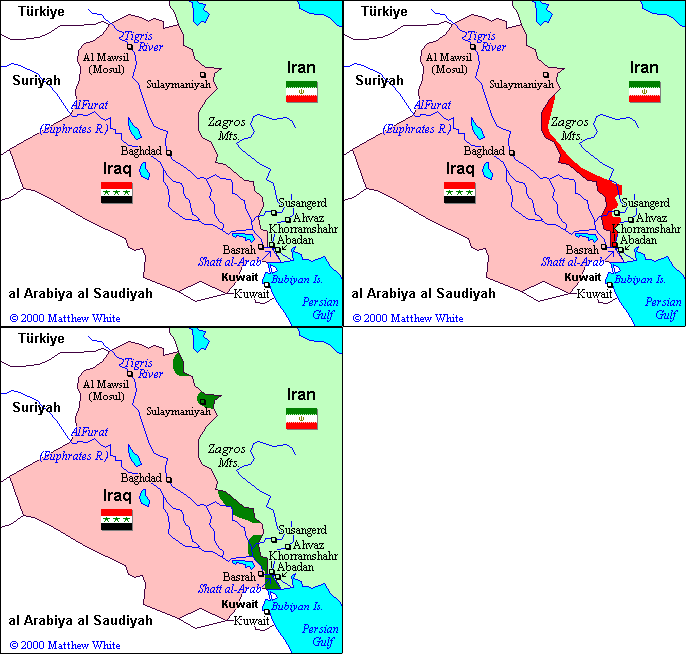
Grunstein on "what has Iran really won?"

Map found here (the flashing bits are the shifting line in the 1980s Iran-Iraq war--another "longest war")

I just really like this bit:

It is by now the consensus view that the primary strategic beneficiary of the Iraq War has been Iran. By this view, the removal of a hostile regime in Baghdad has not only moved Iraq into the Iranian sphere of influence, but has also opened the floodgates for Tehran to extend its influence westward throughout the Middle East. 

This analysis, while compelling, begs the question: If Iran has "won" the Iraq War, just what has it really won? In a best-case scenario of a stable Iraq, it still amounts to a potentially volatile and dangerous relationship, and definitely a high-maintenance one, just next door. If the recent negotiations over Baghdad's coalition government are any indication, maintaining that stability among Iran's Shiite clients, friends and allies in Iraq will require significant diplomatic investment. That investment will only increase once U.S. forces are no longer present to serve as a firewall against potential conflict outside Iran's circles of friends. And in a worst-case scenario of simmering ethno-sectarian violence or outright civil war, Iran has simply inherited a veritable sinkhole of political, financial and military resources.

The Big Bang moves in mysterious ways.

The rest of the piece is a critical deconstruction of the Turkey-Brazil deal and how Iran once again "triumphed."

12:07AM

Divisions within PRC over DPRK?

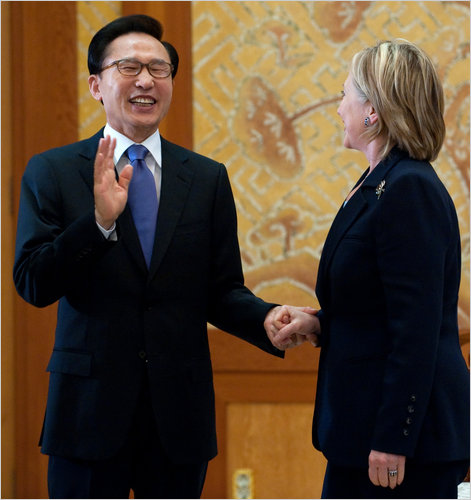
Clinton with South Korea's president last week.

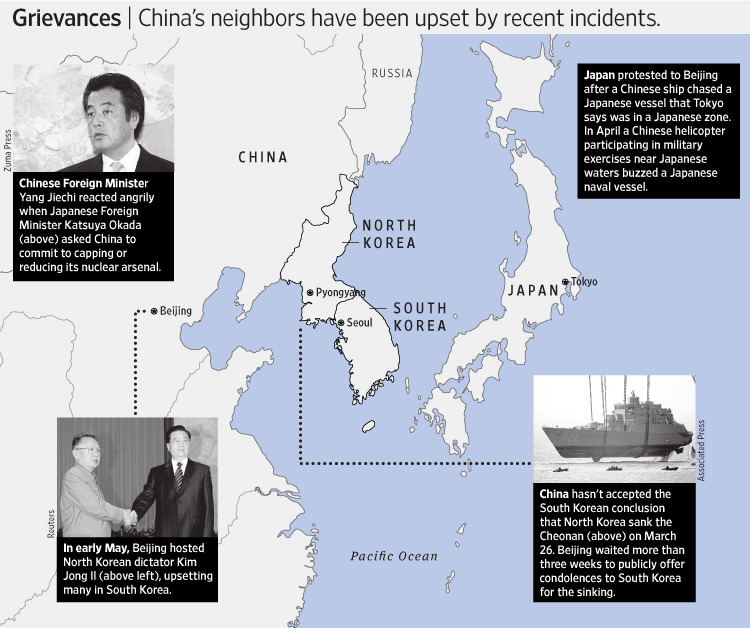
NYT story on perceived divisions within China over how to respond to latest NorKo shenanigans.

While China’s decision-making on core foreign policy issues tends to be secretive, American officials said they had picked up hints that there was some disagreement within the leadership about how to respond to North Korea’s behavior, pitting civilian party leaders against the military.

The debate surfaced last year after North Korea tested a nuclear device, American officials said, and has accelerated since the attack on the South Korean ship, the Cheonan. Chinese civilian leaders have expressed growing puzzlement and anger about the North’s behavior, these officials said, while military officials tend to see the North’s moves as more defensible given the threat North Korea perceives from the United States.

Unsurprising split.  Just interesting that it's becoming apparent to outsiders.

12:06AM

This thing is toking off!

WSJ story on pot store boom across Montana, of all places, replete with an uptick in violence surrounding the stores (fire bombs tossed in windows).  One town saw a rise in ER patients using.

DC and 15 states have passed med marijuana bills, but the cities have been left to deal with them, leading to a lot of confusion.

Montana cop on new pot store:  "Before the doors even open, the parking lot has 300 kids throwing Frisbees and playing Hacky-Sack."

Been there and done that.

There are people who really need and absolutely benefit, and then there's the groundswell anticipating decriminalization.

This will not go smoothly, but it is coming.

12:05AM

Balancing in Asia: no effort required

WSJ story, latest in a long line regarding China's rise/NorKo/etc. Anything that unsettles Asia makes darn near everyone there was to keep America's friendship--and its military in region: South Korea over the crisis, naturally; and Japan over the bases; but also Malaysia and Vietnam, says the piece.

12:04AM

Your globalization $ at work: CA start-up, PRC tech, OH factory, US jobs

WSJ story.

CA start-up Coda Automotive is set to build factory in Ohio with 1,000 jobs, using Chinese technology to make lithium-ion batteries for an all-electric vehicle.

Batteries are too heavy to ship, so Coda wanted a US-based factory.  Until it's up and running, a previous JV set up in Tianjin will make the initial batteries.

12:03AM

Africa's flagships set sail?

WSJ story.

Foreign consumer goods companies from the West have competed in Africa for decades without any real competition from local players.

That changes as Africa's middle class grows.

Now, home-grown companies are expanding aggressively across the continent, eager to accommodate a growing middle-class among the billion-person population.

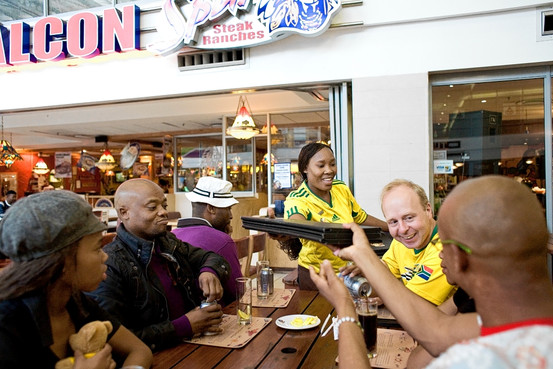
Highlighted is a Kenyan supermarket chain (Nakumatt Holdings), the continent's largest mobile provider (MTN Group) and South Africa's restaurant chain (Spur Corp), among others.  

The supermarket chain modeled itself on Kmart, and the founder's personal hero is Sam Walton.

Ah, but globalization is unraveling--man!

12:02AM

No surprise: hottest job of 2018 expected to be biomed engineers

WSJ story.

The list:

  • biomed engineers up 72%
  • network system analysts (53%)
  • home health aides (50%)
  • personal and home-care aides (46%)
  • financial examiners (41%)
  • medical scientists (40%)
  • physician assistants (39%)
  • skin-care specialists (38%)
  • biochemists and biophysicists (37%)
  • athletic trainers (37%)

To me, that says an aging population, by definition living a lot longer.

12:01AM

Chart of the day: America's "longest war"

USA Today cover story.

When you do the division, you get this for frequencies:

  • 13,000 or so deaths a month, or 400 a day for the Civil War (where both sides are counted in the total);
  • 9200 deaths a month, or 300 a day for WWII;
  • 565 deaths a month, or 19 a day for Vietnam;
  • 308 deaths a month, or 10 a day for the Revolutionary War;
  • 51 deaths a month, or 1-2 a day for Iraq; and
  • 9-10 deaths a month, or one every three days for Afghanistan. 

America has only about 31m people during the Civil War, so the percentage of the population is stunning at 1 in every 50 Americans dead.

The same ratio for WWII (132m population) is 1 in every 325 Americans.

For Vietnam (200m), it's 1 in every 3,450 Americans.

For Afghanistan/Iraq combined (300m), it's 1 in every 56,000 Americans.

A sense of the burden relative to the population and over time.

If we count Afghanistan as a war, I believe it's fair to argue that it's still shorter than our counterinsurgency effort in the Philippines from 1899 to 1913, or roughly 175 months.  We lost 4,200 troops there (24 a month or almost one a day, on average).

12:04AM

The gap between our deep econ-network relationship with China and our paltry pol-mil bond

Been saying this for years: the connectivity skyrockets, but the cooperation does not keep pace.  Politics lags behind economics and security lags behind networking, and the widening gaps are dangerous to all involved.

Pacific Command boss Admiral Robert Willard noted China's "assertiveness" in its regional waters, as captured in an FT story prior to the recent Strategic and Economic Dialogue:

Adm Willard said the US viewed China's growing influence in Asia as positive. But Beijing needed to be more transparent, not only with the US but also with its neighbours.

Adm Willard was speaking ahead of talks with Ma Xiaotian, deputy chief of general staff of the PLA, the first meeting between senior US and Chinese military officers since Beijing suspended bilateral military-to-military dialogue in January after US arms sales to Taiwan.

"US-China military dialogue is officially still in suspension," said Adm Willard, who visited Beijing at the invitation of Hillary Clinton, secretary of state, in the context of the Strategic and Economic Dialogue, the bilateral exchanges that concluded yesterday.

But he interpreted the fact that Beijing had agreed to his presence as a sign it viewed some high-level exchanges as beneficial.

"What was very striking yesterday was my impression of the very advanced, sophisticated and mature dialogue that's occurring across a wide range of subjects between China and the US," he said.

"That is in contrast with a very immature military-to-military relationship."

I would say the admiral hit the nail right on the head.

12:03AM

Another big Chinese investment in African minerals

Pic here, along with stunning accurate 2008 prediction of this investment

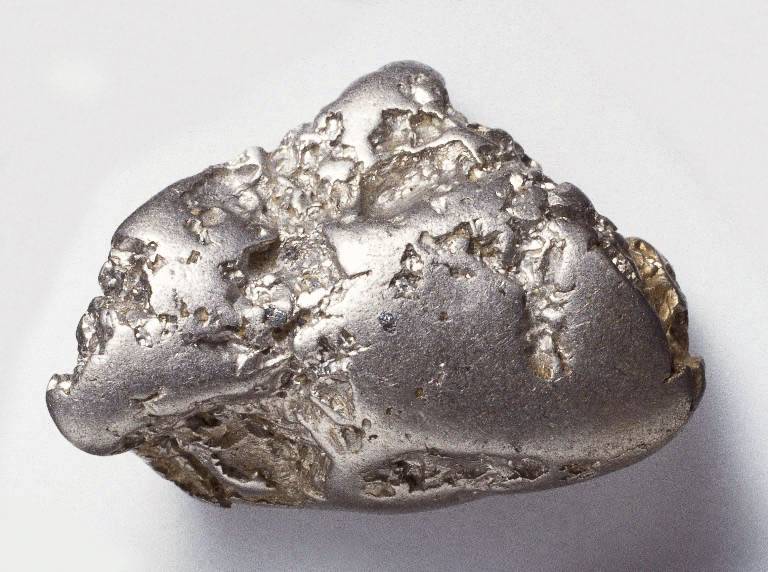
FT story on China investing $877m into South African mining industry--the second largest Chinese investment in Africa outside of oil and the first time China takes a direct stake in Africa's platinum reserves.

South Africa holds an 80% share in global platinum production, so it wasn't a tough prediction to make.

12:02AM

Deep Reads: "The Skeptical Environmentalist" (2001)

Of all the books I've bought over the years, I think I've gone back to this one for data and charts more than any other, which makes sense, because it's a huge meta-data compendium, or basically, Bjorn Lomborg (who made his rep with this book) leveraging hundreds of other people's studies to give the reader a realistic appraisal of the world's state, the amazingly positive trends that got us here, and what's likely to happen going forward.

It is like a bible to me, and I've read everything Bjorn Lomborg has written since.

I like to note that I did my rank-ordering of environmental dangers with an expert group a few years before Lomborg did his own with the "Copenhagen Consensus" crowd of Nobel winners, but that's just my way of unsubtly insinuating that great minds think alike.

And yeah, I wish I had a mind as sharp as Lomborg's when it comes to data.  He really is amazing and always provocative.

Best still:  the guy's optimism.

Not had the pleasure of meeting the guy yet, but hope to someday.

Coolest factoid: his book was published the day before 9/11, and has remained an antidote to end-times pessimism every since.

12:01AM

Movie of My Week: Contact (1997)

I love this movie so much, I even put it ahead of "Close Encounters," which I love for Spielberg's kind take on the government's response (i.e., good people trying to do the right thing--however secretly).

I saw the movie before I read the book, and I've always thought it was Jodie Foster's coolest performance, because her lead character is so compelling and so strong that I just love showing it to my daughters because such films are still maddeningly rare.

I also think it's Robert Zemecki's best film, even better than "Forrest Gump," which is cloying in many places.

Specific things I like: 

  • That stunning opening sequence is a mind-blower (pulling back from Earth and giving you a sense of the reach of radio waves);
  • I love the early sequences with the daughter and father, and how they're used to set up later stuff (I'm also a huge David Morse fan);
  • I love Arroway's obession with her work and especially her sales scene at Haddon industry, when she loses it;
  • I like the long-distance, irregular love story with Matthew McConaughey's spiritually opposite character (a bit didactic, but neat);
  • I love the scenario of the discovery, especially the way Zemecki's paces it and make a mere sound seem so dramatic;
  • I love the scenario of the unfolding of the building of the machine and how the whole discovery of life freaks out the planet in religious terms.
  • I love the Japanese bargaining on the systems integration work and the whole long-term duel between Foster's character and Tom Skerritt's nasty bureaucrat;
  • I love James Woods as the national security adviser and his reasonably justified fears ("Why is it always the consensus of the eggheads . . .");
  • And I especially love John Hurt's "S.R. Haddon" character (both appearances are thrilling [his "Wanna take a ride?" line sends a chill down my spine] and I still cannot understand why he did not receive a supporting actor nomination); and finally,
  • I love how Zemeckis did the whole journey across the universe bit at the end.

I've watched the movie maybe 20 times, and just watched it again this week in my home theater with my eldest son, who declared it the best scifi movie he's ever seen--on the spot!

Kev then threatened to watch it again with a friend he had over and--if he had--I probably would have watched it yet again.

I don't have on Blu-Ray, but will get it eventually.  And yet, watching it on my Blu-Ray machine and my HD projector, I was stunned at how good the print looked. The cinematography on this film, in my opinion, is as good as it gets.

12:06AM

The stunningly sudden glut in natural gas

pic here

FT special on the gas industry.

Gist:  recession plus new shale supplies rebalance global supply and demand dynamic radically.

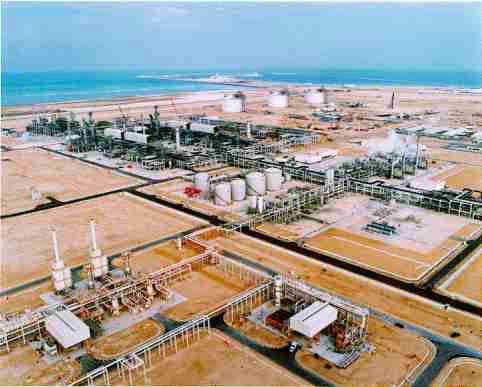
By the end of this year, Qatar will have completed one of the most ambitious industrial revolutions of past decades and in the process helped transform the international natural gas industry.

The small Gulf state this year expects to hit a natural gas export capacity of 77m tonnes a year, enough to supply all the needs of both China and Brazil.

Qatar has become the biggest trader of liquefied natural gas (LNG) in the world and a pioneer – together with the international oil companies it employs – in improving the process whereby natural gas is super cooled and turned into liquid so it can be put on tankers and transported to distant markets.

But the achievement comes at a time when halfway round the world a second, more recent natural gas revolution has also occurred, sending prices to record lows and forcing Qatar and other suppliers to adapt.

While Qatar was busy building its huge LNG complex of miles of winding pipes at Ras Laffan in the barren desert 80km north-east of the capital Doha, independent oil and gas companies in Texas were cracking the technology that would finally give them access to the gas trapped in the solid shale rock scattered across large parts of the US.

The process of breaking up the previously impervious rock, known as “fracking” in the industry, has unleashed a flurry of multibillion-dollar deals, including last year’s $41bn agreement by ExxonMobil to purchase XTO, the shale gas specialist.

European companies, such as BP of the UK, Norway’s Statoil and Total of France have joined the rush, each buying into the shale beds and the expertise ofChesapeake Energy, one of the US’s largest gas producers.

In terms of supply, the shale gas revolution has had a significant impact. In less than five years, the US has gone from seeking new sources of gas from overseas to being self sufficient.

In fact, for the first time in nearly a decade, the US has regained the position of being the world’s largest producer of natural gas. Its reserves life has grown from 30 years to a century.

No wonder energy companies are reluctant to make big infrastructure bets!

Much of Qatar's LNG was set to go to the US (now self-sufficient) and Europe (much less demand and investigating its own shale).  China becomes Qatar's biggest buyer in the short run, as a result, but it too is moving heaven and earth on what is considered to be perhaps the biggest shale gas deposit in the world (in its northwest).

Underlying dynamic:  everybody loves to talk about NOCs (national oil companies) owning the vast bulk of reserves and increasingly dominating the production of the same.  So what are classic Western energy firms to do?  They move into gas, and that creates its own system-changing dynamics.

Old theme of mine:  supply does not equal power.  NOCs can corner oil, and result will be demand shifts to other forms of energy and uses.

Now you get Russia's Gazprom rethinking its whole strategy, and Algeria, another big supplier, calling for a gas OPEC, which went nowhere. 

12:05AM

Collier on how to think about natural resources--very Lomborgian

pic here

Collier op-ed in FT.

The text recalls Bjorn Lomborg's notion that we need to give future generations all the tools and technologies and thus possibilities for an improved standard of living but that we shouldn't think--in a rote fashion--about preserving resources for future generations

Collier's piece worries about the Arctic being somewhat ungoverned and thus subject to plunder, but he emphasizes that the "preservation" model of Western environmentalists is flawed:

The Stern report on climate change is an important example. If transferring a dollar from you to someone in the 23rd century helps them more than it hurts you, then away it should go irrespective of the fact that you worked for it and they did not. While this may describe the ethics of an anthill, it bears little resemblance to any human society.

Both romantics and modellers demand that we be saints. Condemned to fall short of these standards, people retreat into a shrug: God make me good, but not yet. Such costly inertia is avoidable: a more practical common ethics of nature, around which majorities could mobilise, is latent in most societies. It has been crowded out by the noisy battle between the saints and the ostriches.

The valid moral insight in environmentalism is that natural assets are special: we did not create them, yet we are depleting them. But the romantic wing of the movement then wrongly infers that the exploitation of nature intrinsically infringes the rights of the future. Economists should be bringing the insight that natural assets matter not because of their intrinsic purity, but because they are valuable. Our obligation to the future is not to preserve purity but to pass on equivalent value for the natural assets we deplete. If, by converting natural assets into more productive assets, a poor society can escape poverty, then it should do so.

The ethical test is the thought experiment of putting ourselves in the position of some future generation. In an impoverished society, the future will prefer to inherit schools and cities rather than to remain in impoverished purity. This simple ethical test of whether we are infringing the rights of the future is much closer to how we see our obligations than either utilitarianism or romantic environmentalism. Respecting the rights of the future is manifestly more compelling than basing decisions on the esoteric sanctity of the infinite-horizon utilitarian calculus. Recognising that the future may want us to use nature rather than preserve it distinguishes humane environmentalists from romantics: we are the custodians of value, not the curators of artefacts.

The same judgment has to be made regarding natural liabilities such as carbon, where plunder means running up the bill that the future must face. But in a rich society the same ethical test is likely to yield the opposite result. If we spew out carbon we are obliged not to infringe the rights of the future. We would therefore have to bequeath sufficient man-made assets that it feels fully compensated. But since the future will be awash with man-made assets, the cost of compensation would be exorbitant: better in this case to preserve nature.

This, in a nutshell, is my take on development in general.  It ain't about preserving the "sanctity" of impoverished cultures but about enriching and empowering individuals, who can and will change that culture pervasively--if given the chance.

So the question isn't, "What happens when the X runs out?" Rather, it's "What have we created as a result of exploiting that opportunity?"

Tradition is just a snapshot of now; it is always subject to review--and should be.

12:04AM

Wal-Mart plans on capturing its suppliers' supply chains!

Bloomberg story by way of Thomas Frazel.

Gist:

Wal-Mart Stores Inc., the world's largest retailer, is seeking to take over U.S. transportation services from suppliers in an effort to reduce the cost of hauling goods.

The company is contacting all manufacturers that provide products to its more than 4,000 U.S. stores and Sam's Club membership warehouse clubs, said Kelly Abney, Wal-Mart's vice president of corporate transportation in charge of the project. The goal is to take over deliveries in instances where Wal-Mart can do the same job for less and use those savings to reduce prices in stores, he said.

I referenced this in last week's WPR column on the myth of "deglobalization."

This is some serious ambition toward tightening up supply chains.  Brutal to the manufacturers, who now lose economies of scale in their remaining shipments to other retailers--unless they follow suit.

12:03AM

China spans globalization's wealth and poverty

pic here

Trudy Rubin op-ed in Miami Herald via WPR's Media Roundup.

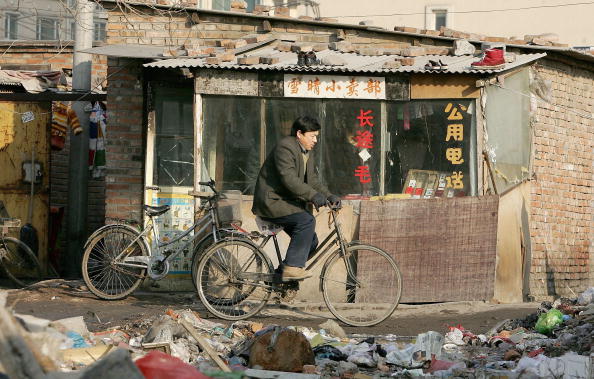
Notion that China contains all four "worlds" of globalization.

I've typically tried to capture this notion by saying that, to make America China's true demographic/economic equivalent, you'd have to invite all of the Western Hemisphere, plus most of Sub-Saharan Africa to come and live inside our territory (we are roughly the same geographic size as China at 9.5m square kilometers).  That way you'd have quite a chunk of rich people, a big middle class, and a huge impoverished rural population.  

Oh, and to make it like China, you have to keep America's pop distro still overwhelmingly concentrated along the coastlines--as it is today.

Rubin leverages the notion of multiple worlds from a Chinese academic (Hu Angang), who says China's "first world" are the coastal cities, and its "second world" is a somewhat affluent belt just inside the coastal line.

That combo makes up about 300m of China's 1.3B.

The "third" and "fourth" worlds are just belts that exist farther inland, with the impoverished western provinces accounting for the bulk of China's most impoverished--and most Muslim and most restive.

So it's a series of north-south bands; the farther in you go, the poorer it becomes.

Old chart, but you get the notion.

Point being, when you think of China, be impressed with the first and second worlds along the coast, but remember that a billion Chinese are still to join that party--by and large.

Thus, China doesn't exactly buy into the notion of being our economic peer--just yet, and really won't have that mindset for a long time. It will also justify all manner of mercantilism and protectionism and tough trading on the basis of needing to make economic development spread inland.  

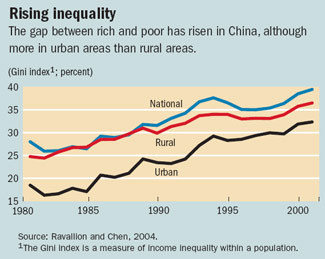
Without it, the Party fears the growing inequality inside China will tear the place apart.

12:02AM

Blast from my past: Barnes & Noble interview re: "Pentagon's New Map" release

An Interview with Thomas P. M. Barnett

Barnes & Noble.com: What is the main theme among the many addressed in your book?

Thomas P. M. Barnett: I specialize in thinking about war -- the seam, so to speak, between war and peace. The shorthand I use for everything else is globalization. Globalization is an all-encompassing compass, if you will. It is why the factory shuts down, why you go back for another degree at 45, why you switch jobs. America must wage a war on terrorism, but if there is a great criticism of this administration and America in general right now, it is that we are waging this war on terrorism without understanding the larger context of everything else. I wanted to write the book because unless we explain it so that it is understood, people on one side are going to shout "Empire" and on the other side are going to shout, "You're not defending America." Neither of those positions gets near to discussing the task at hand or what we need to achieve. The idea of empire is a caricature. If we want to get terrorism to go away, we need to connect the disconnected -- to make them a part of globalization.

B&N.com: What is the meaning of "Map" in the context of your title?

TB: I mean it both figuratively and literally, in a sense. The military uses the term because it likes to view information in a visual fashion. It's just like the original warriors of ancient times who drew plans with sticks in the dirt. Maps are vital for the military. "The Pentagon's New Map" is the new map of globalism. And on this map, where globalization has not spread, there has been violence.

B&N.com: Globalization is a key theme in your book. Please elaborate on it.

TB: What we need to do with the globalization map, so to speak, is to identify the big sources of violence, position ourselves around them, and shrink them over time. We are the only ones who can go somewhere and do things and help. Through our power, military and economic, we can establish stability. We are not interested in empire. When we export security to places that lack it, we do not seek to extend our rule.

Globalization does not come with a ruler -- it comes with rule. We extend rules, not our rule. The map I am talking about is a new map for the globalization for the new century. It is a new understanding of how nations come together. It is not the old balance of power that existed in the 19th century. It's different.

B&N.com: You spend a lot of time distinguishing between those countries and their people that are part of globalization and those that are outside of it. You relate that to the idea of the map, too, don't you?

TB: Yes, the map also has that feeling of a road map. The key question that doesn't get asked enough concerns the makeup of that global map. Where is it leading? The new map says that two-thirds of humanity is in what I like to call "the club." One-third is not. In the end, what shrinks this vital gap is money and investment. That's how we got China on board.

B&N.com: How did 9/11 change the basic defense posture of the United States?

TB: Since we created the Department of Defense in 1947, we have prepared for a war with a great power. But 9/11 transformed all that. We had to go to high-tech and completely alter the way we looked at things. We learned that traditional definitions of war do not exist anymore. We are a military made to fight other militaries, but the fact is there is no one left to fight on a scale like ours. Now the grand historical struggle is between those are willing to integrate into the new global economy and those who are not. What we had driven home to us on 9/11 is that groups like al-Qaeda want to hijack societies like Saudi Arabia and Afghanistan and disconnect them from the future. There is pain in what I call the integration process of these societies outside the globalized world.

B&N.com: You point out that, surprisingly, only a very small portion of the oil that America consumes comes from the Persian Gulf. Where does the Persian Gulf oil go?

TB: Only 40 percent of our energy is oil and only half of our oil comes from abroad. Only one-fifth of what we import is from the Persian Gulf. So, the oil we import from the Persian Gulf is only in the single digits. What people need to know is that the Persian Gulf provides oil for the global economy. We get most of our imported oil from Mexico, Canada, Venezuela, West Africa, Nigeria, Angola, Chad, and the North Sea. The important thing is that global energy markets have regionalized. Remember, OPEC includes Mexico and Venezuela. It is important to realize that Persian Gulf oil -- 60 percent of it -- goes to developing Asia. Those countries are overwhelming consumers of oil and Persian Gulf oil.

B&N.com: You write about the flow of oil as being central to your theory of the new kind of war and globalization. Could you elaborate on that?

TB: Remember, the key thing is that oil has to flow, investment has to flow, people have to flow, and security has to flow. Again, to emphasize that theme, war falls within that context of everything else. There are the four great flows, so to speak, that define globalization's ability to expand: They are the flow of energy, the flow of people, the flow of investment, and the flow of security. Without security, energy won't move, people won't move, money won't move. So the notion that if America pulls back its military from the world, this will somehow lead to less conflict and more stability is wrong.

Security that American military strength provides is as important as any of those other flows. If you remove that security, you will feed the disruption of the flow of people, investment, and energy. Walls will go up and globalization can be killed. That is one thing that the American public does not understand. Our export of security is one thing -- it does not mean exporting arms. It means paying attention to mass violence around the world. The Department of Defense is the world's largest consulting force. It goes to where the "client," so to speak, lives. The American public only wants to hear about the exit strategy. But "the boys" are not coming home until we make globalization truly global. People don't want to hear about that long-term effort.

B&N.com: The last few years have been so harrowing. Are you optimistic or pessimistic?

TB: I am optimistic about the future. But I don't see how you can expect other people to sacrifice or put trust in government unless you are telling them a happy ending. The failure of the Bush administration is not the action or the deeds but the words that are failing. And we need more out of a Democratic contender than to blame a Bush administration. Bush needs to define a happy ending, and he needs to define a finish line in the war on terrorism. Yes, we are all against empire, but what we need to know what he is for.

People might say a "happy ending" is naive, but there is enough in the book for me to show that I am not "a wooly-headed peacenik." I come from the world of national security -- I work at the Naval War College -- I can say that there is a happy ending if you have the courage to recognize the path that lies before us and the tremendous opportunity that lies beyond. The society is on the verge of eliminating war as we know it. That is what the book seeks to describe.

12:01AM

Brief Reminder: The beginnings of System Administration

Fairly self-explanatory slide I used in the original brief I delivered for the Office of Force Transformation.  Wasn't a cornerstone slide or anything like that, but I did have it in for certain audiences.

Basic notion is to show that the SysAdmin activity really started about the same time (mid-1980s) when Soviets were deep into their withdrawal from mischief-making in the Gap (curtailing or ending aid to Countries of Socialist Orientation) as part of the Gorbachev-led rethink of foreign policy and relations with the West.

The first great SysAdmin op, in my mind, was the escort ops during the "tanker war" between Iran and Iraq. It was rather purely designed to be a system-stabilizing effort and it worked magnificently.  After that, we're into the sheriff work:  arrest Noriega, oust Iraq from Kuwait, stabilize Somalia, the Balkans stuff, then Afghanistan-Iraq-and-associated-GWOT (as it was then known: global war on terror).  

Meanwhile, the Sovs fall off the map and the only thing capturing the Leviathan's long-term attention is the possibility of casting China as a semi-hostile threat of "near-peer" status (remember, this is before our growing financial connectivity with China took off or became widely recognized).  

I remember this chart as a 2002-2003 slide.

12:10AM

Gates' "final battle" at the Pentagon

Nice editorial by WAPO.

The set-up:

Robert M. Gates spent his first two years focused on the wars in Iraq and Afghanistan, in each case backing a "surge" to turn around U.S. fortunes. Now, with his time in office probably dwindling, he's taken on a final mission: reforming Pentagon spending so that the United States will be able to maintain its military forces in an era of fiscal austerity. Though the outcome of a war isn't at stake, it's crucial that Mr. Gates succeed.

Gates strives to keep his divisions and such in this uncertain world, so he targets the "tail" behind the "tooth."

This is, to use some military jargon, a target-rich environment. Since Sept. 11, 2001, the Pentagon budget has nearly doubled, not counting the costs of Iraq and Afghanistan. Much has gone to non-military ends. Health-care costs, for example, have risen from $19 billion to $51 billion and make up nearly a tenth of the entire budget. A military family of four pays an average of $1,200 annually for health care, compared with $3,200 for other federal employees. Wages have risen 43 percent, compared with 32 percent in the private sector.

While the military's overall size has shrunk since the Cold War, generals, admirals and their headquarters have remained intact. The private sector has flattened and streamlined management since 2000, but the number of levels of staff between the secretary of defense and a line officer has grown from 17 under Donald Rumsfeld to as many as 30 under Mr. Gates. The latter likes to point out that a request for a dog-handling team in Afghanistan must be approved by five four-star headquarters.

A seasoned veteran of Washington, Mr. Gates doesn't aim for radical change. He'd like to cut $15 billion or so from these costs in the 2012 defense budget. The problem, of course, is Congress.

A real sign of presidential courage would be to veto a congressional defense bill loaded up with the usual pork, like, as noted in the editorial, a second engine for the F-35 fighter that the Pentagon says it does not want.

Reminds me of the line from the "Contact" (from the military industrialist S.R. Haddon played by John Hurt in my all-time favorite role of his):

First rule in government spending: why build one when you can have two at twice the price?

12:09AM

System perturbed? You bet. Rule-set reset? Did not take.

WAPO piece saying no comprehensive global rules likely to emerge from recent financial crisis primarily because the EU and the US cannot agree on any one approach.  We agree on desired ends; we cannot yet agree on chosen means.

This was always the downside of the collective stimulus packages working so well in the short run: the crisis does not end up being enough to foster systemic change.

The go-your-own-way approach undoubtedly leave us with a patchwork of rules, whose gaps will inevitably be exploited--once again--by innovators both well-meaning and nefarious:

. . . a resulting patchwork of reforms could allow companies to continue exploiting national differences by moving operations to countries where conditions are most favorable and thwart the efforts of regulators to spot financial threats early on. The outcome, for instance, could be very different ways of banking in New York and the financial capitals of Europe, prompting leading American firms to shift their riskiest activities overseas beyond the purview of U.S. regulators.

The evolving divide, analysts say, is spooking investors and contributing -- along the European debt and euro crisis -- to the sharp losses in recent days on stock markets from New York to Frankfurt to Tokyo.

Plenty of points of agreement (e.g., next time, the financial community itself must pay), the article notes, but wider perceptions of profound philosophical differences creates uncertainty in the system.