Buy Tom's Books
  • Great Powers: America and the World After Bush
    Great Powers: America and the World After Bush
    by Thomas P.M. Barnett
  • Blueprint for Action: A Future Worth Creating
    Blueprint for Action: A Future Worth Creating
    by Thomas P.M. Barnett
  • The Pentagon's New Map: War and Peace in the Twenty-first Century
    The Pentagon's New Map: War and Peace in the Twenty-first Century
    by Thomas P.M. Barnett
  • Romanian and East German Policies in the Third World: Comparing the Strategies of Ceausescu and Honecker
    Romanian and East German Policies in the Third World: Comparing the Strategies of Ceausescu and Honecker
    by Thomas P.M. Barnett
  • The Emily Updates (Vol. 1): One Year in the Life of the Girl Who Lived (The Emily Updates (Vols. 1-5))
    The Emily Updates (Vol. 1): One Year in the Life of the Girl Who Lived (The Emily Updates (Vols. 1-5))
    by Vonne M. Meussling-Barnett, Thomas P.M. Barnett
  • The Emily Updates (Vol. 2): One Year in the Life of the Girl Who Lived (The Emily Updates (Vols. 1-5))
    The Emily Updates (Vol. 2): One Year in the Life of the Girl Who Lived (The Emily Updates (Vols. 1-5))
    by Thomas P.M. Barnett, Vonne M. Meussling-Barnett
  • The Emily Updates (Vol. 3): One Year in the Life of the Girl Who Lived (The Emily Updates (Vols. 1-5))
    The Emily Updates (Vol. 3): One Year in the Life of the Girl Who Lived (The Emily Updates (Vols. 1-5))
    by Thomas P.M. Barnett, Vonne M. Meussling-Barnett
  • The Emily Updates (Vol. 4): One Year in the Life of the Girl Who Lived (The Emily Updates (Vols. 1-5))
    The Emily Updates (Vol. 4): One Year in the Life of the Girl Who Lived (The Emily Updates (Vols. 1-5))
    by Thomas P.M. Barnett, Vonne M. Meussling-Barnett
  • The Emily Updates (Vol. 5): One Year in the Life of the Girl Who Lived (The Emily Updates (Vols. 1-5))
    The Emily Updates (Vol. 5): One Year in the Life of the Girl Who Lived (The Emily Updates (Vols. 1-5))
    by Vonne M. Meussling-Barnett, Thomas P.M. Barnett, Emily V. Barnett
Search the Site
Powered by Squarespace
Monthly Archives
12:08AM

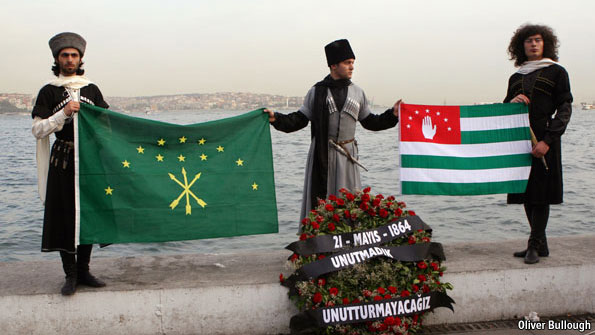
Diasporas around the world, unite!

Economist article, which highlights a favorite theme of mine: ย globalization allows for enclavism to flourish even as it forces society to integrate with the larger whole and submit to its overarching rule-sets.

Starts with a meeting in Chicago of NRIs (non-resident Indians as India refers to its ex-pats) who want to encourage market and political reforms back home. ย The transmission of such ideas is facilitated by globalization.

The old ethnic lobbying model was regressive and guilt-ridden: ย ex-pats working to get their adopted government to support hardline causes back home or supporting them directly themselves with donations. That model dissipates more and more as immigrants are more easily assimilated and no longer form a reliable lobby on such issues.

So what happens when grievances no longer dominate the ex-pat agenda? ย You see the residual nationalism refocused on progressive reforms--as in, give your homeland some of the skill and vision you picked up in your successful ex-pat lives abroad.

The social networks facilitate all this wonderfully.

12:07AM

What's good for China is good for globalization


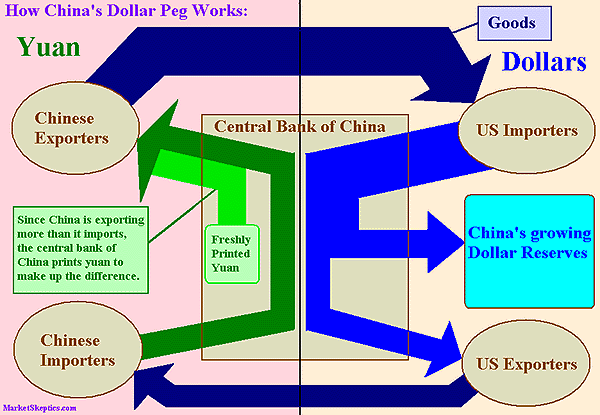
chart here

An FT op-ed by the president of the Chinese Academy of International Trade and Economic Cooperation and the chairman of the Center for America-China Partnership, timed to the recent Strategic and Economic Dialogue in Beijing.

Nice summary of China's thinking regarding our bilateral economic relationship:

America is used to having it all its own way.  In 1972, as the US opened diplomatic relations with China, it abandoned pegging the dollar to gold.  That enabled it--through its monopoly on printing US dollars--to create huge trade and investment advantages.  Its economy grew strongly as it managed the value of its currency at the expense of other nations.

Washington has not always fully acknowledged that from 2000, the year China joined the World Trade Organization, to 2008 the US dollar declined against many currencies, while from 2005 to 2008 Beijing gradually increased the US dollar exchange rate of the renminbi by 21 percent.

The US stimulus plan increased America's debt and deficits and will decrease the value of the dollar. China increased its holding of dollars as America's other trade partners reduced theirs.  As the US financial crisis loomed, China pegged the renminbi to increase stability and exert a positive influence on its economic recovery.  It will keep a relatively stable renminbi exchange rate to ensure its economic growth is steady rather than uncontrollable, which would harm all nations. Currently, China is providing stability as the largest holder of US government debt and US dollar-denominated reserves.

China-US relations changed when the world learnt that America's financial system would collapse unless the government saved insolvent US-based global banks, insurance companies and carmakers.  The bail-out turned the US government into the largest shareholder of formerly privately-owned companies, subsidizing their commercial failure.  Laissez faire theories, which US policymakers still demand that China adopt, were suddenly replaced by massive US government control of market forces.

The US often pursues policies that are "win-win" for itself alone.  Its policymakers would undermine China's vital national security and economic interests while seeking China's help in protecting America's vital interests.  But the reality is that the policies America proposed are implementable and sustainable only if they are beneficial also for China.  The Strategic and Economic Dialogue should focus on new US policies instead of trying to change China's policies, which are essential for global economic recovery.

An excellent and hard-to-refute summary argument.  Our success in encouraging China's rise is such that it can now legitimately claim to be working on behalf of global economic security as much or more than America. In short, it can make the claim that "what's good for China is good for the world," an argument to which only America could lay serious claim in past decades.

This is why we've never going to war with China; the codependency on globalization is profound.

12:06AM

Gaza's tunnel economy

image here

Naturally, the Israeli graphic focuses on weaponry, but the larger truth is this is how most of the economy works--sad to say.  It's like one giant "Shawshank Redemption" (or a gritty "Hogan's Heroes," depending on your ideological take).  

Either way, it's an imprisoned society doing what people do when they face such circumstances:  they adapt and work around the best they can--and the middlemen profiteer nicely.

Key point from FT story:

For close to three years [the length of the blockade], the tunnels below Rafah have offered a unique lifeline to Gazans, who are otherwise deprived of all but the most basic humanitarian supplies.  They have also allowed Hamas, the Islamist group that controls the strip, to replenish its coffers and rebuild its military arsenal, making the tunnels a target for Israel.

The 200-300 surviving tunnels (there are air strikes) have become so efficient that "shops all over Gaza are bursting with goods."

But the local businessmen say this is no answer.  They insist that the smugglers "are creating a false sense of economic improvement while damaging the territory's battered private sector."  In other words, the tunnels bring in the same goods that could be produced locally, providing formal sector jobs--if the blockade was lifted.

One entrepenuer:

We are just replacing legitimate businessmen with illegitimate businessmen.

This is what gets you aid flotillas.

12:05AM

Coming soon to a home theater in your basement!

The gist:

Major Hollywood studies and one of the country's largest cable operators are in discussions to send movies to people's living-room TVs just weeks after films hit the multiplex, a step that would shake up film distribution.

The norm is four months.  The premium charge would be 20-30$ extra.

Understand this:  I take my brood of six total to an IMAX and I drop $100 on tickets and sundries, so I will consider this a great bargain, especially since my high-def projector's always in focus, my sound is excellent, and I control the projector and the audience.

This could come as early as fall, with the first movies affected being those at the tail end of the year or early 2011.

The driver is obvious:  Hollywood is scrambling to figure out how to cut its declining revenue on video and adjust itself to the emerging realities of digital on demand.

12:04AM

Another Big Pharma purchase downmarket

Abbott buys Piramal Healthcare's generic drugs unit for almost $4B, "the latest in a series of deals by Western drug makers to strengthen their presence in emerging markets including India."

This is good, but it also undercuts Big Pharma's arguments about how there's unsafe drugs in unsafe markets and safe drugs in safe markets and never the two shall meet.

I support this M&A activity because I believe the bottom-of-the-pyramid markets should inform Big Pharma as to how it should be able to deliver drugs a lot more cheaply back home.

And it damn well better do so, because those of us American who buy their prescription drugs via Canadian online drugstores know full well that there's no reason for us to be paying these prices when nobody else in the world--either developed or emerging--seems to.

Abbott's big interest in India is that it's mostly self-pay (70%), as opposed to government-controlled--as in Europe.  So Abbott hopes to balance the belt-tightening in the West with the expanding New Core middle class being willing--and able--to spend more on their healthcare.

12:03AM

Long war planning: for when Obama decides to re-engage--or the world decides to re-engage Obama

Gist of Mazzetti piece in NYT:

The top American commander in the Middle East has ordered a broad expansion of clandestine military activity in an effort to disrupt militant groups or counter threats in Iran, Saudi Arabia, Somalia and other countries in the region, according to defense officials and military documents.

The secret directive, signed in September by Gen. David H. Petraeus, authorizes the sending of American Special Operations troops to both friendly and hostile nations in the Middle East, Central Asia and the Horn of Africa to gather intelligence and build ties with local forces. Officials said the order also permits reconnaissance that could pave the way for possible military strikes in Iran if tensions over its nuclear ambitions escalate.

While the Bush administration had approved some clandestine military activities far from designated war zones, the new order is intended to make such efforts more systematic and long term, officials said. Its goals are to build networks that could “penetrate, disrupt, defeat or destroy” Al Qaeda and other militant groups, as well as to “prepare the environment” for future attacks by American or local military forces, the document said. The order, however, does not appear to authorize offensive strikes in any specific countries.

In broadening its secret activities, the United States military has also sought in recent years to break its dependence on the Central Intelligence Agency and other spy agencies for information in countries without a significant American troop presence.

General Petraeus’s order is meant for small teams of American troops to fill intelligence gaps about terror organizations and other threats in the Middle East and beyond, especially emerging groups plotting attacks against the United States.

But some Pentagon officials worry that the expanded role carries risks. The authorized activities could strain relationships with friendly governments like Saudi Arabia or Yemen — which might allow the operations but be loath to acknowledge their cooperation — or incite the anger of hostile nations like Iran and Syria. Many in the military are also concerned that as American troops assume roles far from traditional combat, they would be at risk of being treated as spies if captured and denied the Geneva Convention protections afforded military detainees.

The precise operations that the directive authorizes are unclear, and what the military has done to follow through on the order is uncertain. The document, a copy of which was viewed by The New York Times, provides few details about continuing missions or intelligence-gathering operations.

Several government officials who described the impetus for the order would speak only on condition of anonymity because the document is classified. Spokesmen for the White House and the Pentagon declined to comment for this article. The Times, responding to concerns about troop safety raised by an official at United States Central Command, the military headquarters run by General Petraeus, withheld some details about how troops could be deployed in certain countries.

The seven-page directive appears to authorize specific operations in Iran, most likely to gather intelligence about the country’s nuclear program or identify dissident groups that might be useful for a future military offensive. The Obama administration insists that for the moment, it is committed to penalizing Iran for its nuclear activities only with diplomatic and economic sanctions. Nevertheless, the Pentagon has to draw up detailed war plans to be prepared in advance, in the event that President Obama ever authorizes a strike.

Doesn't signify anything other than our military plans to be ready, no matter what the leadership decides.  The alternative is to do nothing and then suffer the headlines about how, "Prior to the intervention, the Pentagon didn't even have maps for the areas in question!"

After all, this is why you have Special Ops guys.

12:02AM

Don't stare into her eye!

I call her Rasputin, because she's Siberian too!

That's Sasha, our oldest of three Siberian cats.  Her right eye is permanently dilated--a defect from birth.  We noticed it when she was a kitten, and after a visit with a vet eye specialist, realized it was a rather harmless imperfection that could not be corrected.

Frankly, you forget about it because her eyes are rather dark to begin with.  

But then you snap a flash like that and see the flackback from the back of her retina and it's rather eye-catching!

12:01AM

Chart of the day: tracking China's economy

A Chinese business research org, after four years of effort, comes up with a new monthly index of leading indicators designed to give the public--and government--some deeper sense of where things are headed economically.  The government's stats are notoriously patchy, so the Conference Board came up with six:


  1. Expectations of consumers
  2. Lending by banks
  3. Supply of raw materials to industries (central bank survey)
  4. New floorspace being constructed
  5. Export orders received by firms
  6. Supplies delivered to exporting firms.


But because even that leading index is considered a bit crude, the Board simultaneously puts out a monthly current or "coincident" index.  The current index is more volatile than the leading one, because Chinese bureaucrats have a tendency to smooth out reality in their data.

The proof in the pudding?  The Board retroactively applied the indices all the way back to 1986 and showed how it would have predicted the major downturns since.

A nice little step toward managing things better.

Take away:  we have the tendency to assume China's leadership somehow knows more about its economy than our leadership does about ours. The truth is the exact opposite.

12:51PM

Esquire's The Politics Blog: The Real Israeli Raid Fallout: Turkey with a Bomb?

If you look beyond the international shouting match that began on Monday after Israel botched its handling of a Turkey-sponsored aid flotilla bound for Gaza, well, things look pretty shocking. Just because at least nine people are dead — Western casualties included — doesn't mean the boat raid itself is what "has the makings of a huge international fracas." And just because the Turkish foreign minister says "this attack is like 9/11" — which it isn't — doesn't mean Tel Aviv will take its eyes off what the Israelis actually perceive to be the larger threat: Iran's nuclear weapons.

Read the full post at Esquire.com's The Politics Blog.

12:09AM

There is no Plan B for Afghanistan

Karen DeYoung piece in WAPO underscores the bum's rush mentality at work in the Obama administration:

The Obama administration's campaign to drive the Taliban out of Afghanistan's second-largest city is a go-for-broke move that even its authors are unsure will succeed.

The bet is that the Kandahar operation, backed by thousands of U.S. troops and billions of dollars, will break the mystique and morale of the insurgents, turn the tide of the war and validate the administration's Afghanistan strategy.

There is no Plan B.

The deadline for results is short: Administration officials anticipate that the operation will form the centerpiece of a major strategy assessment due in December and will justify the first withdrawals of U.S. troops from elsewhere in Afghanistan in July 2011. Although operations initiated last winter in southwestern Helmand province will continue, and new troop deployments are scheduled this year for northern and eastern Afghanistan, little else will matter if the news from Kandahar is not good.

The urgency and the difficulty of the task were illustrated Saturday when the Taliban launched an unprecedented rocket and ground attack against the Kandahar air field, NATO's largest installation in southern Afghanistan and the headquarters of the upcoming offensive. Several coalition troops and civilian employees were wounded when rockets sailed over perimeter fortifications, but gunmen who tried to fire their way inside through a gate were unsuccessful, the U.S. military said.

Officials have described the offensive's blend of civilian and military operations as the first true test of the counterinsurgency doctrine adopted five years ago on the eve of the 2007 surge in Iraq, but since only imperfectly applied. As troops battle insurgent forces entrenched among the population on the outskirts of the city, the birthplace of the Taliban movement, U.S.-mentored Afghan police will establish a presence in the relatively secure center.

Scary to think this rush job is being described as the "first true test of the counterinsurgency doctrine."  Last time I checked, the doctrine didn't say, "Do a half-assed job for the first seven years and then cram a serious effort into a window of several months, making a do-or-die show of force in a single city."

We all hope it works, but this is not a seriously patient test of anything other than Obama's intense desire to quit the place amidst a good showing.  

There has been no significant regionalization of the solution set.  Instead, we get this showpiece showdown.

Tell me that doesn't strike you like magical thinking?  "If we can make it work in Kandahar, then the Afghans themselves will make it work throughout the rest of the country!"

I have a bad feeling. 

Even more so when I hear Obama saying his new national security strategy will create a new "international order" based on diplomacy and engagement.  An unimpressive showing in Afghanistan will render that vision DOA--no matter what pretty words are attached.

12:08AM

The invasion of the hypermarkets!

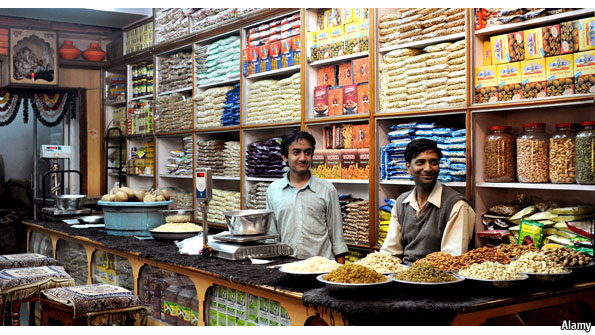
Carrefour plunges into India, putting all manner of corner markets at risk.  It follows Wal-Mart, which opened its first store in the north last year.

For now, supermarkets account for only 5% of grocery sales in India, where middlemen rule.  Laws prevent outsiders from coming in.

But that will inevitably change, not because of the big, bad foreign hypermarkets, but because India's emerging and voluminous middle class will demand more than one brand of rice at one price.  Already, Wal-Mart plans a dozen more stores and reports very positive noises coming from the bureaucracy on this subject.  Why?  A government-sponsored study said that the small shops, when presented with such challenge, lost a lot in the first year but then recovered, presumably by selling differently to maintain their niche rather than their monopoly.

Long-term project by Wal-Mart and Carrefour.  Only the deep-pocketed should apply.

But serious profits await for the stubborn and persistent.

12:07AM

The Sri Lankan option:  details

map here

Little poor Sri Lanka is suddenly a global model of successful COIN.  Everybody seems to forget how long it took (it stretches back to 1983) and instead want to know how the decisive punches were landed.

Louise Arbour, head of the International Crisis Group, sums up the model thusly:


  1. Full operational freedom for the Army to pursue scorched-earth tactics;
  2. Little concern for noncombatant deaths (pretty much a requirement for #1); and 
  3. Dismissing international and media protests regarding #1 and #2.

Judging by Israel's latest mistakes in mishandling the protest flotilla (pen knives and deck chairs = a dozen-plus dead?), Tel Aviv is absorbing the message alright.


12:06AM

Whither Central Asia: the South Korean model

An exploration by Banyan in The Economist of the lack of progress toward democracy in Central Asia--and why it will matter more in coming years.

Nice point:  "Central" Central Asia is not, but rather a true periphery--or in my vernacular the Gap's hernia in Asia.

Key point I've been making for a long time WRT the Shanghai Cooperation Organisation:  "Not only America but also Russia and China view the region as a bulwark against militant Islam."  It either goes NE from the Persian Gulf or SW into Africa--or both. We create Africom in Africa as our instrument of bulwark, and Russia and China instinctively reach for what becomes the SCO.  Same concept, similar execution.

But what really seals Central Asia off from radical Islam is being pulled into China's economic orbit, thanks to mineral and energy resources--a 50-fold increase in trade since 1990.  Meanwhile, the West offers aid and advice.

But it's South Korea's growing presence that is the subject here, as well as the admiration for its national development model held by Uzbek president Islam Karimov, who is allegedly obsessed with the nation and its "cleanliness and order."

The analysis:

Yet Mr Karimov and others seem fundamentally to misunderstand the Korean model.  Although government resources were channelled to favoured companies, these firms then had fiercely to compete among themselves and on world markets.  In Central Asia the most successful companies are sinecures of nepotism.

What is more, South Korea's transition to liberal democracy entailed grassroots activism as well as top-down guidance.

Meaning the educated growing middle class was crucial.

Meanwhile, China is described as learning from Kyrgyzstan's mistakes by cracking down on its own NGOs.  

Sounds like China's got the wrong model.

12:05AM

Four approaches to fixing water

Economist editorial.

Great line:  "Although mostly unpriced, it is the most valuable stuff in the world."

A very true observation:  "So far the world has been spared a true water war, through the belligerency in Darfur comes close to being one . . .."  

No, the farmer and the cowboy are rarely friends.

The four obvious fixes:


  1. Improve storage and delivery--much of which comes down to fixing leaky pipes
  2. Make farms less thirsty--guaranteed requirement with global warming/droughts
  3. Better desalinization technologies
  4. "Unleash the market on water-users and let the price mechanism bring supply and demand into balance."


The clear way forward is--unsurprisingly--to do all four.

Lomborg makes the argument in various places that, if just #1 was done, there'd be more than enough water to go around.

GMOs are the unlocking mechanism on two.

Desal techs are coming and the price of that falls every time another major metro joins the experiment, but we're still talking less than 1/2 of one percent of fresh water and takes a lot of energy.

The biggest holdup is the widespread notion that water is a free good.

Then again, I've watched Americans change quite a few habits WRT drinking water in the past couple of decades--a process that should be joined regarding usage in the house.  But again, all this pales to the choices made by farmers and governments working with farmers.

And that's where I think work such as Venter's can be hugely impactful.

12:04AM

More on Venter's bid for godhood

FT full-page "analysis," plus Economist editorial and briefing.

FT first:

The first application for synthetic genomes may be the rapid development of new flu vaccines . . . "If this technology had been available last year, we could have cut the period needed to make a vaccine for H1N1 by 99 percent," says Dr Venter.  "We could have done it in a day."

The basic reminder:  most life extension is accomplished by defeating everyday disease, not revamping the body.  So the benefits of life extension tend to be fairly democratic, meaning everybody gets them--and not just the super-rich.

Venter, as indicated before here, is focused on creating algae that can suck CO2 out of the air and produce hydrocarbons--great stuff that should be happening here in America. 

From The Economist:

Is the answer lots of new rules?  The better answer is profound openness on developments, so a vote for open-source.  

A key glimpse of the future:  the falling cost of analyzing DNA sequences and the faster and cheaper DNA synthesis.

12:03AM

It's getting better all the time

Matt Ridley hawking his new book, "The Rational Optimist," in the WSJ weekend journal.

The line that got me from the piece, which is good:

Trade was the most momentous innovation of the human species; it led to the invention of invention.

More:

Trade is to culture as sex is to biology.  Exchange makes cultural change collective and cumulative.  It becomes possible to draw upon inventions made throughout society, not just in your neighborhood.  The rate of cultural and economic progress depends on the rate at which ideas are having sex.

Dense populations don't produce innovation in other species. They only do so in human beings, because only human beings indulge in regular exchange of different items among unrelated, unmated individuals and even among strangers. So here is the answer to the puzzle of human takeoff. It was caused by the invention of a collective brain itself made possible by the invention of exchange.

Once human beings started swapping things and thoughts, they stumbled upon divisions of labor, in which specialization led to mutually beneficial collective knowledge. Specialization is the means by which exchange encourages innovation: In getting better at making your product or delivering your service, you come up with new tools. The story of the human race has been a gradual spread of specialization and exchange ever since: Prosperity consists of getting more and more narrow in what you make and more and more diverse in what you buy. Self-sufficiency—subsistence—is poverty.

The fundamental rule-set that underlies all my thinking: connectivity drives code (my security focus) but likewise wealth (my argument that globalization is beneficial).

Strong finish:

The process of cumulative innovation that has doubled life span, cut child mortality by three-quarters and multiplied per capita income ninefold—world-wide—in little more than a century is driven by ideas having sex. And things like the search engine, the mobile phone and container shipping just made ideas a whole lot more promiscuous still.

Again, so much for the myth that we now enter a great period of deglobalization just because of the financial crisis of the past year-and-a-half.  Also, you realize what BS it is to declare globalization some top-down-driven, elite conspiracy.

People connect because they instinctively know it brings them a better, safer, more prosperous life.

Dream all you want about communitarian enclavism as the great alternative salvation, and then realize that it too will be accommodated under globalization--not as a solution but as a means of exploring and retaining individual identity.

12:02AM

Face recognition: the global ID card

Pic here.  FT article.

Google, like Facebook and just about everybody else on the web right now, is suffering privacy issues, hence it has "put the launch of controversial facial recognition technology under review."

But no one expects, argues the article, that Google will back off from the technology, as all sorts of powerful face recognition techs are just hitting the market.

Hell, my new--and tiny--handheld Canon HD digital camcorder/camera does a fascinating job of spotting and tracking faces live as I film or shoot, so if that low-level capacity has reached everybody's personal cameras, you just know that far more profound technologies are being massed by major players.

Most of us have bumped into this technology in travel or across our work days, and there's long been the simple stuff for identifying faces of friends in programs like Apple's iPhoto.  The iPhone's got that bit where you record a snippet of a song and then search the web for its title, so no surprise that companies are rolling out similar technology that allows you to do the same with faces off your phone.

One telecom exec: 

There isn't a single mobile company that isn't interested in this. There are some 800m camera-equipped phones sold each year, but most people don't really use the cameras.  Mobile phone companies are looking for ways to enhance the camera experience.

The fear is easy to imagine:  the ability to snap a photo of somebody, find out who they are, and then be able to pull info up on them instantly, increasing the capacity of stalkers everywhere. Naturally, an Israeli start-up firm, Face.com, is at the forefront of the technology, having already scanned 9bn photos, yielding 52m identities.  Face.com admits it is still defining the safeguards on such a system.

But some smart words from an exec of a Swedish tech firm:

Now people are scared when they see [facial recognition products], but three or our years from now it won't be like that. At the moment, it is hard to control privacy on social networks, but it won't always be that way.  We will see a lot of legal cases over this, and a lot more control given to the user.

I believe he's right, and that this is the normal catch-up phenomenon on rules.

Larger point:  this will be a powerful security tool in a world where violence has largely migrated down to the level of individuals.

12:01AM

Chart of the day: Water, water--everywhere

Just a nifty chart from a recent Economist special report on water.

The basics of the planet's layout when it comes to water.

The bits that always catch your eye:


  • Only 2-3% of the water in the world is fresh, or non-salt water
  • Of that, much is held in glaciers and ice caps
  • Of the tiny fraction that is surface water, most of that is lakes.


The most counter-intuitive for me is that when we talk of water, it's mostly about rivers, but when you check the numbers, rivers are only 1.6% of surface/atmospheric water, which is 0.4 percent of fresh water, which is 2.5% of the world's water. 

The other big counterintuitive reality: domestic use of water is peanuts compared to agricultural.


10:01AM

WPR's The New Rules: Whatever Happened to Deglobalization?

In the midst of deep crisis, cooler heads rarely hold sway -- at least in the public discourse.  Thus it was that just a year ago, we heard from many experts -- and joyous activists -- that globalization was on its deathbed: The global economy was on the verge of a great and permanent unraveling.  It was to be an inexorable and exact reversal of everything that defined the go-go globalization of the 1990s, replete with social and political unrest of the highest order.  In effectively re-enacting the Great Depression of the 1930s, we even faced the incredible prospect of resumed great-power war.

Read the rest at World Politics Review's "The New Rules" column.

12:01AM

Holiday observed: Have a nice Memorial Day!

Pic here

A scene from my youth, although I never had the hat or the shorts.

Best to you and yours.

My regular WPR column will be posted near the start of the non-business day.