Buy Tom's Books
  • Great Powers: America and the World After Bush
    Great Powers: America and the World After Bush
    by Thomas P.M. Barnett
  • Blueprint for Action: A Future Worth Creating
    Blueprint for Action: A Future Worth Creating
    by Thomas P.M. Barnett
  • The Pentagon's New Map: War and Peace in the Twenty-first Century
    The Pentagon's New Map: War and Peace in the Twenty-first Century
    by Thomas P.M. Barnett
  • Romanian and East German Policies in the Third World: Comparing the Strategies of Ceausescu and Honecker
    Romanian and East German Policies in the Third World: Comparing the Strategies of Ceausescu and Honecker
    by Thomas P.M. Barnett
  • The Emily Updates (Vol. 1): One Year in the Life of the Girl Who Lived (The Emily Updates (Vols. 1-5))
    The Emily Updates (Vol. 1): One Year in the Life of the Girl Who Lived (The Emily Updates (Vols. 1-5))
    by Vonne M. Meussling-Barnett, Thomas P.M. Barnett
  • The Emily Updates (Vol. 2): One Year in the Life of the Girl Who Lived (The Emily Updates (Vols. 1-5))
    The Emily Updates (Vol. 2): One Year in the Life of the Girl Who Lived (The Emily Updates (Vols. 1-5))
    by Thomas P.M. Barnett, Vonne M. Meussling-Barnett
  • The Emily Updates (Vol. 3): One Year in the Life of the Girl Who Lived (The Emily Updates (Vols. 1-5))
    The Emily Updates (Vol. 3): One Year in the Life of the Girl Who Lived (The Emily Updates (Vols. 1-5))
    by Thomas P.M. Barnett, Vonne M. Meussling-Barnett
  • The Emily Updates (Vol. 4): One Year in the Life of the Girl Who Lived (The Emily Updates (Vols. 1-5))
    The Emily Updates (Vol. 4): One Year in the Life of the Girl Who Lived (The Emily Updates (Vols. 1-5))
    by Thomas P.M. Barnett, Vonne M. Meussling-Barnett
  • The Emily Updates (Vol. 5): One Year in the Life of the Girl Who Lived (The Emily Updates (Vols. 1-5))
    The Emily Updates (Vol. 5): One Year in the Life of the Girl Who Lived (The Emily Updates (Vols. 1-5))
    by Vonne M. Meussling-Barnett, Thomas P.M. Barnett, Emily V. Barnett
Search the Site
Powered by Squarespace
Monthly Archives
12:08AM

I am Africa, hear me roar!

FT story citing Boston Consulting Group report:  Africa’s top 40 firms are beginning to compete successfully on the global stage, helping trigger national growth rates that rival those of the BRICs.

So yeah, countering the notion that globalization impoverishes, we’re seeing broad boat-lifting on the poorest continent in the world—right on the heels of the worst financial/trade crisis ever endured by the modern global economy!

Since 1998, the 500 top African companies have been growing in the range of 8% a year—or the China pace.

No question the resource draw from the rising New Core cohort propels a lot of this growth.

The  so-called lions are Algeria, Botswana, Egypt, Libya, , Mauritius, Morocco, South Africa and Tunisia.  So really the northern tier and the southern cone and the great, Singapore-like connector in Mauritius.

The collective per capital GDP of this crew stands at roughly $10,000, which outranks the BRICs collectively. 

So the old Asian tigers are now being matched by the African lions.

Quite the “de-globalization.”

12:07AM

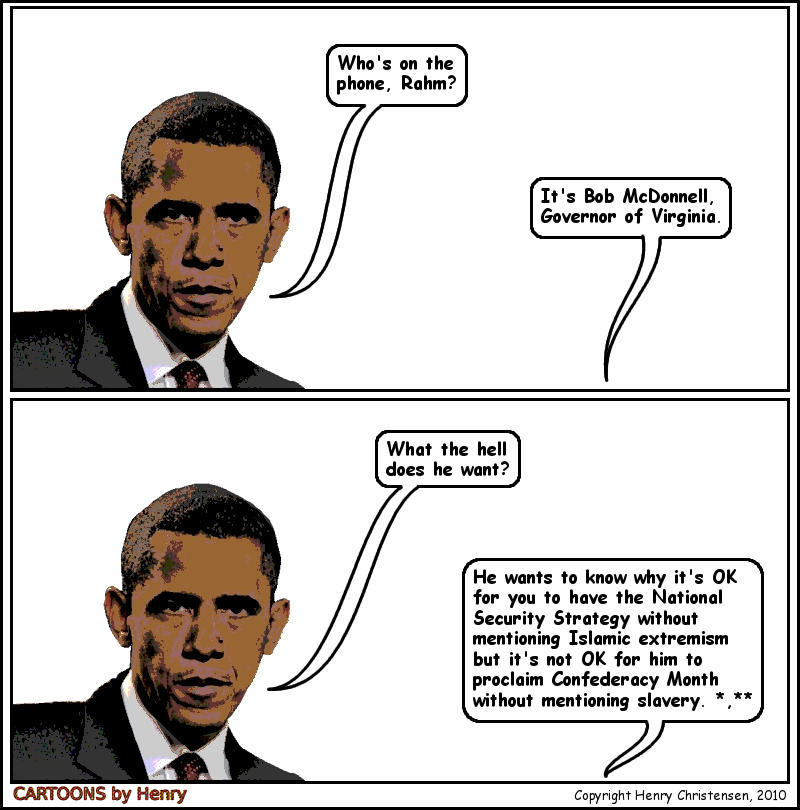
The national security strategy that isn't

Cartoonist here

Reading the new National Security Strategy, one is struck by how little it actually talks about national security and instead speaks mostly about America's economic renewal (security assets listed include a strong economy, fiscal discipline and access to affordable healthcare).  

All the right things are said about enlisting the aid of rising great powers, and everybody, including the FT, admires the calmer tone, but this document doesn't really clarify the war aims in Afghanistan--for example. 

The NSS is often a list-drill, but this one is especially incoherent:

It also warns against imposing US values, yet says that building "government capacity" is essential.  Or take domestic counter-terrorism.  Rightly, the White House wants the issue kept in proportion--yet the strategy promises ever more resources for aviation security and intelligence gathering as though cost, disruption, and infringement of civil liberties were no object.

To me, the document sort of begs off on the question of US leadership, which is certainly a route for encouraging others to do more.  But it signals an America that's adjusting, adjusting, adjusting--without much ambition for leading.  

Again, maybe this is all we can expect with this administration, but it strikes me as largely a waiting strategy.

12:06AM

New rules force Lockheed to shed PA&E

WSJ story.

Sad for me to see because I played a small role as outside cheerleader on the purchase (I ended up giving speeches to a couple of the early Lockheed-Pacific Architects & Engineers corporate gatherings.

But CEO Bob Stevens announces he will be putting PA&E up for sale because new federal rules from last year (Weapon System Acquisition Reform Act of 2009) places stricter limits on mil-industrial companies who provide both managerial support and then seek to build on systems that are ultimately slotted in under the same--i.e., it's a conflict of interest to both manage programs on behalf of the government and then seek to bid on subordinate contracts.

PA&E was acquired in 2006 as part of Lockheed's move into soft-power/second-half/SysAdmin activities.  PA&E continues to do well; it's just that the new rules force divestiture.

To me, this is part of the yin-yang struggle within DoD:  it knows it's stuck with a lot of SysAdmin workload for the foreseeable future, but it fears the military-industrial complex getting too used to horning in on these activities--contract-wise--because the Pentagon wants these functions to migrate elsewhere ultimately, and the more the mil-indusrial complex settles in, the harder that becomes.

So it's just hard to have it both ways, as both the Pentagon and Lockheed find out.

12:05AM

More evidence of China's evaporating "cheap labor"

Foxconn is the world’s largest electronics contract manufacturer, meaning it’s contracted by huge Western firms (Dell, HP, Sony, Apple, Motorola) to build on its behalf in cheaper-labor locales, like Asia and China in particular.  This is how the West remotely controls the bulk of China’s manufacturing exports.

Well, that easy labor advantage for China is fast evaporating.  I routinely harp on the demographics (2010 is the “golden year” when the ratio of dependents to workers hits its lowest mark, only to rise from here on out thanks to a rising number of elders as China ages more rapidly than any society in history), but the more compelling short-term issue is rising demand among coastal labor for higher wages.

And when you don’t give it to them, they start staging nasty, attention-grabbing suicides in your factories.

So booyah!  Here comes a 30% increase for worn-out workers in that communist paradise, and guess what?  That increase eventually gets passed on to consumers, meaning China’s labor advantage erodes.

Where does it go next?

Some goes to interior China.  Some goes to SE Asia.  And China will direct some to Africa as part of its penetration/accommodation there, as it seeks to slot in cheaper African labor under itself as it moves up production chains.

All good stuff, but it shows you, there is no such thing as a permanent advantage in cheap labor.

12:04AM

The flag follows trade

Gist:  America under Obama seeks to enlist the aid of rising great powers in shaping the international order for the better.  Problem is, most of these powers are just feeling their oats, and their fist instinct ain’t to take orders from Washington.

Hence, say I, all this “world without the West” bravado, which is thrilling for those pushing it, but it will wear off once larger realities set it.

Hillary Clinton quote:  “Convincing people to go alone with us requires different skills and ways to exercise our power than it did 50 or 100 years ago.”

True enough for 50 years ago, but 100 years ago WE were the rising power that required difference skills from established ones seeking to enlist our help, so some finer sense of the historical sequencing here, please.

Series of cool charts in the piece lay out a logic I first spelled out in PNM:  politics follows trade nowadays, unlike during the Cold War when trade (and investment) followed the flag.  That too is part of the Cold War peace dividend staring us in the face.  The charts show how, for Brazil, Indonesia, South Africa, and Turkey, China now trades with each to the same degree—or better—than the US did in the past or trade.

This is an inescapable reality:  first comes the trade, then the investment, then the infrastructural network ties, then the political friendship, and then the confluence of security interests.

Expecting anybody to choose us over China with those dynamics unfolding inexorably over time is to ignore reality.

So no, we won’t be fighting China, and neither will any other rising power—save maybe India, but even that seems far fetched.

And yeah, that too is part of the Cold War peace dividend, although it’s really part of America’s larger international liberal trade order-cum-globalization peace dividend, and it should most definitely be viewed that way.  No hegemonic power before us was ever able to structure a system in which numerous great powers could rise simultaneously and peacefully.

But again, America “doesn’t do grand strategy” because we’re all dreamy pinheads, according to the East Coast liberal establishment’s conventional wisdom.

12:04AM

Africa as a compelling new source of coal?

Map here

FT full-pager on coal rush into Africa.

Turns out Africa has got a lot of coal, and lots of the best kinds, in locations that are relatively cheap to mine.

Why not done up to now?  Coal is fairly dispersed globally, so until emerging economies start running through their own instead of exporting to the advanced West, apparently the economic impetus just wasn’t there.

But now it’s there in spades (pun intended).

So as part of the everybody-is-coming-to-Africa meme, coal is a rising quotient of activity.  This comes on top of all of the other minerals and gas and oil.

This is why, “The growth rates achieved during the past 17 years are comparable to those of the east Asian economies in the 1970s and early 1980s.”

This is why I call globalization the gift that keeps on giving.  Europe gave it to us in the 1900s (screwing everybody else with colonialism), and after the tumult of the first half of the 20th century, we gave it to East Asia.  Now Asia is doing the same to much of the Gap but especially to Africa.  America doesn’t create that international liberal trade order (first just in the West) after World War II, this doesn’t happen.

Good thing America can’t do grand strategy, eh?

Story focuses a lot on Tete in Mozambique, where everybody in the emerging economy universe is there with cash in hand for one of the biggest and best coal deposits in the world.

You want to spot a Cold War peace dividend, this is part of it.

In 1989, US trade with Africa was about 13% of the continent’s total trade, and what China, India, Brazil, Korea and Malaysia managed  in total was maybe 5%.  Now China’s total (closer to 12%) is more than America’s (just over 10%) and the other four are closing in—cumulatively—on another 10%.

So African trade with the quintet goes from about 5% in 1989 to more almost one-quarter of the continent’s total trade, while America’s share holds steady.

More generally, Eurozone trade decreases from about one-third of Africa’s total to more like one-quarter, while emerging economies’s share goes from basically nowhere to close to half over the two-decade period since Cold War’s end. 

That’s a big infusion of new demand and new investment, with hundreds of thousands of entrepreneurs arriving as part of that slipstream—mainly from China.

No, it’s not all good, but in aggregate, it beats the hell out of the past, because the West’s draw on resources—at best—created booms and busts as part of those regions’ business cycle.  Now we’re seeing sustained boom-times demand from a far larger portion of the global consumption base that has very long term infrastructure development and energy consumptions trajectories.

A lot of experts fret over a globalization “unraveling” from a Western perspective, but the larger truth is a globalization on steroids for the rising New Core and those Gap regions that get immediately tied into that stunning growth and the emergent middle class it creates.

12:02AM

A familiar sort of populism, from the ground (literally) up

NYT story that warms my heart:  average Chinese citizens getting uppity over development issues--or the real estate sort.

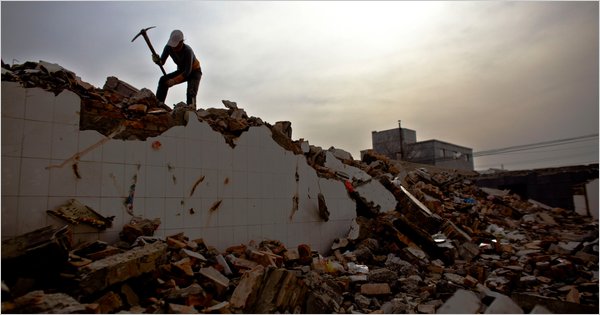
When China’s land boom excited a frenzy of popular resistance late last year — including headline-grabbing suicides by people routed from their homes — Chinese policy makers finally proposed a solution: rules to protect citizens from unchecked development and to fairly compensate the evicted.

Today in Laogucheng, a dingy warren of apartments and shops slated for redevelopment on Beijing’s far west side, the fruits of that effort are on vivid display: a powerful developer is racing to demolish the neighborhood before the rules are passed. And about 700 gritty homeowners are adamantly refusing to move until they get the fair deal they hope the rules will provide.

“This is a limbo period,” one holdout, Tian Hongyan, 49, said after a stroll amid the rubble of his half-bulldozed neighborhood. “And during it, we’re seeing even more sudden and violent demolitions occur around the country.”

China is not a good setting for a Frank Capra tale, but people do have influence over their autocratic masters. Top officials are worried that the property rush — which has led to soaring prices for urban real estate and low prices for old homes and farmland seized for development — is enriching local governments and well-connected developers at the expense of ordinary people and social stability.

Protests like those in Laogucheng — including self-immolations and deadly standoffs — have forced officials to at least consider measures to make it harder to seize property and turn it over to developers without fully compensating those who live on it or use it. 

The lack of rules is the usual suspect, and nastiness ensues:

Without updated rules, local governments pick renewal sites at will, then leave negotiations with residents to developers, demolition companies and low-level “demolition and relocation offices.” They frequently low-ball home-purchase offers, cut off utilities and even hire gangs of thugs to terrorize homeowners.

Powerless to stay and too poor to move, many Chinese have rebelled.

As usual, the Party is forced to choose and/or balance between growth and angering the population too much.

12:01AM

Chart of the day: The Gaza blockade

From The Economist.

If the notion is, give the guy a fish and you feed him for a day, but teach him to fish and he eats everyday, then I detect a distinct desire on Israel's part to make sure Gazans learn how to do nothing for themselves.

Hard not to argue that these are essentially prison conditions, designed to punish more than allow economic rehabilitation.

Convince me otherwise.

12:10AM

Now I take it ALL back on the myth of "deglobalization"!!!

NYT story kills the one "give" I made in my recent WPR column on "deglobalization's" many myths.

My mistake, because if I hadn't been so busy turning 48 (Sniff! My 49-year-old wife just joined AARP, but she's got a MA in elder studies, so I'm calling it a professional quirk) and watching Em graduate from HS (frugal babe, she refused to buy her academic honors and Japanese honors cords), I would have noticed this article just in time for the piece I wrote last Saturday!

In the piece, I admitted that guest worker numbers depressed, and thus so did remittances.  Based on this piece though, the former effect was negligible-to-unimportant and the latter?  Well, there was less money everywhere for a while, so that says little about "deglobalization" and simply says it was a financial crisis on a global scale (Boo hoo!  No repeal of the biz cycle!  Topple capitalism!).

Read it and weep:

The world may be staggering through its worst economy in 70 years, but international migration, an ever-growing force, shows few signs of retreat.

Globally, the number of migrants appears undiminished, and last year they sent home more money than forecasters expected. Many migrants did lose jobs, but few decided to return home, even when others offered to pay.

In some places, demand for foreign labor grew.

From the Arizona Statehouse to Calabria, critics warn that porous borders hurt native workers, threaten local cultures and increase crime. But even a downturn of rare magnitude did less than expected to slow the flows, revealing instead the persistent forces that keep migrants venturing abroad.

Perhaps no place shows the lure of migration as much as the Philippines, a nation of nearly 100 million people, where a quarter of the labor force works overseas. Despite the world’s sagging economy, the country set records last year for the number of workers sent abroad and the sums they returned.

“We hardly felt it — the global financial crisis,” said Marianito D. Roque, the labor secretary, who has been promoting the virtues of Filipino workers from Alberta to Abu Dhabi.

On every corner of this jeepney-jammed capital, someone seems to be coming from or going to a job overseas. At the Magsaysay Training Center, beside Manila Bay, college graduates scrub replicas of cruise ship cabins, hoping for housekeeping jobs that can pay four times the local wage. A park across the street doubles as a sailors’ bazaar, a reminder that the Philippines supplies at least a fifth of the world’s seafarers.

In government seminars a mile away, throngs of outbound maids learn to greet future bosses in Arabic, Italian and Cantonese. Some cry through a film about a nanny who wins an overseas job but loses the love of her children.

Doctors go abroad to work as nurses. Teachers go to work as maids. Would-be migrants set off sparks at the Tesda Women’s Center, where the government offers free training to female welders.

Naturally, the Philippines still provide large numbers of poster boys and girls for the whole "people flow" from PNM.

The financial crisis follows an age of growing mobility that has scattered migrant workers across the globe. Polish nannies raise Irish children and Indians build towers in Dubai. Of 15 million American jobs created in the decade before the bust, nearly 60 percent were filled by the foreign born, according to a report by the Organization for Economic Cooperation and Development. To be sure, the crisis has hurt migrants, often disproportionately. A report by the Migration Policy Institute found that in the past three years, joblessness grew by 4.7 percentage points among native-born Americans, while rising 9.1 points among immigrants from Mexico and Central America.

Anti-immigrant feeling in some places has swelled, at times to the point of violence. South African riots in 2008 killed dozens of African migrants, including many Zimbabweans. In Italy, attacks on African farm workers this year brought condemnation from the pope.

But with few exceptions, the hard times have not sent migrants home. Spain, Japan and the Czech Republic tried to pay foreign workers to go, but found few takers. Likewise, the number of Mexicans leaving the United States has not grown, said Jeffrey S. Passel of the Pew Hispanic Center. While the economy and tightened borders have reduced new arrivals, he said, the total population of Mexican migrants remains unchanged.

Hania Zlotnik, director of the United Nations Population Division, said, “Worldwide, the crisis has slowed the growth of migration, but the number of migrants is still increasing.”

That's it:  the crisis slowed the GROWTH of migrant workers, but did not stall it or reverse it WHATSOEVER.

CAN YOU FEEL IT!!!!!

The key for resiliency in the face of crisis is an old one:  keep your network wide.

While remittances to Mexico took an outsize hit (16 percent over two years), the Philippines offers a contrasting model of overseas work.

Mexicans are closely tied to one place (the United States), and one industry (construction). Filipinos work across the globe in dozens of occupations. Mexican migration is unmanaged and mostly illegal. Filipino workers are promoted by the state, and most go with contracts and visas.

The key lesson:  when you know the vision is on target, don't join in the freakout that naturally comes with any crisis.

12:09AM

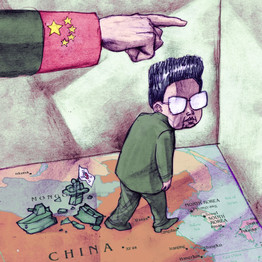
Smart Haass piece on the Koreas crisis

"Smart Haass" has a nice ring to it, yes?

WSJ op-ed by Richard Haass, president of the Council on Foreign Relations and holder of the George Kennan slot at State under Bush-Cheney (early, not late).

Call out text summarizes it perfectly:

Pass the South Korea free trade agreement and give up negotiating with Kim Jong Il.

The FTA has been sitting with Congress for 3 years.  Instead of passing some meaningless message, why not pass that instead?

(Feel free to slap your own forehead and utter, "Duh!")

Other than that, skip the usual diplo show with nutty Kim and signal that you're just waiting for his death to screw the place over as much as possible.

Okay, I spiced up that last bit.

Reason why?  Make it clear to China that when the event goes down, we'll just watch while things get dicey for them as much or more than they do for Seoul.

Meanwhile, we should publicly explore the reality of a unified Korea with our southern friends, says Haass, and let China come to that conversation as it sees fear--I mean, fit.

May have spiced up that last-last bit a bit too.

12:08AM

A familiar rule-set gap: the tech races ahead, but worker safety does not

NYT story, coming to a court near you.  Pic is David Michaels, director OSHA, which everybody despises until it's your ass on the production line.

Naturally, the leading edge is a risky place to work, starts the piece.

You work with dangerous stuff, and maybe it costs you--literally--an arm and both legs when the meningococcal bacteria infects you, as happened to a New Zealand lab worker.  

The small quiet suits by workers have already arrived, like a $1.4M win for a former Pfizer worker.  The bigger class-action types will inevitably follow.

Michaels says, in effect, that "his agency's 20-century rules have not yet caught up with the 21st-cnetury biotech industry."

No kidding.  Same is true for US foreign policy on biowarfare, as our leaders instead prefer to obsess over the oh-so-20th-century "N" in the NBC (nuke, bio, chem) trilogy, which, in historical terms is really CNB (chemistry in the 19th C, nuclear in the 20th C--both producing weapons that debut in two world wars, and then biology in the 21st).  

Have no fear, the tragedies are coming.  Every good law on the American books had some nasty real-world tragedy as precursor. This will be no different.

Rule-set gaps, it's "what's for dinner?" in political terms.

12:07AM

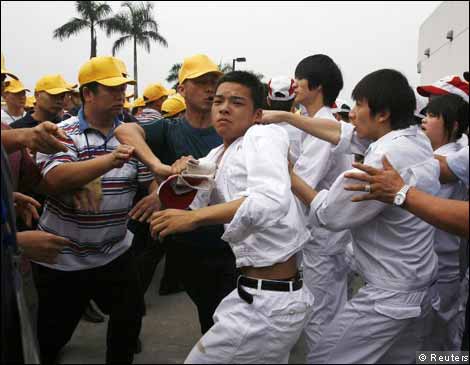
Honda disabled by strike at Chinese factory! I blame the communists!

WAPO, FT and WSJ stories.

Honda hit by strike from 1,800 workers at transmission factory that disabled adjacent production in three other plants.

How much stomach does Honda have for labor unrest in China? Even less than the Chinese Communist Party, whose rep for working labor within an inch of their lives is capitalistic enough.

So a weekend later we get news of a 24% pay increase.

Expect to read a LOT of these stories in coming years.  It's not just the demographic shift (adding more old people after years of only cutting down the number of babies) that ends China's legendary-but-momentary "cheap labor" advantage.  Workers, with practice, will get uppity.

12:06AM

The rise of the "democratic rest"

Excellent piece by Daniel Kliman in World Politics Review (by way of WPR's weekly article roundup).

Much ink has been spilled discussing the nuclear fuel swap deal that Brazil and Turkey brokered with Iran last week. The pundits have focused on whether the deal will resolve the standoff over Iran's nuclear program, or whether Tehran is simply playing for time, as well as what the deal says about the growing prominence of Brazil and Turkey. Yet the real meaning of the nuclear deal has gone largely overlooked: The dominant trend of the early 21st century is the rise of democratic powers to positions of regional and even global influence.

Of course, the most prominent rising power, China, is no democracy. But in this, China is the great outlier. All of today's other rising powers feature representative governance, as a cursory look around the world makes readily apparent.

Amen, brother!

Rest of piece explores India, Brazil, Indonesia, Turkey, South Africa.

Why we should be optimistic:

As these five democracies rapidly emerge as full-fledged powers with far-flung influence, their rise is cause for optimism about the future. Why? To be sure, shared values do not guarantee a complete congruence of interests. The United States, Europe, and Japan will not always see eye to eye with these arriviste democracies, as is already evidenced by differences over climate change, trade, and Iran. However, the fact that an overwhelming majority of rising powers are democracies has strongly positive implications for the nature of the global order that is coming into existence.

First, most of the new players in this global order will behave predictably. Democratic governance is premised on internal checks and balances . . .

Democracies may shift course, but they do so slowly, and within relatively confined boundaries . . 

Second, democracies can rise without producing a global order riven by fear and hostility, because of the domestic transparency made possible by democratic institutions. In democracies, the media can extract information from government authorities and convey that information to the world. Although unable to disclose classified information, officials representing a democracy can still engage in open, far-ranging conversations with their foreign counterparts. This domestic transparency enables outsiders to readily discern a democracy's intentions . . .

Third, a world of rising democracies is a world ripe with opportunities for access, meaning the ability to intervene inside another state's policymaking process . . ..

Again, excellent piece.

What I would add:  don't be surprised to witness the most ambitious and inventive foreign policy coming out of these states.  Because they're not single-party dictatorships, they're more risk tolerant.  China's Communist Party can't afford any screw-ups, because the resulting throw-the-bums out mentality frightens it too much to act boldly.  Not the same weakness for democracies, which means, counterintuitively for many, they will drive us nuttier than that stale, unimaginative thinking from Beijing--to wit, the Iran nuke deal.

12:05AM

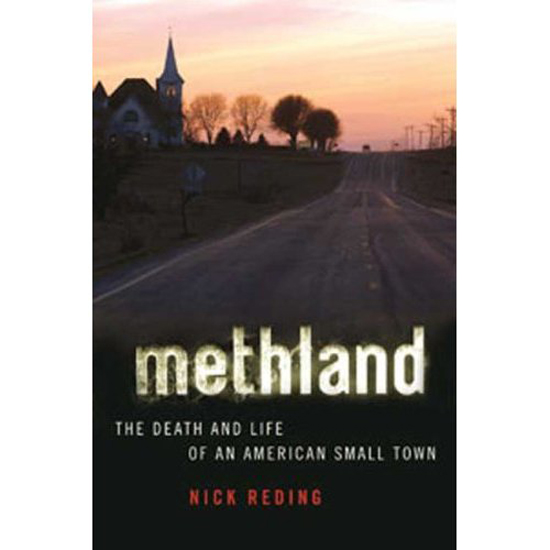
Core-Gap thinking in Nick Reding's "Methland"

Noted by my cousin Paul (career "Mad Man").

The brief description of the book from Publisher's Weekly:

Using what he calls a "live-in reporting strategy," Reding's chronicle of a small-town crystal meth epidemic-about "the death of a way of life as much as... about the birth of a drug"-revolves around tiny Oelwein, Iowa, a 6,000-resident farming town nearly destroyed by the one-two punch of Big Agriculture modernization and skyrocketing meth production. Reding's wide cast of characters includes a family doctor, the man "in the best possible position from which to observe the meth phenomenon"; an addict who blew up his mother's house while cooking the stuff; and Lori Arnold (sister of actor Tom Arnold) who, as a teenager, built an extensive and wildly profitable crank empire in Ottumwa, Iowa (not once, but twice). Reding is at his best relating the bizarre, violent and disturbing stories from four years of research; heftier topics like big business and globalization, although fascinating, seem just out of Reding's weight class. A fascinating read for those with the stomach for it, Reding's unflinching look at a drug's rampage through the heartland stands out in an increasingly crowded field. 

The reference to "heftier topics" is explained in a reader review (Gaetan Lion):

"Fast Food Nation" meets "The Pentagon's New Map", September 28, 2009

This is a very good book that reads like a thriller. Reding, the author, covers the advent of meth throughout the rural Midwest through several related angles. 

First, he covers this topic by following the firsthand experience of several key individuals attempting to keep the social fabric of a small town (Oelwein) in the midst of a meth epidemic. These include the mayor, the main primary physician, the chief of police, and the local district attorney. Their narratives describe how desperate the situation is until two of them are able to turn things around (the chief of police by cracking down onmeth dealers and the mayor by raising financing to invest in a new commercial complex to generate jobs). Reding also follows the life of several meth addicts in various stages of either recovery or deterioration. 

Second, Reding studies the history of meth that was at first deemed a legitimate miraculous drug that could cure 33 different ailments ranging from weight gain to schizophrenia. In 1939, a Harvard sociologist warns about side effects including sexual aggression, violence, hallucination, and insomnia. His warnings are ignored as the drug is still used extensively during WWII to maintain the energy and focus of soldiers (on either side) during stressful sleepless nights. Also, medical records suggests Hitler was ameth addict which explains his madness. 

Third, Reding studies the biochemistry of meth. The attractiveness of meth is multi-dimensional. On one hand, it has the libido benefit of Viagra. On another, it has an antidepressant effect similar to Prozac. On another, it is the equivalent of a smart pill that gives you unparalleled mental focus. It is also like a caffeine booster giving you the ability to perform at top level without sleep. Overall, it provides an incredible feel-good feeling. This is because like many drugs it reduces the uptake of dopamine (the satisfaction hormone). But, unlike other drugs it actually squeezes dopamine out of presynaptic cells. The resulting unparalleled flow of dopamine through one's system triggers a feel-good feeling that even sex does not match. On the other hand, the long term side effects are really nasty. Those include bleeding skin-sores, internal organs shrunken from dehydration resulting in liver and kidney failure, weakened hearts and lungs, brains depleted of neurotransmitters. A person is literally falling apart from the inside. Also, it has all the already mentioned nasty behavioral side effects. Reding states there are thousand of stories about meth associated with hallucinogenic violence, morbid depravity, and extreme sexual perversion. Reding provides a few choice examples throughout the book. 

Fourth, Reding maps out the socioeconomic and policy factors associated with the meth epidemic that includes the convergeance of several forces: 
1) the advent of Big Pharma that lobbied to weaken any law regulating the import and sale of meth ingredients found in cold medicine;
2) Big Agriculture taking out small farms in the Midwest and employing a rising flow of low cost illegal Mexican immigrant workers. This part reads like Fast Food Nation
3) the emergence of the five major Mexican drug trafficking organizations (the DTOs) distributing their drugs using the same Mexican immigrants. By 2003, 85% of all illegal drugs sold in the U.S. whether meth, cocaine, heroin, were controlled by the five DTOs.; 
4) Globalization and NAFTA making border control between the U.S. and Mexico more challenging. 

Fifth, he leverages Thomas Barnett analytical framework described in The Pentagon's New Map: War and Peace in the Twenty-first Century. Where Barnett divides the World into two sets of countries, the functional ones that follow the Rule of Law (the core), and the rest consisting of failed states that live in chaos (the disconnected ones). Reding makes the connection that even within the core countries such as the U.S. there are expanding pockets of disconnected regions such as the Midwestern towns falling pray to meth. He adds that when small towns are vulnerable to social implosion, larger towns may not be far behind. As a proof, he tracks the route of the meth epidemic that reaches to the big cities such as New York and Los Angeles . . .

Needless to say, I'm intrigued.  Know such small-town life very intimately.  Also know what it's like to indulge in that venue and the reasons why such escape are so appealing (even if, life-wise, I felt like a tourist because all my older siblings had moved up and out and so I knew I would too).

Being able to extrapolate the continued pockets of Gap inside even the most advanced Core is a pronounced jump to graduate-level analysis of my stuff that a lot of cops, social workers, mayors, etc. instinctively make.  I know, because they've sought me out over the years.  I don't particularly develop it in the books; it's just there in a latent sense, and they fill in their own blanks better than I could.  

I will definitely seek out the next time I'm in a book store.  Naturally, I admire anybody who pulls thinking from other realms--the ultimate in horizontal thinking.  Examples are always to be coveted.

12:04AM

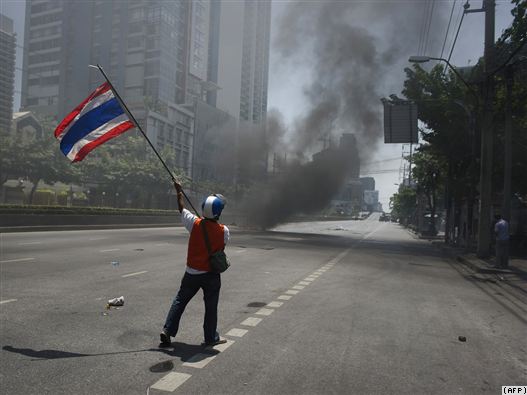
What Confucians saw in Thailand

pic here

Brilliant piece by Daniel Bell out of Tsinghua U (my favorite Beijing stomping ground) in Japan Times via WPR's Media Roundup (indeed, a great example of what WPR brings to your attention).

I will quote at dangerous length:

Whatever the effects of political turmoil in Thailand, they have not helped the cause of democracy in China. The images of prodemocracy protesters and the subsequent military crackdown in downtown Bangkok have been openly shown in Chinese media without any apparent bias. Indeed, there is no need to embellish the political message for China.

If a relatively well-off and religious country known as the "land of smiles" can so rapidly degenerate into bloody class warfare, what would happen if the Chinese Communist Party lost its monopoly on power?

It is not hard to imagine a Chinese-style red-shirt rebellion, with populist leaders tapping resentment and hotheaded youth torching symbols of privilege in Beijing. If multiparty democracy leads to violent and uncompromising electoral blocs, then most reflective people will prefer one-party rule that ensures social stability.

Still, it would be a mistake for the Chinese government to treat the events in Thailand as an excuse to postpone political reform. The gap between rich and poor is about the same in both countries, and there are tens of thousands of class-based "illegal disturbances" in China every year.

The Chinese government is promoting social welfare in the countryside, but it must also give more institutional expression to social grievances. That requires more representation by farmers and workers in the National People's Congress and subnational legislative organs, more freedom for public-spirited journalists to investigate cases of social injustice, and more freedom for civic organizations to act on behalf of the environment and those who do not benefit from economic reform.

Can China open up without going the way of multiparty rule?

In fact, the great 19th-century British political thinker John Stuart Mill advocated liberal government without multiparty rule ... In Mill's view, an open society ruled mainly by educated elites is the most desirable form of government.

In a similar vein, the Confucian tradition has long emphasized the value of political meritocracy. Confucius himself emphasized that everybody should have an equal opportunity to be educated. But not everybody will emerge with an equal ability to make informed moral and political judgments. Hence, an important task of the political process is to select those with above-average morality and ability. In subsequent Chinese history, the meritocratic ideal was institutionalized by means of the Imperial examination system.

Confucians do not oppose electoral democracy, but they argue that it must be constrained by meritocratically selected political leaders who look after the interests of nonvoters . . .  

As it happens, the Chinese Communist Party is becoming more meritocratic. Since the 1980s, an increasing proportion of new cadres have university degrees, and cadres are promoted partly on the basis of examinations. But choosing educated elites is only part of the story.

The elites are also supposed to rule in the interest of all, and to allow for their voices to be heard.

In practice, it means a more open and representative political system, but not necessarily multiparty politics.

Okay, I cut about 200 words.

Just a brilliant piece that shows how China will seek to be different, based on deep local custom, but will invariably have to conform to the demands of its people for more say.  

Is the system described here that much different from ours professional political class?

Yes, in the sense that few of them are great minds.  But no in the sense that the professional bureaucracy (highly educated and highly ethical, in my experience) runs much of DC.

I think this is how China evolves:  increasingly smarter, increasingly competitive, increasing use of polls that simulate voters' preferences (already being done at the top).  But I also think China will need, for a stretch (meaning another 20-25 years) the illusion of single-party unity.  

My democratic breakthrough for China is a 2030s deal.  Can come earlier, but unlikely to go longer.  The complexity will grow too great and the people far too competent.

But until such critical masses are reached, expect China to remain as Chinese as possible while submitting to huge and pervasive and magnificent change/stress.

No one wants that place to blow up, because no one will benefit from that pathway.

12:03AM

Grafting an old fight on a new fear: jihadists chase fads too

WAPO story by way of WPR's Media Roundup on how a jihadist leader in Pakistan is stoking fears on India's upstream control of rivers.

Gist:

The latest standoff between India and Pakistan features familiar elements: perceived Indian injustices, calls to arms by Pakistani extremists. But this dispute centers on something different: water.

Militant organizations traditionally focused on liberating Indian-held Kashmir have adopted water as a rallying cry, accusing India of strangling upstream rivers to desiccate downstream farms in Pakistan's dry agricultural heartland. This spring, a religious leader suspected of links to the 2008 Mumbai attacks led a protest here of thousands of farmers driving tractors and carrying signs warning: "Water Flows or Blood." The cleric, Hafiz Sayeed, recently told worshipers that India was guilty of "water terrorism."

India and Pakistan have pledged to improve relations. But Sayeed's water rhetoric, echoed in shrill headlines on both sides of the border, encapsulates two issues that threaten those fragile peace efforts -- an Indian dam project on the shared Indus River and Pakistan's reluctance to crack down on Sayeed.

It also signals the expanding ambitions of Punjab-based militant groups such as the banned Lashkar-i-Taiba, founded by Sayeed, through an issue that touches millions who live off Pakistan's increasingly arid land.

Pakistan's water supply is dwindling because of climate change, outdated farming techniques and an exploding population. Now Pakistan says India is exacerbating its woes by violating the treaty that for 50 years has governed use of water originating in Kashmir.

India denies the charge, and its ambassador to Pakistan recently called the water theft allegations "preposterous." International water experts say that there is little evidence India is diverting water from Pakistan but that Pakistan is right to feel vulnerable because its water is downstream of India's.

The underlying reality is that there's no real evidence for the charge, but plenty of circumstantial conspiracy-style "evidence" and a triggering event/perception of climate change to fuel local fears.  The jihadis are drawn to any potential cause celebre.  Why?  To control through disconnection requires you blame the world for all your woes.

The real truth:

Politics aside, experts say, Pakistan's water situation is reaching crisis proportions. As the population has grown over six decades, per-capita water availability has dropped by more than two-thirds. About 90 percent of the water is used for agriculture, making it an economic lifeline but leaving little for human consumption.

Inefficient irrigation and drainage techniques have degraded soil and worsened shortages, forcing many small farmers to pump for groundwater. A severe electricity crisis means most rely on diesel-powered pumps, but fuel prices are rising, said M. Ibrahim Mughal, head of Agri Forum, a farmers' advocacy group.

So you ask yourself:  does Pakistan suffer from too little globalization (my diagnosis) or too much (the jihadis' charge at its most generalized level)?

None of these problems are insurmountable, but population growth plus outdated ag practices equals a disaster that must be blamed on outsiders.

12:02AM

China plays global central banker on euro too

WAPO story about how just a reassuring word from China that it won't sell off any significant portion of its euro holdings is enough to calm global markets regarding the ongoing eurozone crisis.

That, my friends, is an amazing world.

12:01AM

The global demand center gets discounts

Pretty basic chart that shows Asia paying higher-than-European prices for Saudi light crude seven out of the last ten years (2000-2009), only to start receiving a steep discount in the second and third months of this year, suggesting that a worm has indeed turned.

Nothing weird or unexpected about this:  demand = power and being the global demand center = the biggest discount for bulk buying, made affordable to producers by economies by scale.

9:30AM

WPR's The New Rules: Redefining Identity in an Age of Connectivity


Despite my reputation as a fierce defender of globalization’s many benefits, I have always been of two minds on the human desire for connectivity in all its recently emergent possibilities.  After all, my narrative on globalization began as “the Pentagon’s new map” -- not Google’s or Goldman’s.  Even there, I was never under the impression that connectivity was an instant fix regarding human conflict -- quite the reverse.  And I knew instinctively that the primary motive for increased connectivity throughout history has been individual greed for resources, opportunities, influence and -- most importantly -- an improved standard of living.

I’ve routinely expressed that ambivalence through two simple rules . . .

Read the rest of the column at World Politics Review.

12:09AM

Smart guy, dumb book: US grand strategy completely misrepresented

Find the book here, because I won't.

Certainly not on the basis of the WAPO review referenced (or three hours of reading through dozens of pages via Google), which nonetheless describes it as a hot read in the Obama White House.

Few things would depress me more but surprise me less.

This is a classically non-economic view of American grand strategy (certain to appeal to the lawyerly Obama administration), which, if I could define in one phrase, would be "open door" for the last century-plus.

The result?  It's called globalization, my friends, the most world-shaping phenom known to humankind.  It's only the most individually liberating and enriching "empire" the world has ever witnessed.  That's what American "hubris" bought us.

Still loath your country's impact on human history across the 20th century?

Globalization--that's the base.  Everything Beinart targets in this book is superstructure.

This is self-criticism bordering on self-hatred simply because it's view is so DC, so pol-mil, and so public-sector as to miss the gargantuan forest for the trees.

But examine the source:  

Beinart is a classic Washington scholar-journalist-pundit -- a Yale and Oxford graduate who has edited the New Republic, stamped his wonk pass at the Council on Foreign Relations and now hangs out at the New America Foundation and the City University of New York.

So go figure, global economics is a distant concept, as is life outside the Beltway or Manhattan's best salons. It's truly compelling when someone of that breadth of experience targets the narrow thinking of Washington insiders.  The pot was never more correct in calling the kettle black (though I thought it crucial to the storyline to hear that Joe Kennedy bought son Jack prostitutes in his youth--see page 133; if only Beinart spent such effort understanding global economics!).

But how to explain globalization's rise in its modern form? How to explain all the poverty reduction, wealth growth, technological advance, and reduction in warfare?  How to explain the defeat of the Sovs?  How to explain the moratorium on great-power war without crediting the US on nukes?  A world of numerous rising great powers with no great-power war?  These are all accidents of history?  Weird, unexpected byproducts? How come none of this is possible UNTIL America becomes THE world power?  Is all that purely coincidental? Unintentional success amidst our non-stop strategic delusions?

Of course, you can go the sophisticated self-hating route and declare it all "their" victory, but please . . ..

So here we get the usual left-wing condemnation of the whole based on--frankly--the least meaningful parts. This is the Left's mirror-imaging of the same narrow vision of the Right's neo-cons.  Frankly, there isn't an intelligent businessman among them both.

Grand strategists understand that the military part is just time-buying.  Kennan knew that.  His containment strategy was sheer genius and it worked (and yes, by defining it as a "narrow political strategy" it's necessarily a vast economic one).  TR and FDR knew that, and set in motion America's grand strategic impulse that has remade the entire planet for the better.

But no, let's skewer Wilson one more time, whine on about irrelevant Vietnam, and credit Reagan with winning the Cold War (though, his cheapening of it by supporting anti-communist rebels is correctly defined as genius) when it was really Nixon and Kissinger that let loose the dogs of globalization with China.

I think Beinart is a smart guy.  I also think he's doing public therapy for supporting the war in Iraq (the reviewer's point; read the opening pages and watch Arthur Schlesinger spill his martini and you too can cringe at the tragedy of it all), and on that score, you can count the whole endeavor up in terms of public treasure and blood, but again, we're talking only a tiny fraction of reality. If you think the story of globalization's penetrating embrace of the Middle East is captured completely by our Iraq operation, then I will leave you alone to your thoughts. Ditto if you can't see how that intervention sped things up.  But no, that public debate ended years ago for most people, hence the need to declare--pre-emptively--failure on a continuing grand strategic impulse that has spanned decades and continues to project into many more with its current-day actions.

America the nation does grand strategy just fine; Washington just lacks grand strategists.

But you won't find any of that larger impulse in Beinart's narrow tome.  Search the book at Amazon, like I just did for the word globalizaton.  You won't find a single entry!

No, wait a tick!  There's a single reference on page 290 to "globalization" (yes, it only appears in "quotation marks" because it's not real but some queer fantasy of Francis Fukuyama and the Clintonistas!) as being the Washington Consensus in extremis (American-style capitalism plus full-blown American-style democracy).  This is presented as an intellectual sophistry perpetrated by the Clinton White House, and dutifully rejected by the planet as "Americanization."

Imagine that, "globalization" is just the result of some Clintonian triangulation!

I gotta tell you, this sort of analysis is just bizarre in its willfully narrow ignorance.

How this passes as serious judgment on American grand strategy is beyond me. There are basically no references to the global economy either, except two passing ones to a near global economic meltdown in the late 1990s and the global financial crisis of 2008. That's it. American grand strategy is just the wars we fought and the places where we sent troops.

You can't find thinking more preciously biased than this other than in your average undergraduate course on U.S. foreign policy in too many American colleges to name, but such is the state of punditry in Washington--that island of public-sector unreality.

This is why I wrote my 85-page history of America in "Great Powers" from the prism of our experiment in globalization-in-miniature (19th Century) begetting our projection of that model across the 20th.  That "hubris" is the greatest single force for good the world has ever witnessed from a nation state.  Beinart just doesn't recognize that reality because he does not know where to look.  Nothing in his training or career forces him to look beyond the narrow confines of his comfortable conversations with like-minded types.  This is why I don't read Foreign Affairs.  I can't afford the de-education.