Buy Tom's Books
  • Great Powers: America and the World After Bush
    Great Powers: America and the World After Bush
    by Thomas P.M. Barnett
  • Blueprint for Action: A Future Worth Creating
    Blueprint for Action: A Future Worth Creating
    by Thomas P.M. Barnett
  • The Pentagon's New Map: War and Peace in the Twenty-first Century
    The Pentagon's New Map: War and Peace in the Twenty-first Century
    by Thomas P.M. Barnett
  • Romanian and East German Policies in the Third World: Comparing the Strategies of Ceausescu and Honecker
    Romanian and East German Policies in the Third World: Comparing the Strategies of Ceausescu and Honecker
    by Thomas P.M. Barnett
  • The Emily Updates (Vol. 1): One Year in the Life of the Girl Who Lived (The Emily Updates (Vols. 1-5))
    The Emily Updates (Vol. 1): One Year in the Life of the Girl Who Lived (The Emily Updates (Vols. 1-5))
    by Vonne M. Meussling-Barnett, Thomas P.M. Barnett
  • The Emily Updates (Vol. 2): One Year in the Life of the Girl Who Lived (The Emily Updates (Vols. 1-5))
    The Emily Updates (Vol. 2): One Year in the Life of the Girl Who Lived (The Emily Updates (Vols. 1-5))
    by Thomas P.M. Barnett, Vonne M. Meussling-Barnett
  • The Emily Updates (Vol. 3): One Year in the Life of the Girl Who Lived (The Emily Updates (Vols. 1-5))
    The Emily Updates (Vol. 3): One Year in the Life of the Girl Who Lived (The Emily Updates (Vols. 1-5))
    by Thomas P.M. Barnett, Vonne M. Meussling-Barnett
  • The Emily Updates (Vol. 4): One Year in the Life of the Girl Who Lived (The Emily Updates (Vols. 1-5))
    The Emily Updates (Vol. 4): One Year in the Life of the Girl Who Lived (The Emily Updates (Vols. 1-5))
    by Thomas P.M. Barnett, Vonne M. Meussling-Barnett
  • The Emily Updates (Vol. 5): One Year in the Life of the Girl Who Lived (The Emily Updates (Vols. 1-5))
    The Emily Updates (Vol. 5): One Year in the Life of the Girl Who Lived (The Emily Updates (Vols. 1-5))
    by Vonne M. Meussling-Barnett, Thomas P.M. Barnett, Emily V. Barnett
Search the Site
Powered by Squarespace
Monthly Archives
7:37AM

Why You Should See "The Brief"

Fellow Readers,

I first stumbled across "The Brief" via YouTube five years ago, where I was introduced to Dr. Barnett’s theories, then his books and finally this blog, which instantly became part of my daily reading.

Tom became a major influence on how I think about the world, so when founding Wikistrat I reached out to Tom for advice. At that time I had no idea that he would one day join the team as Wikistrat’s Chief Analyst. He's been instrumental in helping us build our company ever since.

Last month I was finally able to watch Tom deliver The Brief live. The latest version centers on the Five Strategic Flows driving Globalization's advance in the coming decades. The presentation was actually constructed around material Tom penned within the Wikistrat model almost a year ago.

The verdict? A very different (and much better) experience than watching it on my computer screen: Aside from how fascinating Tom's insightful analysis is, The Brief is a work of performance art.
So, to anyone who's ever asked to see it live: I suggest you get down to CSIS offices tonight where Tom will be presenting one of the few briefs made open to the public. The event is being kindly hosted by our friends at YPFP (Young Professionals in Foreign Policy) at CSIS offices in downtown DC.
Tom, myself and others from the Wikistrat team look forward to seeing you there.

Joel Zamel
CEO
Wikistrat

(Visit www.wikistrat.com to learn more about online community of strategic thinkers which serves as the web's first Massively Multiplayer Online Consultancy)
12:01AM

Wikistrat's "The World According to Tom Barnett" 2011 brief, Part 4 (Flow of Energy)

This section of the brief explores how urbanization and infrastructure development is shaping globalization, how Asia is the natural integrator of future globalization across the Gap, and how China's and America's interests overlap in the future evolution of Africa.

12:01AM

Wikistrat's "The World According to Tom Barnett" 2011 brief, Part 3 (Flow of Money)

This section of the brief focuses on the rise of the global middle class, the evolution of national economies, why China won't "rule the world" for all that long, and what the future evolution of East Asia holds.

9:57AM

WPR's The New Rules: A Look Ahead at the Geography of Global Security

As part of a “big think” forecast project commissioned by an intelligence community sponsor, I’ve begun to think about the future geography of global security. As often with this kind of project, I find myself falling into list-making mode as I contemplate slides for the brief. So here are nine big structural issues that I think any such presentation must include . . .

Read the entire column at World Politics Review.

9:29AM

Fish story

Shift my work load from Friday to Saturday to take advantage of the fact that: 1) kids were home from school on Friday, and 2) spouse was heading to Terre Haute for Nona time.

So I put the canoe atop the Odyssey and pack up the gear. Vonne drops us off about 5 miles north of TH on the Wabash, and I steer with Jerry up front and the three girls in the middle (Vonne Mei paddling some). 

Beautiful fall day, but still most of the trees haven't turned along the river, so we might go back for one more trek before winter.

Anyway, very quiet on river, as we're the only people there, and we are, at this one point, just floating along the right side in shallow waters, taking a beverage break.

Then I put my oar into the water for a stroke and out jumps this big fish in response.  Maybe 18-20 inches and a solid 6 inches midrange in "height." In the instant I see it flying completely out of the water, my first thought is, that is one beautiful big fish.

Then the water surrounding us for about 15 yards on all sides erupts like a jaccuzzi and there are similarly sized fish jumping completely out of the water everywhere - maybe 50 or so. It is loud and chaotic and goes on for about 10 seconds as everybody seems to be frantic to escape our dreaded clutches. At several points I'm semi-deflecting fish about to jump into the boat (I know, later, I thought, hmmmm - dinner! But right then I was worried about us flipping this kayak-style canoe).

I have to tell you: I have canoed rivers for about 4 decades and I have never run into that one. We pretty much screamed throughout the whole thing, it was just so bizarre and unexpected on this otherwise uber-quiet journey.

But very cool. The fish were gorgeous and it was exciting to see all that action in such a short bit of time.

We talked about it for the rest of the journey down the Wabash.

9:30AM

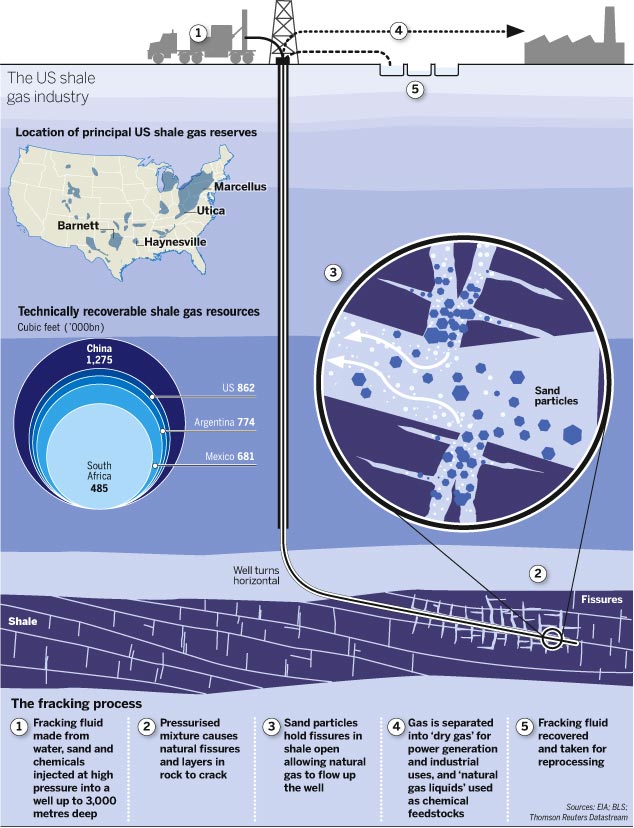
Chart of the Day: Isn't a coincidence that the two biggest energy consumers . . .

 . . . happen to own the world's two largest reserves of shale gas?

Nice timing, huh?

The trick, of course, is the environmental impact.  American companies don't want to reveal their techniques, but the public needs to know so we can judge the impact and enforce the necessary precautions.

How that works and what volumes that ultimately allows us to extract is a big variable going forward.

With China, one assumes the niceties are not observed - until the riots start.

12:49PM

Time's Battleland: Why America should go slow on declaring victory in Libya - or making promises

[co-written with Michael S. Smith II of Kronos Advisory LLC]

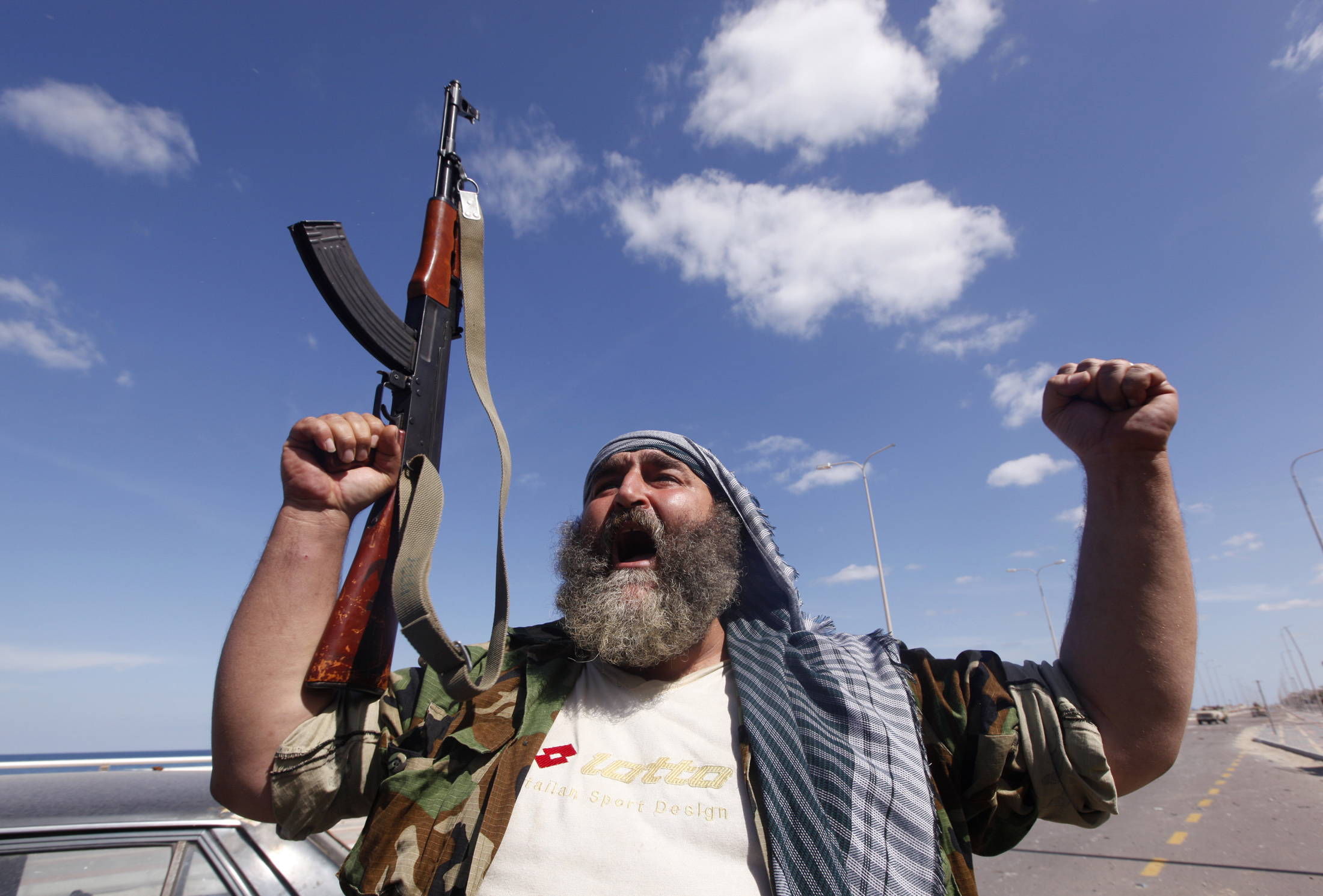
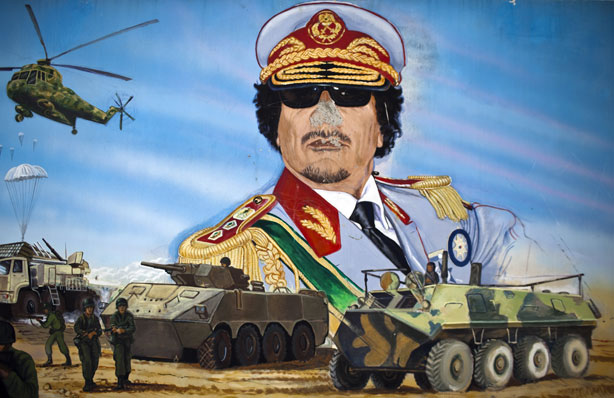
The demise of Col Qaddafi, a despicable despot who should have met this or a worse fate sooner, will likely give rise to power grabs in Libya by groups whose agendas will often be anything other than what meets the eye. Despite many power holders' claims of “secularist” and democratic aims, Washington's policy makers would be wise to exercise great caution when assessing who should be trusted inside Libya. For, at present, it would appear Libya is taking on a political atmosphere that will carry a high Salafist quotient.

Read the entire post at Time's Battleland.

12:01AM

Wikistrat's "The World According to Tom Barnett" 2011 brief, Part 2 (Flow of People)

Part two of the Sept 2011 briefing to international military audience in Washington DC area. This section focused on the flow of people as captured in Wikistrat's GLOMOD (online, wiki-based "global model" of globalization), then moves on to the inevitabilities surrounding demographic aging, then explores how demography drives the Arab Spring, and then offers a regional evolution projection for the Middle East.

11:35AM

Esquire's Politics Blog: 5 Post-Qaddafi Realities for Libya and the Rest of Us

They came to bury Muammar Qaddafi, not capture him. After more than four decades of rule, he was still in the business of threatening and killing Libyans — a kind of start-up insurgency that would never go away. So if Qaddafi is indeed dead, then so much the better; the great bogeyman has been removed from the scene. Of course the world will (temporarily at least) lament the violence required for his departure from power, but as dictator-toppling exercises go, this one was about as good as it gets: First, the Arab Spring's power of example, then the rebels-turned-ruling-military-force driving him out from below, and finally an enabling from the human rights-minded powers that be.

But still: How did we really get here? And, perhaps more importantly, what now?

Read the entire post at Esquire's The Politics Blog.

12:01AM

Wikistrat's "The World According to Tom Barnett" 2011 brief, Part 1 (Pentagon's New Map)

Delivered in Washington to an international military audience, September 2011.

We'll roll out the rest of the brief over the next couple of weeks. This section covers the introduction and my concepts regarding globalization's Core and Gap.

6:03AM

Speaking in DC on 26 Oct (Young Professionals in Foreign Policy) and it's open to the public

I’m speaking in Washington DC on October 26th, to the members of Young Professionals in Foreign Policy (YPFP), a non-profit committed to fostering the next generation of foreign policy leaders.  I’ll be presenting on “The Future of Globalization,” using the latest version of “The Brief.”  Because the audience will be mostly in their 20s and 30s,I'll tailor my discussion slightly to emphasize the important skills and characteristics future foreign policy leaders will need to have. 

It’s an evening presentation and YPFP made it an open event, so if you’re in the DC area and haven’t seen “The Brief,” this is your chance (regardless of age).   7:00p.m. start at 1800 K St. NW.  Must RSVP with your name and affiliation to events@ypfp.org.

The President of YPFP, Josh Marcuse, invited me to speak after he met Joel Zamel and Dan Green in Washington earlier this year.  Joel, Dan, and Josh hit it off talking about how younger generations are drawn to the type of platform Wikistrat provides, and the need for new approaches in understanding the complexities of today’s geostrategic environment.   It's been a few months since my last round of college talks, so I’m looking forward to the questions a younger-than-average audience is likely to throw my way - especially on the subject of working in the biz.

12:02AM

Time's Battleland: Africom to work Lord's Resistance Army problem with Uganda

Ugandan forces (Reuters)

WAPO and NYT reporting over the weekend that the US will send around 100 armed advisers to help the Ugandan military work the stubborn problem of the Lord's Resistance Army, a beyond-its-expiration-date insurgency that's terrorized rural populations across four states for a couple of decades now. These guys really are the worst of the worst, engaging in atrocities galore, mass rape as a tool of terror, and the forced recruitment of child soldiers. They check every box on war crimes.

Read the entire post at Time's Battleland.


9:00AM

WPR's The New Rules: Debunking the Pentagon's Chinese Nationalism Hype

There exists within the Pentagon an unshakeable line of reasoning that says the Chinese military threat to the United States in Asia is profound and growing, that the most likely great-power war conflict will be over Taiwan or the South China Sea, and that the primary trigger will be China's burgeoning -- and uncontrollable -- nationalism. Objectively, China's military capabilities are certainly growing dramatically, but our conventional wisdom tends to break down in the structural plausibility of the scenarios. That's why the firm belief that rampant nationalism will trigger an eventual conflict becomes so crucial, especially when considered in combination with an additional line of speculation that emerged earlier this year, after the Chinese military trotted out a fifth-generation fighter jet the same day that former U.S. Defense Secretary Robert Gates arrived in Beijing for confidence-building talks: At the time, Gates suggested that maybe the People's Liberation Army was getting too big for its britches, and according to those who emphasize the Chinese threat, when the Chinese Communist Party eventually caves in the face of out-of-control popular nationalism, the PLA will step in and take matters into its own hands.

Read the entire column at World Politics Review.

8:26AM

Enterra's new website launched

Exciting stuff. Find it here.

Enterra continues to expand its pioneering work in supply-chain management, and, despite leaving the company as a part-time employee last summer, I continue to work with CEO Steve DeAngelis in a consulting capacity. So, suffice it to say, I couldn't be happier with how the company has matured in this way.

As the site proclaims, Enterra "is a cloud-based, intelligent supply chain technology company that solves complex supply chain execution problems of consumer products and retail organizations through real-time data sharing and analytic solutions that “Sense, Think, Learn and Act” to continually improve process execution and capitalize on new demand generation opportunities."

8:00AM

Emily Updates Volume 2 videos online

Find the rest here.

9:33AM

My interview in Mindy Audlin's "peace movement" book

Excerpt from the book, Let it Begin with Me: 21 Voices of the New Peace Movement, by Mindy Audlin (Unity MO: Unity Books, 2011), pp. 153-66.

Note: This interview was conducted over the radio and later transcribed. In this excerpt, I correct a few mistakes in the text, something I didn’t get a chance to pursue prior to publication. The two majhor mistakes were my use of “sustenance” when I meant “subsistence,” and my mixing up of the terms “premillennialist” with “postmillennialist.” Both were just weird mistakes I kept making in that timeframe, reflecting my near-dyslexic relationship with certain words. I also corrected certain flow issues, meaning punctuation style. It's always scary to have an interview transcribed, because how you speak in an interview doesn't always look good on the page, but I'm pretty happy with this one. And so I enter it into the record here.


A POLICY FOR PEACE


Thomas P.M. Barnett


Thomas Barnett is a former assistant for strategic futures in the Office of Force Transformation (OFT) and a professor at the Naval War College. He is author of The Pentagon’s New Map: War and Peace in the 21st Century and Great Powers: America and the World After Bush. Here he discusses political and military strategies for creating peace among nations.


“Never bet against a people’s desire for freedom, connectivity or pursuit of individual opportunity and liberty, because it is strong.”

—Thomas P.M. Barnett, The Pentagon’s New Map


Q: Tom, on the very first page of your book, The Pentagon’s New Map, you write: “When the Cold War ended, our real challenge began. The United States had put out so much energy during those years trying to prevent the horror of global war, that it forgot the dream of global peace.” Why is it so important for that shift in perspective to occur?

It is actually crucial now, experiencing, as we are, the first global economic crisis of the globalized age.

You have to go all the way back to 1982 to find a global recession, but back then, we did not really talk about global economy. We really only talked about the West—about 25 percent of humanity at the time, even though it controlled about 70 percent of the global productive power and wealth in the system.

Now we are really talking about a global economy that encompasses, by a lot of measures, upwards of 85 percent of the world’s population. Our resource-intensive industrialist model obviously has to change fairly dramatically when you are talking upwards of 85 to 90 percent of the world’s population engaged in pursuing that standard of living.

The reason why it is important for America to shift is that still, very much so, we see a world of nuclear weapons. We see a world of terrorists. We see a world only of bad things. After years of the post-9/11 mindset, America really became disengaged from the way the rest of the world was viewing this time period. It was one of great economic advance, one of incredible integration, networks proliferating, and empowerment to a level that is stunning.

Fifteen to 20 years ago, you could talk about half the world never having used the phone. Now we are talking about Twittering revolutions and cell phone coverage of events almost in any neck of the woods you can name, globally. We really have to understand the way we have conducted ourselves with the world.

Focusing on the prevent of bad things needs to shift into a create of what has been called “the future worth creating,” the recognition that we are coming upon the emergence of a global middle class, which is huge.

This is not an alien world. This is not a Frankenstein that we have unleashed. What we have created here is something we very much sought to do. It went all the way back to the end of the Second World War when Franklin Roosevelt promised a new deal for the rest of the world much as he had created for America, and really made explicit something that had been dreamt of, going all the way back to his cousin Theodore Roosevelt at the turn of the 20th century: this notion of remaking the planet in our image, not so much immediately in a political sense, but very much immediately in the economic sense.

When America had that kind of flowering of integration, what arose in our environment was, for the first time in our history, a broad middle class. We went through a very angry period in our 1870s and 1880s, a populist phase. Even though we were growing very dramatically in terms of wealth, there was great income inequality, raping the environment, child labor abuse, a rough lot for women. It was an angry, divided, unequal society that led to the progressive movement very much led by religious groups.

Today we are seeing on a global scale many of the same things we went through as a multinational union—from 1865 to 1917—once we got past our Civil War and the question of slavery in America.

The role that religious groups played in creating that progressive movement, I believe, is already being replicated on a global scale. That is why we should admit or accept that the 21st century is going to be the most religious century we have ever seen.

Do not put that all in terms of radical fundamentalists. Think more in terms of the evangelicals, who, as a group, are expanding dramatically as fundamentalists are shrinking in their influence. Come to realize that we need to harness that kind of religious awakening much as we did in America at various points. We had a number of religious awakenings in our past. Understand it as a tremendous force for creating a progressive agenda and taming this global version of capitalism that needs to be tamed much as our national version did 150 years ago.

When people exist in a subsistence mode, just barely getting by, the rules, structure and social codes that come with that mode tend to be really strict: Everybody gets married. Everybody cranks out babies. No homosexuals allowed. We plant these crops. These crops work here. We no not mess around. We do not experiment. This is how we survive the off-season.

That is the Malthusian trap that says population is strictly limited because organic growth, how your can grow by using resources from the world, is strictly limited. There is no such thing in that mindset as inorganic growth or escaping the limits of material growth into true wealth like we have done with the Industrial Revolution in the West since the 1800s. Understand that most religions in the world were formed during that tough Malthusian phase. When you allow societies to go from subsistence to abundance, that is a massive social revolution.


Q: And that is what is happening worldwide right now.

That is what is happening worldwide. What happens is what happened in America in the 1870s and the 1880s. We had the rise of the middle class, the rise of leisure activities. That was when all our social and civic institutions really came about, the vast bulk of them. Major league baseball started. All sorts of things happened in that time frame and you are seeing a replication of that model now globally.

These are people who have lived in subsistence for thousands of years, with strict religious codes attached to that survival. All of a sudden, a young woman does not have to marry whom dad says. All of a sudden, a young woman does not have to stay in the village. All of a sudden, a young woman can get an education. All of a sudden, she can marry outside her faith, her religion, her race, her social caste—whatever. The controls that existed and had been enshrined in a lot of tough religious stricture for centuries come under assault and you’ve got social revolution.

You’ve got two responses to that social revolution.

One says: Hey, this is out of control. We have not allowed women to do that in our neck of the woods for centuries upon centuries, thousands of years. One answer is the fundamentalist answer: That is an evil world. I am going to cut myself off from it. I cannot live with you bad people. I am going to force isolation and drive you out.

Or you say: I need to adapt my religious code to this and my adaptation is going to be the new better version. Then I need to evangelize and spread the word to the rest of the world. If I cannot defeat your integration efforts, I will remake you in my social-religious image.

You see both of these answers coming out of Islam, which is a very rapidly growing religion with a strong evangelical strain to it. But it also has a core fundamentalist-gone-violent strain that really constitutes what most people call this long, persistent struggle against radical extremism. Many people look at that little package and say, “This is our future. Everything is going to hell in a hand basket. More religion is bad.”

When you take people from subsistence to abundance, my God, that is a bizarre, perverse journey by their standards. That journey is inescapable because people want better lives. They are going to search for and grab onto self-help guides, religious codes, anything that will give them a moral compass, a handhold definition of what a good life is.

You are seeing this in these places like China, which arguably features the most unchurched generation in human history, and a vast one at that. You are seeing China explode in terms of its religiosity, and really go back to what it was, a highly spiritual nation.


Q: I first saw you speak at a spiritual conference and everyone who heard you was abuzz. We are not used to hearing political strategists at conferences of this nature and yet the message really resonated. What is going on with that?

It taps into the bulk of religious sentiment in the world, which tends to be more postmillennialist, more optimistic, more like, “How can we make this world more heaven-like over time?”

But we do not expect that premillennialist, fatalistic, rejection-of-the-modern-evil-world mindset to go away immediately. Globalization is definitely still in a very high frontier-integrating mode, much like it was in the American West as we expanded westward across the 19th century.

People are going from subsistence to possibilities of abundance very rapidly. Things are being created out of thin air—networks, governments, opportunities—and there is a huge demand for religion in that kind of landscape, because amidst all that change it supplies a sense of some permanence. It supplies a sense of some code of behavior against which to measure the progress of economics, politics and social change.

If we are in a frontier-integrating mode on a global scale, which I believe we are, it is no surprise that the evangelicals are taking the day, and religions are expanding dramatically. The versions of religion that you find in these frontier areas tend to be more intense that the kind that we have migrated toward in our last abundance in the advanced West.

We tend to look at them and say, “Wow, they are scary. They are hardcore. They are old school. What is up with that?” My Catholic church is certainly getting a taste of that with a lot of these priest shortages. We get these priests from Africa, Latin America, and we expect these laid-back types, but what we get are these firebrands.

Religion, by and large, finds my message unusual in its optimism, and feels empowered with the message that we are in that frontier-integrating age.

I think they like the message that says, “Hey, you are not part of the problem. You are very much part of the solution. Do not let the religious movements of the world be tagged with the radical sins of a very small minority who are on the wane in the historical sense.” And yet, as globalization comes to their frontier, off-grid locations, you have got to expect them to put up a fight.


Q: As you were saying, the shift is happening so rapidly that is seems like everybody is trying to catch their footing. It’s easy for that Armageddon type of fear to take hold. So here is an alternative to that. It is very refreshing.

Economic networks tend to race ahead of political networks and/or rules. The economic rules race ahead. The political rules lag behind. The networks race ahead, but the security lags behind. You get kind of a Wild West mentality. We are so removed from our frontier-integrating days; we like things very calm, very certain, very conformed, very controlled.

When we get a package like 9/11, our tendency is to say, “This is either a conspiracy or Armageddon. Either God is in charge or the U.S. government actually pulled this off.” The notion that 19 or 20 guys with half a million dollars pulled this off is too scary to contemplate.

So we look for very simple answers, and that is where you get the conspiracy theories. We would prefer to have the stern father administer all the justice in the world, whether it is God or the U.S. government.

You want to fix this world? Then engage this world. Don’t put up a firewall.


Q: Thomas, we have talked a lot about peace in a strategic perspective. What does peace mean to you, personally?

It is all about creating certainty. You ask yourself, “What are those various components that people want from their government?” The poor arguably want protection from their circumstances. The rich, you can cynically argue, want protection from the poor.

What the middle class wants is really hard to deliver. That is the challenge of the 21st century, when you have a rise of the global middle class. The middle class wants protection from uncertainty. They want protection from the future, which is why they are so drawn to religion.

Religion gives you ideas about the future, a way to contextualize it and say, “If you do this, good things will happen; if you do that, bad things will happen.” That’s what the middle class wants, because it has achieved a certain standard of living. Its ambitions are modest. They are middle class, and there is nothing wrong with that.

They want to keep what they have achieved. They want a better life than their parents had, and they want to pass on the possibility of better lives to their children. Security has become the dominant aspect of peace in the last 20 years, and it’s a huge revolution.

One day, back when I first got into this business, I had just come from listening to my first child’s heartbeat and seeing the ultrasound when she was a fetus. Then I walked into a room and we had a discussion about a limited nuclear war.

We had this sassy, rhetorical discussion about how many tens or hundreds of millions could go in various scenarios and what would be acceptable.

In the time frame when I started my career 20 years ago, the paradigm was to light up the planet in seven minutes. Now the goal is to find, recognize, target and kill one or two bad actors, try to limit the collateral damage involved, and you try to do that in about a seven- to eight-minute kill chain, as they call it. What is stunning about that to me is that, in 20 years—this is human history—we have gone from a paradigm that said, “blow up the planet in seven minutes” to “kill a bad guy in seven minutes.”

So was has shifted from a system-level fear, which was profound when I was a child. We all feared nuclear war. Now it is down to “get the bad guys.” If you look at U.S. military interventions in the last 20 years, all the way back to when we toppled Noriega in Panama, we have not fought wars against militaries much. We have not really engaged wars against countries or nations or peoples. Every instance since then, either right from the start or very soon into it, we realized we were basically there to get the bad guys.


Q: Can we really get the bad guys or, if we get the bad guys, will there just be another bad guy that pops up?

This is a good point. The notion that it is not enough to go in and take out the crack dealer, if you leave behind the wife, the six kids and all the associates and all the demand function that guy has created, because two weeks later there will be a new crack dealer.

The same thing you can extrapolate to the level of nations. You take out the bad Saddam, and you can very well end up with another Saddam unless you empower the people.

My argument is, if you do an intervention militarily, you’re going to leave that place more connected than you found it. Not just elite connected through the exporting of resources like energy, but mass connected. People realize there is an outside world. They realize they should not have to be treated like this. They realize there are other opportunities, and it makes them more demanding of their government, which is a good thing for us. 

I grew up in the shadow of the Second World War and everybody I knew who was a man fought in that war. That was a war in which 70 million people were killed. Wars today kill in the hundreds or thousands.

Genocide used to be 7 million or 8 million dead. It is now a couple of hundred thousand dead. It is great that we have ratcheted definitions down, but do not leg those ratcheted-down definitions convince you that we live in a world of more war today because we do not. We live in the most peaceful planet we have ever had. We have fewer wars. To qualify for a war nowadays, you need three dead a day to you a thousand dead for a year and they call that a war.

Along those lines you can declare war on everything, can’t you? Smoking, choking on toys—whatever. When you get big enough numbers, all sorts of things will give you a war—hence our tendency to declare war on things all the time.

The world lost 28,000 people a day for six years in the Second World War. Now the average war today, in a year, takes about 28,000 lives. So everything has come down from having to defend all the time, and much more to the point of security, watching the economic development, which the middle class wants.


Q: So what about the typical American middle-class person? What can we do to cultivate peace and harmony here in our planet?

You push things like better educational opportunities. Push stricter child labor laws. Push for the improvement of health. You go very green. You tackle global smoking if you want to talk about a global killer. After we drove out all the tobacco companies here in America, they went abroad. They have been enormously successful in hooking a lot of people on smoking.

Anything that promotes the rights of women is crucial because anything that keeps girls in school delays early pregnancy, delays first sex, delays first pregnancy, delays marriage, reduces population pressures, educates them, empowers them, and makes them more uppity and demanding. As we saw in Iran, you really risk your authoritarian regime when you anger the women.


Q: Well, that makes sense!

Most authoritarianism usually comes with a very strong, patriarchal bent. Yet we know from history, if you want to develop your economy, make your women available to the labor force and deal with all the social changes that come as a result.


Q: If history has one lesson for us in terms of how to create peace, what is the lesson that you would want to pass on to future generations?

Connect.

If I would take one perspective from history, I would go with that advice: you should always focus on connection. Never bet against connection. Humans are ultimately highly social animals and whenever they seek connection, so long as it is not harmful to themselves, it should be allowed in each and every instance because with connection typically comes rules.

The freest person on the planet was the Unabomber, living in a shack in the woods, living by his own code, committing murder at will. Why? He had to connections with the outside world.

Every time you take on connection, whether it is a mortgage, a marriage, children, home ownership, career, education, or anything that connects you to the rest of the world, it usually comes with rules, and with those rules comes pacification.

Compared to a history of humanity, what we’ve got going now is incredibly pacifying. You go back every hundred years in human history, and you will find a much greater percentage of humanity engaged in, or preparing for, mass slaughter.

It is a tremendous thing to realize how much we have ratcheted down violence in the system, and now that has come with all this tremendous wealth. The challenges we face today are fantastically better challenges than we had before.

The answer is still, “connect.”


Q: There is a beautiful quote in your book, Great Powers, where you write, “I believe life consistently improves for humanity over time, but it does so only because individuals, communities and nations take it upon themselves not only to image a future worth creating, but actually try to build it.”

It is the unleashing of the individual ambition on a planetary scale. There has been a massive empowerment and enrichment of hundreds of millions of people around the planet, thanks to globalization’s spread. Yes, you will find friction with that process, and if you only focus on the friction with that process, you will ignore the tremendous force that is being unleashed in terms of individual ambition and opportunity.

Yes, there will be violence involved in that. Yes, there will be death and all sorts of tumultuous results. But look at the Balkans 10 years after we bothered to go in and stop the genocide there. The Balkans are a much better place now, connected in all manner of ways—political, economic and social.

Never bet against a people’s desire for freedom, connectivity or pursuit of individual opportunity and liberty, because it is strong. I admire America for making the effort, even when it does not always do it well. Try to tap into that and unleash it as much as is possible, because when you look at history, there is no other country that has ever tried to do that.

8:00AM

Being realistic on Iran's long-term influence in Iraq: it will lose out to Turkey and China and Kuwait

Story in WAPO gets the Iran-is-winning crowd all jacked up: Iraq is condemned for not siding with the anti-Assad movement in Syria and actually offering support to the regime! This is spun as clear evidence of Iran's influence, when there are a host of pragmatic reasons why Baghdad isn't so interested in having the Arab Spring topple the dictator Assad.

Some analysis that's far more nuanced and realistic is found in the NYT Sunday ("Vacuum Is Feared as U.S. Quits Iraq, but Iran's Deep Influence May Not Fill It," by Tim Arango).

The best bits:

As the United States draws down its forces in Iraq, fears abound that Iran will simply move into the vacuum and extend its already substantial political influence more deeply through the soft powers of culture and commerce. But here, in this region that is a center of Shiite Islam, some officials say that Iran wore out its welcome long ago.

Surely, Iran has emerged empowered in Iraq over the last eight years, and it has a sympathetic Shiite-dominated government to show for it, as well as close ties to the anti-American cleric Moktada al-Sadr. But for what so far are rather obscure reasons — perhaps the struggling Iranian economy and mistrust toward Iranians that has been nurtured for centuries — it has been unable to extend its reach.

In fact, a host of countries led by Turkey — but not including the United States — have made the biggest inroads, much to the chagrin of people here in Najaf like the governor.

“Before 2003, 90 percent of Najaf people liked Iranians,” said the governor, Adnan al-Zurufi, who has lived in Chicago and Michigan and holds American citizenship. “Now, 90 percent hate them. Iran likes to take, not give” . . .

So big surprise: those who deliver economically achieve real standing. Iran simply cannot do this, because it's economy is broken - just like its "revolution."

Now to address the conventional wisdom: 

A standard narrative has it that the Iraq war opened up a chessboard for the United States and Iran to tussle for power. One of the enduring outcomes has been an emboldened Iran that is politically close to Iraq’s leaders, many of whom escaped to Iran during Saddam Hussein’s government, and that is a large trading partner.

Yet the story is more nuanced, particularly in the Shiite-dominated south that became politically empowered after the American invasion upended Sunni rule. It has been other countries — most powerfully Turkey, but also China, Lebanon and Kuwait — that have cemented influence through economic ties.

The patterns were established soon after the American invasion. Shoddy Iranian goods — particularly low-quality cheese, fruit and yogurt — flooded markets in the south, often at exorbitant prices, said Mahdi Najat Nei, a diplomat who heads the Trade Promotion Organization of Iran office in Baghdad. This sullied Iran’s reputation, even though prices have since plummeted, creating an aversion to Iranian goods that lasts to this day, Mr. Nei said.

This has made it difficult for Iranian businesspeople to make investments in southern Iraq, said Ali Rhida, who is from Iran and is building an iron factory on the outskirts of Najaf. “The real problem is with the mangers of the economy in Iran,” he said. “After the fall of the regime, many Iranian companies came here but they screwed it all up.”

As always, the real winners are the ones who deliver opportunity. Iran makes demands and delivers burdens.

“Investment from Iran has almost stopped,” said Zuheir Sharba, the chairman of Najaf’s provincial council, referring to a phenomenon that has more to do with Iran’s anemic state-run economy than it does to Iranian ambitions. Speaking about Americans, he said, “They were coming, but they’ve stopped.”

Mr. Sharba continued: “We wish that American companies would come here. I wish the American relationship was that, instead of troops, it would be companies.” Mr. Sharba is a cleric, and he spent 14 years in Iran in exile during Mr. Hussein’s government.

Our failure at economy-building staring us in the face.  Why? We became obsessed with the notion that government-building equates to state-building, when it's economy-building that triggers the locals to make their own state happen. We acted like the Gorbachev here: imagining politics determines economics, when we should have played it like Deng, understanding that you start with the economics and let the politics slowly evolve.

Yes, Iran can make trouble, but who cuts the deals?

While Iran may be flagging in the battle for hearts and minds, it is still able to create trouble. A rise this summer in American troop deaths in southern Iraq at the hands of Iranian-backed militias raised alarms in diplomatic circles and became the core of the argument put forth by those who want a longer-lasting American military presence to counter Iran’s clout.

But the troublemaking does not extend to the more important arena of commerce, officials say. “Because of the political sensitivities of Iran, many people say Iran is controlling the economy of Iraq,” said Sami al-Askari, a member of Parliament and a close confidant to Prime Minister Nuri Kamal al-Maliki. “No, the Turks are.”

Mr. Maliki once lived in Iran, and he surrounds himself with aides who have close ties to Tehran. Yet even these relationships have not translated into economic or cultural influence that could endear Iran to the Iraqi public at large. “I’ve yet to meet an Iraqi who trusts the Iranians,” said Joost Hiltermann, the International Crisis Group’s deputy program director for the Middle East.

But the mythology dies hard in Washington, so eager are we to crap on ourselves and see "loss" in everything right now. It's silly and it's childish, but that's what we are right now.

Kenneth Katzman, a Middle East analyst at the Congressional Research Service in Washington, said that because of numerous small projects — particularly related to religious tourism in Najaf, including a large underground toilet facility, and some construction projects in Basra — “a lot of these myths get perpetrated” about Iran’s influence in the south. “In the aggregate, it doesn’t add up to much,” he said.

Atmospherics trumping reality. Iran is a master at spewing this nonsense and we are adept at swallowing it, much like Ahmadinejad's diatribes and threats against Israel.

The Saudis know better and so do the Turks.  Given the choice, I choose Turkey, which, BTW, is really "winning" in Iraq - and that's just fine by me.

Will we Americans ever grow past this pathetic need to view all interventions in such black-and-white terms? I have great faith in the Millennials. The Boomers were raised in a Manichean childhood, and it permanently ruined their strategic thinking.

6:01AM

Iran crossing a line on attacks inside the US?

You've probably heard the reports coming over the various "wires."  Here's a link to ABC's version

Gist:  FBI and DEA (yes, the DEA!) say they disrupted an Iran sponsored plot to attack Saudi and Israeli diplomatic reps/buildings in Washington.  Naturally, if true, this would be a major-league line-crossing by Tehran, which has always been fairly "correct" - if such a term can be used here - in its anti-West/US/Israeli terrorism, meaning Iran has typically displayed a certain recognition that these targets will get you that indirect response from your opponents while those targets will place you in serious jeopardy of a direct response. Again, if true, these plots are of the level that can easily trigger some serious direct responses.

As way of background, here's a statement on these developments from a colleague of mine, Michael Smith. I repost in full with his permission. You will remember Mike from a piece we co-wrote on Syria a while back for WPR. I also wrote about Mike's report (mentioned again below) in another WPR column.

Statement from Kronos Principal and Gray Area Phenomena Subject Matter Expert Michael S. Smith II*


Regarding the linkage of the Iranian (Islamic) Revolutionary Guards Corps’ Qods Force to the terror plot targeting embassies located in Washington, DC

*Entered into the Congressional Record on September 23, 2011 by U.S. Congressman Jeff Duncan, in April 2011 Kronos Principal Michael S. Smith II presented members of the House Permanent Select Committee on Intelligence and the Congressional Anti-Terrorism Caucus a report on Iran’s ties to al-Qa’ida and Affiliated movements titled “The al-Qa’ida Qods Force Nexus.” A redacted version of this report is now available online.

Background

The Qods Force (QF) is an elite and clandestine special operations unit nominally within the command of the Iranian (Islamic) Revolutionary Guards Corps (IRGC). QF is Tehran’s top ambassador to the realm of Islamist terrorism. Its commanders serve as chief liaisons between the Government of Iran and organizations like Hizballah (which was formed with substantial support from the IRGC), as well as the leaders of Sunni militant groups such as Core al-Qa’ida and the Afghan Taliban. 

Operating globally, QF was created with a mandate to bolster the development and operations of Islamist terrorist groups that target Iran’s enemies in the Middle East and beyond. To that end, and frequently in collaboration with Hizballah — which has developed a substantial presence in Latin America and the Caribbean — QF provides financial, training, and tactical support to these groups, several of which are responsible for hundreds of attacks targeting American soldiers in Iraq and Afghanistan.

QF commanders report directly to Supreme Leader Ayatollah Sayyed Ali Hosseini Khamene’i, the top official among the most powerful cadre of government officials in Iran:  The Islamic Republic’s “unelected” theocratic leaders who do not rely on the popular vote to secure their positions of authority. QF purportedly maintains such a secretive existence that few Iranian government officials are aware of its membership numbers, which are assessed to range between 2,000 – 20,000. Its ranks are said to be comprised of Iran’s most highly skilled special operations and intelligence officers. High-profile officials affiliated with QF include Iran’s current minister of defense, Ahmad Vahidi, who previously served as a commander of this paramilitary unit and is known to have a decades-long relationship with Core al-Qa’ida Commander Ayman al-Zawahiri.

As noted in my April 2011 report on the Qods Force’s ties to al-Qa’ida for members of the United States Congress:  According to the U.S. Department of Defense, QF has been “involved in or behind some of the deadliest terrorist attacks of the past 2 decades.”1 QF was behind the two U.S. Embassy truck bombings in Beirut, the 1983 Marine barracks bombing that killed 241 U.S. soldiers, and most of the foreign hostage-taking in Lebanon during the 1980s and early 1990s. It is also known to have directed Saudi based Hizballah al-Hijaz, an organization created by the IRGC, to plan attacks against Americans. This directive is said to have manifest the 1996 attack on the Khobar Towers that killed 19 Americans and wounded another 372. An attack which authors of the 9/11 Commission Report suggested al-Qa’ida may have played a role in.

Statement Regarding Allegations of QF Involvement

It would be highly unusual for Qods Force operatives to be involved in such an operation as the recently uncovered plot targeting facilities and foreign officials in Washington, DC without the knowledge and consent of the Supreme Leader of Iran. Moreover, given the president of Iran’s ties to the IRGC, in which he previously served as an officer, coupled with his efforts to elevate IRGC officials’ roles in the Iranian government since he was first elected president, it is reasonable to speculate Iranian President Mahmoud Ahmadinejad would have been apprised of such a plot.

If the Qods Force is indeed involved with the plot to bomb embassies based in Washington, DC this would represent a substantial and very alarming shift in Tehran’s use of terrorism as an instrument of the Islamic Republic’s foreign statecraft. Historically — although the Government of Iran vis-à-vis QF and its terrorist proxies has targeted American interests in the Middle East and South Asia — the Government of Iran has typically avoided involvement in plots targeting the U.S. Homeland. (Note:  A lawsuit in which plaintiffs assert the Government of Iran was involved with the 9/11 plot was recently initiated in a U.S. court.)


USG national security managers and policy makers should take Iran’s alleged involvement in this plot just as seriously, perhaps more so, than similar plots to strike the U.S. Homeland spearheaded by al-Qa’ida and Affiliated Movements. 

During the past three decades, Washington has failed to take appropriate action in responses to Iran’s involvement in successful terror plots that have resulted in the deaths of hundreds of American troops, as well as American civilians. And additional economic sanctions will only strengthen the Government of Iran, which in recent years has transformed the country from a theocratic state into a garrison enterprise by enabling the IRGC to acquire substantial stakes in virtually all important sectors of the country.

If the Iranian (Islamic) Revolutionary Guards Corps’ Qods Force was behind this recent terror plot, failure to issue a forceful response will only empower the Government of Iran in its all too well-known pursuits of opportunities to inflict harm on Americans and our allies. This, as Tehran is dangerously dabbling with the development of nuclear capabilities. 

If investigators have indeed confirmed the Qods Force played a collusive role in this plot, officials would be well advised to regard this as an (attempted) act of war.

Kronos is a strategic advisory firm established in 2011 by Medal of Honor recipient MajGen James E. Livingston, USMC (Ret) and Congressional counter-terrorism advisor Michael S. Smith II — online at kronosadvisory.com

Unclassified Report on Military Power of Iran. U.S. Department of Defense. April 2010. Online via http://www.foxnews.com/projects/pdf/IranReportUnclassified.pdf 

Coverage of The al-Qa’ida-Qods Force Nexus report was produced in May by the following news organizations:

Agence France-Presse (AFP) “Report Highlights Alleged Iran Force’s al Qaeda Links” (4 May 2011)
Link to report: http://www.google.com/hostednews/afp/article/ALeqM5ghRPhpAicLLjQad84KP5hwCja97A?docId=CNG.c4e5aaec1a6b9ae498dbebf05c7cebdc.1121

The Jerusalem Post “U.S. congressional report:  Iran offering support to al-Qaida” (5 May 2011)
Link to report:  http://www.jpost.com/International/Article.aspx?ID=219255&R=R1

Al Arabiya “Report from Congressional panel says Iran’s Revolutionary Guard helps Al-Qaeda” (5 May 2011)
Link to report:  http://english.alarabiya.net/articles/2011/05/05/147902.html

6:00AM

The Emily Updates, Volume 2, hits the eBook stores

Find the Amazon edition here.

Find the Barnes and Noble edition here.

Find the Apple iBookstore version here.

9:03AM

WPR's The New Rules: Turkey's Long Game in the Cyprus Gas Dispute

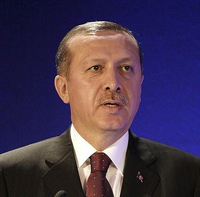
"Resource wars" enthusiasts worldwide have a new -- and unexpected -- poster child:"zero problems with neighbors" Turkey. The Turkish government of Prime Minister Recep Tayyip Erdogan is beside itself over Israel's recent moves to cooperate with Cyprus on surveying its Eastern Mediterranean seabed for possible natural gas deposits thought to be lying adjacent to the reserves discovered last year off the coast of Haifa.

Read the entire column at World Politics Review.