Buy Tom's Books
  • Great Powers: America and the World After Bush
    Great Powers: America and the World After Bush
    by Thomas P.M. Barnett
  • Blueprint for Action: A Future Worth Creating
    Blueprint for Action: A Future Worth Creating
    by Thomas P.M. Barnett
  • The Pentagon's New Map: War and Peace in the Twenty-first Century
    The Pentagon's New Map: War and Peace in the Twenty-first Century
    by Thomas P.M. Barnett
  • Romanian and East German Policies in the Third World: Comparing the Strategies of Ceausescu and Honecker
    Romanian and East German Policies in the Third World: Comparing the Strategies of Ceausescu and Honecker
    by Thomas P.M. Barnett
  • The Emily Updates (Vol. 1): One Year in the Life of the Girl Who Lived (The Emily Updates (Vols. 1-5))
    The Emily Updates (Vol. 1): One Year in the Life of the Girl Who Lived (The Emily Updates (Vols. 1-5))
    by Vonne M. Meussling-Barnett, Thomas P.M. Barnett
  • The Emily Updates (Vol. 2): One Year in the Life of the Girl Who Lived (The Emily Updates (Vols. 1-5))
    The Emily Updates (Vol. 2): One Year in the Life of the Girl Who Lived (The Emily Updates (Vols. 1-5))
    by Thomas P.M. Barnett, Vonne M. Meussling-Barnett
  • The Emily Updates (Vol. 3): One Year in the Life of the Girl Who Lived (The Emily Updates (Vols. 1-5))
    The Emily Updates (Vol. 3): One Year in the Life of the Girl Who Lived (The Emily Updates (Vols. 1-5))
    by Thomas P.M. Barnett, Vonne M. Meussling-Barnett
  • The Emily Updates (Vol. 4): One Year in the Life of the Girl Who Lived (The Emily Updates (Vols. 1-5))
    The Emily Updates (Vol. 4): One Year in the Life of the Girl Who Lived (The Emily Updates (Vols. 1-5))
    by Thomas P.M. Barnett, Vonne M. Meussling-Barnett
  • The Emily Updates (Vol. 5): One Year in the Life of the Girl Who Lived (The Emily Updates (Vols. 1-5))
    The Emily Updates (Vol. 5): One Year in the Life of the Girl Who Lived (The Emily Updates (Vols. 1-5))
    by Vonne M. Meussling-Barnett, Thomas P.M. Barnett, Emily V. Barnett
Search the Site
Powered by Squarespace
Monthly Archives
5:26PM

Emily Updates Volume 2 photos page up on the book site

Find the page here.

Believe it or not, this was our first family portrait.  Vonne had bought some package earlier in the year, from Sears I think, and we had this one portrait sitting left that we had to use up before the end of 1994. Em was falling apart at this point from the nonstop chemo of the "induction phase" lasting 13 weeks post-diagnosis in July, so we figured, this might be the only family portrait we'd ever have that included her.

I really love this photo.  My raccoony eyes from fatigue give me away (I was drinking heavily at the time too), and Vonne, starting her second trimester with son Kevin, is looking wan, but she musters something like a smile. Emily is happy enough, if a bit ghostly with her complete lack of hair (notice the missing eyebrows). We are barely holding it together in the fall of 94.

Then again, we held it together enough to write the Vol. 5 retrospective this last August.

The portrait was shot during the "missing" time of Volume 1 (after the first two chapters but before I started the diary), so we include it here because I described the picture in Chapter 4 of Volume 2.

9:53AM

Quoted in Reuters piece on Cyprus gas dispute

Here are excerpts with my bits (find the story here):

ANALYSIS-Turkey-Cyprus spat a sign of conflicts to come?

06 Oct 2011 08:54

Source: Reuters // Reuters 

By Peter Apps, Political Risk Correspondent

LONDON, Oct 6 (Reuters) - With an emerging power testing its strength, valuable resources in the balance and a weakened West struggling to exert influence, the dispute between Turkey and Cyprus over gas drilling may be a sign of wider things to come . . . 

In Southeast Asia, the Arctic, and perhaps also Africa and Latin America, disputed maritime boundaries may become flashpoints as rising scarcity of energy and other resources coincide with a shift in the geopolitical balance of power.

The United States and other Western powers,their relative influence waning, may have to play a subtle diplomatic game to ensure conflict is avoided and important relationships are not jeopardised.

"What we're seeing here is theatrics," says Thomas Barnett, US-based chief strategist for political risk consultancy Wikistrat. "The trick here is to manage it" . . . .

Beijing has been involved in a growing number of face-offs with neighbours in recent years over mineral and fishing rights, most recently Vietnam. Outside analysts say these are often originally spurred as much by private actors -- fishing boats or exploration vessels -- as deliberate policy, but again offer a podium on which Beijing can showcase its growing clout.

Other areas to watch, analysts say, might include Russia's growing assertiveness in the Arctic and perhaps Argentinian interest in the British-controlled Falklands, particularly in the event of energy discoveries there. Increased energy discoveries of Africa's coastline could also spark disputes.

But fears of a new era of "resource wars", Wikistrat's Barnett says, might still be overblown.

In the long run, he said a more assertive Turkey could prove a positive for both the U.S. and Israel, acting as a regional counterweight to Iran and Saudi Arabia, and that the important thing was to manage its rise.

"My instinct is that this is a storm in a tea cup," Barnett says of the Cyprus dispute. "You could make comparisons from this to what we are seeing in the South China Sea (and) in both cases the ultimate answer is probably the same -- some kind of shared corporation agreement... It might sound a long way off now, but it should happen with time."

The need for the West, he said, was to learn to reach out subtly and diplomatically to emerging powers like Turkey as Richard Nixon and Henry Kissinger did with China in the 1970s, soothing egos and helping nudge them towards co-operation.

Not everyone is so confident outright bloodshed will always be avoided . . . 

Yes, I did have some problem with the formulation Apps made on that last line.  I said  thing, but he was working the tension in the piece (sigh!), so you live with that journalistic trick, realizing that this is my legitimate niche anyway - the anti-alarmist.

So the tone of the quotes was good for both me and Wikistraat:  we want to be associated with wide-angle perspectives that emphasize strategizing. Toward that end, we've designed a number of simulations on this story at Wikistrat, to include ones that explore Turkey walking from the EU over this, oil drig shootouts (if Turkey truly wants a bloody shirt to wave like the "aid flotilla" fiasco), a downstream linkage to the nuclearization of the Eastern Med, and ultimately how all this natural resource wealth impacts regional economic development.

I'll have more on this subject in Monday's column. Apps' piece got me thinking . . ..

9:09AM

Time's Battleland: Arab Spring with same impact as "big bang strategy": Islam at war with self - not West


Nice piece in the NYT at the end of September pointing out that the primary impact of the Arab Spring is that, in giving people chances to rule themselves and not be subject to dictators, Islamic activists find themselves splintering from within . . .

Read the entire post at Time's Battleland.

8:00AM

My best explanation of Wikistrat yet

(Fb x Wp = MMOC) = CIE

Start-ups are curious things. They tend to morph right before your eyes, especially in the first stage in which family and friends tend to dominate the proceedings, with the occasional visionaries sucked in (as visionaries are wont to be).  It’s figuratively, “You supply the barn and I’ll bring some old sheets for the curtains and once we figure out who plays all the parts, we can put on a show!” In short, it’s all one grand experiment that attempts to answer the question, “Can we see our way to a product with a market and, if so, can we build a viable company around that product?”

The first stage is a heady mess, but incredibly exciting. It usually starts with a fabulous idea that requires downstream definition (“Okay, but where will this take us?”), which is typically achieved through real-world trial and error (“First we tried this, then that, and finally we locked onto the path.”) The key is the flexibility to say, “This isn’t working, but here’s the next logical attempt at something that might.”  How many times do you turn that crank?  My experience across ten such entities going back to 1987 is that 5-6 is the mean, with – naturally – foundational clients driving the process. 

Getting to those initial clients marks your departure from early-stage to mid-stage: you’ve had your proof-of-concept experience and figured out your basic product development and you’re heading into initial engagements.  Trick is, by then, your company needs to have some identity, to include enough of the right people in the right spots to execute those initial engagements with real confidence, meaning no wasted opportunities.

I was fortunate enough to be sucked into the Wikistrat world just after CEO Joel Zamel and DTO Daniel Green had decided to move off their first iteration (simply selling the wiki platform), and with them I participated in three more turns of the crank: the initial subscription period (CoreGap Report) that followed my laborious creation of the wiki/scenario-based GLOMOD (globalization model), the first efforts at mustering distributed simulations with a proto-community of early-joining analysts/interns, and then the – arguably audacious – decision to conduct the international grand strategy competition to jumpstart the community ethos, create some buzz on the whole crowdsourcing analytic dynamic, and conduct junior-to-mid-level recruitment that would fuel both.

The success of the competition really marked the beginning of the end of the early-stage development and the start of the mid-stage effort. After regaling each other with various attempted descriptions and analogies and heroic tales of what Wikistrat was and would eventually become, our dialogue – both internal and external – began to coalesce around three primary components.

Now, understand that what I’m about to say is my best description but not necessarily Joel’s or Daniel’s, and that, by presenting my version here, I’m not pretending that the dialogue is consummated, because start-ups simply don’t unfold like that.  More turns of the crank invariably happen.  It’s just that they’ll get smaller in the months ahead – more course corrections than setting out on new vectors.  And given that Joel and Daniel were only at it for yeah many months before they pulled me aboard and that was roughly a year ago, that’s a pretty sweet record – getting through the first stage in two years or less.  Not warp speed, mind you.  More like getting your Master’s degree on schedule and hitting your PhD program with advanced standing, understanding that I purposefully reach for an analytic analogy here.

So how would I describe Wikistrat as we embark on our midstage effort?

First, let me explain how I accumulated my “high concept” definitions along the way. By “high concept” I mean, a buzz phrase or mash-up of buzz phrases that captures the gist, like when Emily and I were watching James Cameron’s “Avatar” and I turned to her in the Imax and offered “The Matrix meets . . .” and she blurted out “Ferngully!”

Early on in conversations with Joel, I started with this bit, “Facebook meets Wikipedia.”  By that I meant two distinct things mashed up: Facebook referred to a global community of strategic thinkers, while Wikipedia referred to both the wiki-based strategic planning process and the under-construction GLOMOD, otherwise known the ultimate wiki on globalization itself or, in my initial upload, my professional body of thought transferred to the web to serve as original source code for what we know will eventually evolve far past my thinking to something a whole lot larger and more valuable – the rich and deep canvas against which we conduct simulations.

Now, the minute I blurted this out, I was pretty proud of myself, even if it presented the usual characteristics of my shorthand lexicon in that it was a bit superficial but highly accurate (my particular skill).  Then again, that’s the whole point of the high concept definition: namely, it cuts to the chase and its highly evocative.  You get it the minute you hear it.

The problem with this initial bit is that I would immediately follow it up with the refrain of, “But how to we make either of those items pay for themselves?”  Of course, Joel and Dan were thinking all along about the simulationss as products, but how to triangulate between community (Facebook) and environment (Wikipedia) into executing agent?

Joel and Dan had been mulling from the start about how the wiki-based approach would revolutionize the consulting business, taking the black-box methodology (you tell the consultancy your problem, they mull your world and future, and then out pops their answer, the creation of which made them smarter but doesn’t exactly empower you beyond their advice and revealed rationale). Their first iteration was selling the platform itself, but traditional consultancies weren’t interested in re-engineering what they felt wasn’t broken, even as they would readily admit the model represented the future of their industry, which, by all accounts - and my personal experience - is experiencing a serious shake-out since the global financial crisis began in 2008 (a true killing-of-the-dinosaurs-effect by that “meteor,” with no clear definition yet of who the “mammals” are, even as SaaS* providers look the most vibrant).  [*service as a solution]

Once it became clear that selling the platform wasn’t the way, the next iteration explored the notion of replicating the basic outlines of a traditional consultancy and then using the platform as a competitive advantage. But here was the problem with that: it didn’t sufficiently leverage the crowdsourcing dynamic.  It was your experienced and well-leveraged traditional consulting team versus our lean but wiki-enabled team – too close to a fair fight to be compelling.

Enter the grand strategy competition, where our subtext was, “Can we show how smart-but-relatively-inexperienced newcomers to the field can, en masse, tackle a complex future projection and really run that beast to ground in impressive fashion?”

For those of you who followed the competition, you know the answer. No, it wasn’t all “wheat,” but the “chaff” quotient dropped radically with each week, and the overall product was incredibly rich, especially considering the variety of simulations we crammed into the effort.  By my count, all sorts of legit professional products are easily generated from the competition, and we weren’t really even customizing with a customer in mind.

It thus proved, to a pleasantly surprising degree (for me, at least) the viability of a phrase I had started using last spring after Joel and Daniel confronted me with their idea of the competition: we are building the world’s first MMOC, as in, a massively multiplayer online consultancy.  So, it’s not just the community (Facebook of strategists) and it’s not just the environment (Wikipedia/GLOMOD), it’s the MMOC that combines the two into a product-offering machine.

I had written about this back in “Blueprint for Action” (2005) in my concluding bit called, “Headlines from the Future” (last entry for the 2020 timeframe):

“Online Game Triggers Dictator’s Departure; Stunning Victory of ‘People’s Diplomacy’”

The complexity of planning postconflict stabilization operations in advance is daunting, simply because of the huge number of variables involved. It’s not a matter of simply crunching numbers, but rather anticipating the free play of so many actors—your own military, allied civilians, enemy soldiers and insurgents, the local population, and so on. In many ways, this kind of complex simulation is well given over to massive multiplayer online games (MMOG), something I see both the military and the U.S. Government turning toward as a tool for predictive planning. Imagine if, months prior to the invasion, the Pentagon had started a MMOG that modeled Iraq immediately following the regime’s collapse, allowing hundreds or even thousands of chosen experts (or even just enthusiastic gamers!) from the world over to fill out the multitude of possible characters involved on both sides. Imagine what insights could have been learned beforehand. Now jump ahead fifteen years and think about how sophisticated such MMOGs might be, and how they could be used to preplay—for obvious consumption by both the global community and the targeted state in question—a rogue-regime takedown and subsequent occupation, perhaps even to the effect of convincing the regime to abandon its untenable situation in advance of actual war being waged. Far-fetched? Not in a world where uncredentialed Internet bloggers can force Senate majority leaders and major network news anchors to resign in disgrace at lightning speed.

And yes, I had thought of this the first time Joel and Daniel laid out their vision at the airport in NYC last fall. It just took a while for the three of us “blind men” – along with Wikistrategist Elad Schaffer – to feel up that “elephant” enough times to realize what we had here.

Back to the competition: it wasn’t just the executing-the-simulation-through-crowdsourcing dynamic that was proven there. What impressed me even more was the immediate sense of community that was created: participants really got into the process, regardless of their level of success in scoring.  It energized them and produced its own individual benefits of the blade-sharpening and unfolding-your-wings varieties.  I felt the same way about the judging: it was simply fun, in addition to being hard work and engrossing and enriching.  At the end of it, it didn’t just tickle my fancy.  My gut professional reaction was, “I could bundle this whole beast into an impressive book.”

Of course, so could anyone else who worked the competition – once they approximate my writing skill-set (not a simple matter, I would maintain). And there is beauty in that too: the Wikistrat universe is far more than a blade-sharpening and marketing-of-skills universe, it’s an elevating-your-thinking environment – no matter your level of experience.

Moreover, the sum product of the competition fed the GLOMOD beautifully.  It was like adding an entire new floor to the building in one fell swoop.

Win-win-win, but likewise a delineator of what we had here in this three-legged stool:  Facebook + Wikipedia = MMOC, or global community of strategists + global model of globalization = powerfully crowdsourcing simulations for a wide variety of clients.

In later conversations with one of the competition participants, who’s now in the process of stepping into an advisory role for Wikistrat (based on past-life experiences) even as she joins our global lineup of analysts (she’s a grad student in international relations), I let out the final high-concept definition: that Facebook + Wikipedia = MMOC constellation equates to a private-sector equivalent of what the CIA always should have been for the US Government – an intelligence exchange.  Wikistrat, in its full flowering, is a Central Intelligence Exchange on globalization across all of its major domains, meaning it connects clients with the best crowdsourced advice out there.  It is the “beast” (GLOMOD) that’s feed by the smart mob (community of strategists) and put to specific use (“the drill”) for interested clients. It beats traditional black-box consulting by being interactive, real-time, fully transparent, archivable, and red-teamed to a point of analytical robustness that cannot be achieved BOGGSAT-style (bunch of guys/gals sitting around a table).  It gives the client a world-class, throw-everyone-at-the-problem capability at an incredibly affordable price, making Wikistrat a desirable add-on capability for existing consultancies (dubbed, “channel partners”) looking to bring new-but-lean capabilities to clients struggling with globalization’s mounting complexity. Likewise, if you’re an analytic shop in the public sector facing budget cuts, Wikistrat has just given you the “more” capability to go along with your “less” budget (as in, “do more with less!”).

Why it matters for us to have this self-awareness.  The Facebook dynamic requires its own dynamics, skilled leadership, etc.  As does the Wikipedia/GLOMOD bit (my proximate role) and the MMOC (my ultimate role).  Making the whole CIE dynamic happen is a meta-level responsibility not to be underestimated either.  Knowing all this guides who we bring on in the future, because if you don’t know what your start-up is all about, you will flounder around when it comes to ramping up personnel and capability.  The good news is, of course, that ramping up the global community of strategists itself is a fairly simple – and cheap – affair. They go into your pool and they’re activated as jobs arise – a virtual labor force that can be activated discretely and at will.  But yes, some management and operational structure will need to be built around them, so – again – having a good sense of what that “elephant” is now is crucial. 

That’s it.  That’s my – for now – best riff on what Wikistrat is and is becoming. I didn’t put the whole package together in one conversation until I was chatting with one of our mentors while driving up to Green Bay Sunday morning to hit the Packer Hall of Fame prior to Aaron Rodger’s historic performance (4 passing TDs, 400-plus passing yards, and two rushing TDs – first time ever for an NFL QB in 90 years of league play), which just goes to show you two things: 1) it takes a while to construct complex explanations, and 2) I think best when I’m talking – even better than writing (which is why I have to explain something several times before I typically author it).

12:01AM

WPR's The New Rules: U.S. Resilience Can Rise to Future Threats

Last month I spent a couple of hours on the phone being interviewed for the next iteration of the National Intelligence Council's global futures project. This one imagines the world in 2030, and the interview was part of the organization's early polling process of experts around the world. I've participated similarly in previous iterations, and I've always found the NIC's questions fascinating for how they reveal the group's primary fears about the future.

Read the entire column at World Politics Review.

8:35AM

Wikistrat Middle East Monitor, September 2011

We're excited to announce the launch of Wikistrat's Middle East Monitor for September 2011, which can be viewed in its entirety here.

Summary

All eyes were on the Palestinian bid for U.N. membership this month. The move puts the U.S. in the uncomfortable position having to exercise its veto to block the bid, which could cause the region to erupt in anti-American fervor and lead to violence on the borders of Israel. However, Wikistrat does not believe that such an event would have a direct strategic affect, and is more concerned about how the political environment would improve the appeal of the Islamists in countries affected by the Arab Spring. The Islamists would benefit politically if Israel and confrontation with the West were to become major campaign issues, particularly in Tunisia and Egypt, where elections are to be held in October and November, respectively.

Civil war appears imminent in Yemen, and the chances of an armed revolt within Syria significantly increased. Yemeni President Saleh has returned home from Saudi Arabia, where he was being treated for three months following an assassination attempt. His return resulted in a sharp increase in violence, and now fighting between tribesmen loyal to the opposition, backed by defected soldiers, and the regime, is spreading. At the same time, two groups in Syria have formed called the Free Officers Movement and Free Syria Army, with contradictory reports on whether they are rivals or have united. The Free Syria Army is claiming credit for a string of attacks on the regime’s security forces, but is far from presenting a significant armed challenge at this stage.

The struggle between Islamists and secularists in the Arab Spring became more apparent this month. In Libya, Islamists are trying to sideline the secular leadership of the National Transitional Council. In Egypt, liberal parties are decrying the unfair playing field they face, with some calling for a postponement of elections until they can properly organize. In Syria, it is less obvious, but rival efforts to form opposition groups show the Islamists and secular democratic forces are in a quiet competition to lead the opposition to the Assad dictatorship.

All eyes were on the Palestinian bid for U.N. membership this month. The move puts the U.S. in the uncomfortable position having to exercise its veto to block the bid, which could cause the region to erupt in anti-American fervor and lead to violence on the borders of Israel. However, Wikistrat does not believe that such an event would have a direct strategic affect, and is more concerned about how the political environment would improve the appeal of the Islamists in countries affected by the Arab Spring. The Islamists would benefit politically if Israel and confrontation with the West were to become major campaign issues, particularly in Tunisia and Egypt, where elections are to be held in October and November, respectively.

Civil war appears imminent in Yemen, and the chances of an armed revolt within Syria significantly increased. Yemeni President Saleh has returned home from Saudi Arabia, where he was being treated for three months following an assassination attempt. His return resulted in a sharp increase in violence, and now fighting between tribesmen loyal to the opposition, backed by defected soldiers, and the regime, is spreading. At the same time, two groups in Syria have formed called the Free Officers Movement and Free Syria Army, with contradictory reports on whether they are rivals or have united. The Free Syria Army is claiming credit for a string of attacks on the regime’s security forces, but is far from presenting a significant armed challenge at this stage.

The struggle between Islamists and secularists in the Arab Spring became more apparent this month. In Libya, Islamists are trying to sideline the secular leadership of the National Transitional Council. In Egypt, liberal parties are decrying the unfair playing field they face, with some calling for a postponement of elections until they can properly organize. In Syria, it is less obvious, but rival efforts to form opposition groups show the Islamists and secular democratic forces are in a quiet competition to lead the opposition to the Assad dictatorship.

Wikistrat Bottom Lines

Go!Opportunities

  • Turkey has placed an arms embargo on Syria and will enact further sanctions. Prime Minister Erdogan has also offended the Egyptian Muslim Brotherhood with his call for secular governance. This is a surprising development given Erdogan’s own Islamist orientation, but these actions nonetheless complement Western interests.
  • Saudi Arabia has granted women the right to vote in local elections in 2015. If they are able to turn out, that will give the liberal elements within Saudi society a greater voice. The Moroccan and Saudi models of handling the Arab Spring also offer a formula for Western allies in the region.
  • Syrian protesters are increasingly vocal about their desire to see various kinds of Western intervention on their behalf. This opens the door for the West to reach out to the opposition in Syria, and perhaps elsewhere, and provides an opportunity for the West to strengthen secular elements.

Stop!Risks

  • A civil war in Yemen is very likely to be bloody and severely destabilizing. The main opposition party, Islah, is a Muslim Brotherhood affiliate with Salafist backing. Al-Qaeda in the Arabian Peninsula will have more freedom of movement, and the Iranian-supported Houthis in the north will have an increasing amount of autonomy.
  • The increasingly assertive role of Turkey also carries risks. The Turkish government may favor the Islamist elements of the Syrian opposition. It also is increasingly confrontational towards Israel, showing that it has not taken a sharp turn towards the West entirely.
  • The ongoing fighting in Libya raises the threats of weapons falling into the hands of enemies to the West, terrorists gaining a foothold, and Qaddafi loyalists waging an insurgency from neighboring countries.

Warning!Dependencies

  • The goals of Turkey. The political party of Erdogan is undoubtedly Islamist, but Turkey’s confrontation with Syria, break with Iran and clash with the Egyptian Muslim Brotherhood is leaving observers in disagreement about his regional objectives.
  • The patience of the defected military forces in Yemen, particularly General Ali Mohsen. The soldiers have defended protesters, but have not made a full push to forcibly push Saleh out of power.
  • The ability of the Syrian opposition to address the fears of the minorities that back Assad out of self-preservation, specifically the Allawites, Christians and Druze who fear persecution.
1:45PM

Gone fishing . . .

. . . for a 4-0 start.


Be in the north end zone (left side of TV screen), right between goal posts, in my Mom's seats with son Jerry and Indiana buddy.

7:46AM

Daily Dish cite on Esquire post

Find it here.

I credit Yale and Claremont Grad School for convincing me on this point, showing the utility of the wisdom of crowds (especially populated by young new thinkers).

10:14AM

China will spend where it can own

It's becoming clear that China won't bail out Europe, simply because it sees no political will and has no desire to buy more Western debt.  Same will apply to US as things get worse.

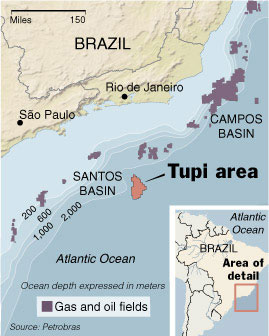
What China will buy is access to stuff it truly wants: resources and management talent.  So, as the cited FT story makes clear, China is ready to invest in Brazil's new offshore hydrocarbon discoveries.

And as the Center for America-China Partnership made clear in our grand strategy agreement, China is interested in buying into US companies.

But no, it's not interested in throwing hard-earned money after bad.

9:28AM

Esquire's Politics Blog: 5 Ways to Make the Pakistan Mess Less Stupid Than Vietnam

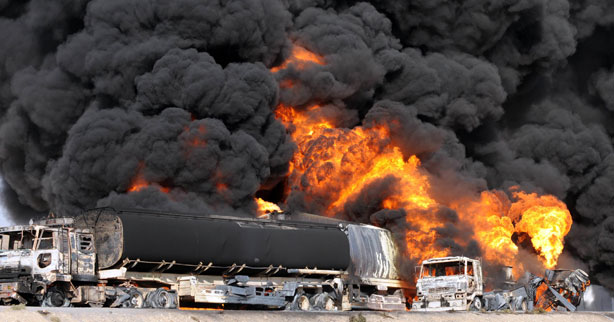
In the wake of Admiral Mike Mullen offering such electrifying testimony last week, various commentators — and respectable ones, like Christopher Hitchens and Dexter Filkins — are circling the "long war" question of the moment: What to do about Pakistan? And it's clear to anybody with a brain at this point that Pakistan has abused our trust and military assistance as much as — or worse than — we have long abused that fake state in our pursuit of Al Qaeda and the Taliban. So now, as the West's fiscal crisis kicks into high gear, progressively denuding us of NATO allies while Congress finally gets serious about reining in the Pentagon's vast budget, we've come to a clear tipping point in the whole Af-Pak intervention as its tenth year of operations draws to a close.

Read the entire post at Esquire's The Politics Blog.

8:00AM

Chart of the Day: Slowing trade = slowing global economy = slowing globalization

FT story that matches a previous Economist bit about the slowing of traffic through the Suez (HT Dan Hare on latter).

As I've noted here before, the more than 10% drop in 2009 was basically recovered in 2010. For now, the trade growth still forecast through the rest of 2011 is more than twice as high as the 2008 total, but we are headed in the wrong direction.

In releasing these figures, the WTO hinted that the fiscal crisis in Europe is much to blame (uncertainty depresses production depresses trade).

The danger now - again - is that trade protectionism begins to creep back in, especially of the monetary sort, as the BRICS are getting hot under the collar over the hot money pressuring their systems - Brazil especially.

7:04PM

Getting better on Amazon Kindle

And we really haven't had much publicity yet (working on that).

Steady as she goes . . ..

10:40AM

WPR's The New Rules: Time to Worry About Over-Eating, not Over-Population

The real clash of civilizations in the 21st century will be not over religion, but over food. As the emerging East and surging South achieve appreciable amounts of disposable income, they're increasingly taking on a Western-style diet. This bodes poorly for the world on multiple levels, with the most-alarmist Cassandras warning about imminent resource wars. But the more immediate and realistic concern is the resulting health costs, which will inevitably trigger a rule-set clash between nanny-state types hell-bent on "reining in" a number of globalized industries -- agriculture, food and beverages, restaurants, health care and pharmaceuticals -- and those preferring a more free-market/libertarian stance.

Read the entire column at World Politics Review.

7:00AM

Movie of my week: "Bridesmaids" (2011)

Watched it last night at home on BluRay and it was spectacularly funny.  That Melissa McCarthy is simply unreal, like this gruff female Ricky Gervais. Everything she did was funny, which makes me want to check out that TV sitcom she just won an Emmy for.  

Also loved Rose Byrne as the baddie and the always fabulous Kristen Wiig, who co-wrote and co-produced with an old Groundlings pal for Judd Apatow.

Raunchy enough to deserve the R rating, I laughed out loud throughout and just about lost it during the infamous dress-shopping scene.

12:26PM

Chart of the Day: Migration map (site)

Found here, HT to Critt Jarvis.

You can click on any country and see where people are drawn from.  Very cool.

10:03AM

China's slows but still grows, thanks to regional "gravity"

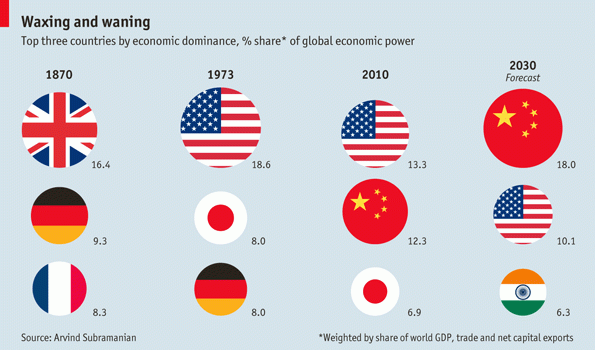
Economist talking up a new book by Arvind Subramanian, who often writes for the FT. It's called "Eclipse."

Why China looms large in the future global economy, according to Subramanian: demography, convergence, and "gravity."

Convergence is a take on the healing of the "great divergence" that began around 1800: West grows 1200% over two next centuries while the rest lost 50% (much due to colonialization). The "great convergence," as many call it, predicts that the West grows 600% this century while the rest grow 1200%. Doesn't eliminate difference, but closes gap mightily.

Demography, in Subramanian's take, is all about heft: China is 4X size of US so only needs 1/4 GDP per capita to outpace.  He blows off the ageing issue, according to the Economist, and he doesn't seem to be tracking the decrease in labor either.

Subramanian is no pie-in-the-sky trajectionist, meaning those who place China on a neverending track of 8-10% growth. He buys into the S-curve argument and says China will grow about 5% for next two decades. That's the pattern we've seen in East Asia in the past (reach 25% of US per cap GDP and then slow to 5-6% growth).

The idea that caught my attention was the gravity one: 

. . . the "gravity" model of trade, which assumes that commerce between countries depends on their economic weight and the distance between them. China's trade will outpace America's both because its own economy will expand faster and also because its neighbors will grow faster than those in America's backyard.

Point being: China works its region while we do not.  We play the drug war and China is working infrastructure like crazy in SE Asia. China will also logically work toward an Asian Union with its economy as the centerpiece, while the US puts up a border wall.

Back to an argument I continue to make: we need to be opening up to the south like crazy, not shutting ourselves off on immigration and drugs.  We'll make ourselves weak relative to China and India due to their bulk populations, when our version of their interior rural poor are there for the taking.

We should be expanding the United States, not closing it down.

8:58AM

Interview in new peace movement book called "Let it begin with me"

A while back I gave a long interview to Mindy Audlin on her radio show.  That interview, along with twenty others, is bundled up into her new book, "Let it begin with me: 21 voices of the new peace movement."

Yes, I realize that it's not my typical venue, but Mindy is a bigger thinker than most.


Find the book at Amazon.


8:53AM

Time's Battleland: AFRICOM gets seriously . . . nasty

In 2007, I wrote the first definitive piece for Esquire on the kernel code for Africom: namely, the Combined Joint Task Force - Horn of Africa. Back then, I described it as essentially a non-kinetic force, or no "trigger pullers." But the piece led off with a quick summary of a special ops event that occurred in conjunction with Ethiopia's military intervention in Somalia. So when the deputy commander of CJTF-HOA said that the command had "never fired a shot in anger," he was being truthful in a bureaucratic sense. Back then, HOA didn't kill bad guys on the Horn, SOCCENT [Special Operations Command, Central Command] killed bad guys on the Horn.

Read the entire post at Time's Battleland.

9:02AM

Time's Battleland: When the machine world attacks

Coming to a theater near them

Interesting WAPO piece today on advances in drone technology, the basic line being, we're not all that far from drones doing their killing on their own. Story leads with a description of a successful test wherein drones communicate with each other and zero in on a colored object. You can easily do the extrapolation to face-recognition technology . . .

Read the entire post at Time's Battleland.

7:47PM

Welcome Hugh Hewitt listeners

For regular readers, the live stream on Hewitt is here. I'm on in the next hour (8-9pm EST).

Once that airs, welcome to the listeners!

Regardingly the eBook serial, The Emily Updates: One Year in the LIfe of the Girl Who Lived, please go to The Emily Updates.net for all the details and purchasing links.