Buy Tom's Books
  • Great Powers: America and the World After Bush
    Great Powers: America and the World After Bush
    by Thomas P.M. Barnett
  • Blueprint for Action: A Future Worth Creating
    Blueprint for Action: A Future Worth Creating
    by Thomas P.M. Barnett
  • The Pentagon's New Map: War and Peace in the Twenty-first Century
    The Pentagon's New Map: War and Peace in the Twenty-first Century
    by Thomas P.M. Barnett
  • Romanian and East German Policies in the Third World: Comparing the Strategies of Ceausescu and Honecker
    Romanian and East German Policies in the Third World: Comparing the Strategies of Ceausescu and Honecker
    by Thomas P.M. Barnett
  • The Emily Updates (Vol. 1): One Year in the Life of the Girl Who Lived (The Emily Updates (Vols. 1-5))
    The Emily Updates (Vol. 1): One Year in the Life of the Girl Who Lived (The Emily Updates (Vols. 1-5))
    by Vonne M. Meussling-Barnett, Thomas P.M. Barnett
  • The Emily Updates (Vol. 2): One Year in the Life of the Girl Who Lived (The Emily Updates (Vols. 1-5))
    The Emily Updates (Vol. 2): One Year in the Life of the Girl Who Lived (The Emily Updates (Vols. 1-5))
    by Thomas P.M. Barnett, Vonne M. Meussling-Barnett
  • The Emily Updates (Vol. 3): One Year in the Life of the Girl Who Lived (The Emily Updates (Vols. 1-5))
    The Emily Updates (Vol. 3): One Year in the Life of the Girl Who Lived (The Emily Updates (Vols. 1-5))
    by Thomas P.M. Barnett, Vonne M. Meussling-Barnett
  • The Emily Updates (Vol. 4): One Year in the Life of the Girl Who Lived (The Emily Updates (Vols. 1-5))
    The Emily Updates (Vol. 4): One Year in the Life of the Girl Who Lived (The Emily Updates (Vols. 1-5))
    by Thomas P.M. Barnett, Vonne M. Meussling-Barnett
  • The Emily Updates (Vol. 5): One Year in the Life of the Girl Who Lived (The Emily Updates (Vols. 1-5))
    The Emily Updates (Vol. 5): One Year in the Life of the Girl Who Lived (The Emily Updates (Vols. 1-5))
    by Vonne M. Meussling-Barnett, Thomas P.M. Barnett, Emily V. Barnett
Search the Site
Powered by Squarespace
Monthly Archives
12:06AM

Sad story for Rhode Island's cliff walks

NYT story on courts clearing way for lawsuit by tourist against city of Newport for allegedly not having enough safety measures WRT its famed Cliff Walk.

Usual dumbass behavior by off-islanders: guy walks off trail down to water, slips and paralyzes himself.  Usual trick is to stand very close to edge of water for picture-taking, and while back to water, sneaker wave sucks person off shore to watery death. 

Having lived on the island for 7 years and spent countless hours on various cliffs and beaches and shorelines, I'd see this behavior all the time.  And I'd just shake my head and make my polite warnings, but my advice was just as quickly blown off by know-it-alls as would be any additional signs or fences.  People will just not be told what to do when they're on vacation, and then they want somebody else to pay for their mistakes.

Don't get me wrong, me and mine would engage in all sorts of similar behavior--just with our eyes wide open (I will confess to slipping past the cops with my kids to surf during hurricane surges).  And we loved RI's landscape for all those opportunities afforded to commune with nature. But nature is nature, not a Disney ride.

12:05AM

The deficit/debt as national security "threats"

James Galbraith in the LA Times, by way of WPR's Media Roundup.

He takes on the notion that the deficit is now a national security threat, a notion the Obama administration raised in its new National Security Strategy.

Was World War II, for example, won with balanced budgets? No. Deficits ran about 25% of GDP every year of the war, and the national debt had reached 121% of GDP by 1946. Was the United States weakened by this? Hardly. America had never been stronger than it was in 1946. And afterward, the economy didn't implode. The debt-to-GDP ratio merely declined, year after year, until it reached a low of about 33% of GDP in 1980.

Was America stronger in 1980 than in 1946? No again. That year we elected Ronald Reagan, who campaigned on a promise to restore the United States to a position of strength. To that end, he promptly cut taxes and boosted military spending, actions that pushed the deficit back up to about 50% of GDP even as the economy recovered.

It's true that nowadays China, Japan and other countries hold large piles of Treasury bonds. But why? Only because they run trade surpluses with the whole world and have chosen to stockpile those earnings in dollars. This is a sign of confidence in us. And reducing budget deficits wouldn't change anything about that, unless those Asian trade surpluses were also reversed. But the folks at Brookings weren't calling for a trade war with Asia, just about the only step (however unwise for other reasons) that might plausibly cut the surpluses.

Do China's debt holdings give China leverage over us? Not at all. Realistically, China can do nothing with its Treasuries except roll them over. China is not going to dump U.S. bonds in order to buy those of Spain or Greece. And paying interest on them is not, for us, a burden, since the money is never spent and probably never will be.

Speaking of interest, it's also obvious that the capital markets don't take the deficit scare-talk seriously; otherwise, they wouldn't be lending to Uncle Sam for 30 years at just over 4%. And the dollar wouldn't be rising, as investors seek safety from the European crisis in Treasury bonds — a sure sign that the world's wealthy don't find U.S. deficits all that worrisome.

The danger?  The old bugaboo by which Social Security and Medicare are whacked to pay for increased military spending.

I like the contrarian attitude here.

12:03AM

Rwanda: healthcare on the cheap

NYT story on near-universal healthcare in poor Rwanda.  $2 a year buys it.

Nothing fancy, and yet impact:

Since the insurance, known as health mutuals, rolled out, average life expectancy has risen to 52 from 48, despite a continuing AIDS epidemic, according to Dr. Agnes Binagwaho, permanent secretary of Rwanda’s Ministry of Health. Deaths in childbirth and from malaria are down sharply, she added.

Shows the utility, no matter the level of development.
Doesn't work without some outside money help, and it's hard to get locals to pay in advance, but the larger point is, if it costs something, even if it's not much, people take it a lot more seriously--and use it.
12:02AM

Saudis likewise prep strike capacity vis-a-vis Iran

Media Line story via WPR's Media Roundup.

Gist:

As it denies cooperating with preparations for a potential Israeli attack on Iran, Saudi Arabia prepares for strike of its own. 

Saudi Arabia’s air force has signed a deal to upgrade its fleet of 150 strike aircraft and procure advanced weaponry to respond to an Iranian military threat while simultaneously denying reports that the country is coordinating with Israel over a possible strike against Iran’s nuclear sites.
    
“The Saudis are very worried about the growing power of Iran,” Arie Egozi, an aviation expert for the Israeli daily Yediot Ahronot, told The Media Line. “They want to protect their oil resources and other things. They have a very large air force and are upgrading their capabilities by installing new systems into their aircraft, mainly the Boeing F15s.”

Perfectly sensible stuff, and perfectly fine for US defense industry to be involved.

12:01AM

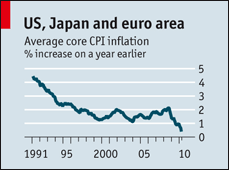
Chart of the day: too much deflationary pressure a bad thing

Economist chart.

For a long time, China's deflationary impact on prices was seen as a good thing:  it meant China's rise didn't lead to more expensive goods in the West--just the opposite.

But with the West is a slump, a vicious cycle sets in:  more belt-tightening means less demand, means lower prices still, means . . ..

So the view of economists rounded up online by the mag is, "deflation is the bigger short-term danger in big, rich economies, whereas inflation is an immediate worry in many emerging economies and, potentially, a longer-term danger in rich ones."

12:10AM

The future face of China captured in a perfect NYT headline

David Barboza (frequently brilliant) piece in NYT with perfect, crystalizing headline:  

In China, Unlikely Labor Leader Just Wanted a Middle-Class Life

Story comes out of the recent strike at a Honda factory.

The dynamics here are also perfect:

Tan Guocheng is hardly a self-styled labor leader. Age 23 and introverted, he grew up among rice paddies and orange groves far from China’s big factory towns.

But last month, an hour into his shift at a Honda factory in the southern city of Foshan, Mr. Tan pressed an emergency button that shut down his production line.

“Let’s go out on strike!” he shouted. Within minutes, hundreds of workers were abandoning their posts.

Colleagues described Mr. Tan’s leadership as an uncharacteristic act of courage; Mr. Tan said he simply wanted a pay raise. Regardless, he has helped touch off a wave of strikes at Honda plants and other workplaces in China that are still playing out in surprising and significant ways.

Though Mr. Tan has since been fired by Honda for “sabotage” and moved back to his village, striking workers at another Honda plant less than 100 miles away in Zhongshan marched in the streets on Friday and made a new demand: the right to form an independent labor union.

“This is a remarkable development,” said Anita Chan, a labor expert at the University of Technology in Sydney. “Most strikes in China tend to be about not being paid or being mistreated. This was different. The workers were demanding very high salaries. And they want to elect union leaders democratically.”

The two-week strike at Mr. Tan’s plant forced Honda to shut down its four assembly plants in China and to eventually offer 1,900 workers in Foshan a 24 to 32 percent pay raise. That got to the heart of Mr. Tan’s complaint.

Leaving his home in central China four years ago, Mr. Tan had hoped that working on an assembly line for a global company like Honda would be his path to a middle-class future.

But the pay was meager, he says, and inflation ate away at his earnings. And last January, when Honda offered to increase his $175 monthly salary by a mere $7, Mr. Tan, who planned to marry soon, was distraught. It was not enough money to buy a house or raise a child.

“I couldn’t understand how they could give us so little,” he said. So he decided to fight back.

This is a story about what China becomes when it's all grown up and industrialized.  

There will be countless more Tans in this story, and they will be the best thing that's ever happened to the country.

God bless the fellow for just wanting what he's due.

12:06AM

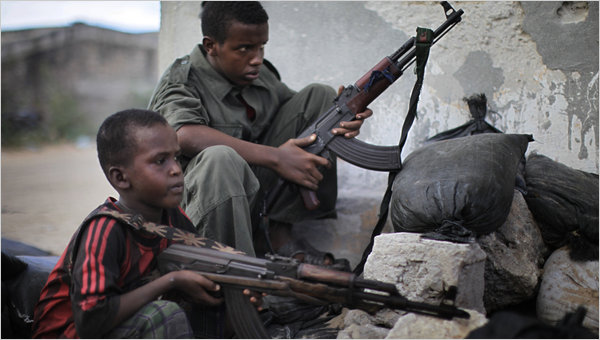
When you do SysAdmin by proxy in Somalia, you enlist children as warriors

NYT story says child soldiers exist "across the globe," but truth is, they exist only inside my Gap.

When people say it's not our role to do the SysAdmin work in these places, they just need to understand who gets pressed into service when Core great powers don't show up.

Take a good look at the kid's face, because he's working for you.

Feel any holier about our non-interference?

12:05AM

Will Pakistan uphold its end of the clear-and-hold effort?

Map here

Pakistani member of parliament via Times of India via Our Man in Kabul.

I quote at length:

There is a saying in Pakistan that if you can’t defeat your enemy, befriend him. This is particularly true in the tribal areas that border Afghanistan, where, in six agencies, there’s an unprecedented military offensive against militants. Despite many tactical alliances and ceasefire pacts in Waziristan, Pakistan has gone in with firepower backed by US drones. The cornerstone of the security policy here is to attack militants close to the al-Qaida, but spare armed syndicates that protect Pakistan’s flanks. 


The turbulence in the Af-Pak border zone has led Washington to put out strategic leaks about possible military intervention inside Pakistan. The heart of the problem is what could alter the dynamics of declining US-Nato successes in the Afghan theatre. North Waziristan agency (NWA), and what the Pakistan army is able to do there, seems to have become the litmus test for US-Pakistan relations. After Faisal Shahzad’s attempted bomb attack in Times Square, the pressure on Islamabad to act against anti-US Taliban in NWA has increased. Islamabad pleads capacity constraints; the US cites commitment gaps. 

The stakes are high. After failing to build institutional structures in Afghanistan, the test for Washington is linking US-Nato ground offensives in the south and Loya Paktiya to Pakistan’s push on the militant Haqqani-led groups from NWA. The Obama presidency needs a game-changer in a theatre where success is elusive despite a COIN (counter-insurgency) strategy that focuses on population safety. The expected Taliban reversals have not happened despite a massive offensive in Marjah. In Washington’s view, Pakistan is pulling its punches as it may need the Taliban when the US exits Afghanistan. 

For Pakistan, this is a battle for its stability and survival. Action is overdue against terrorist and sectarian groups in Punjab, Balochistan and Khyber-Pakhtunkhwa. There is a compelling need to act against extremist groups after the massacre of nearly a hundred Ahmadiyas in Lahore recently. The Punjab government needs to do a counter-terror sweep of its cities . . . 

The challenge in NWA is that Islamabad does not have the military or civilian capacity to open all fronts at the same time. Enmeshed in a blighted strategic endgame, with a growing terrorist threat, tanking economy and India posturing to the east, the military option in NWA cannot be a hair-trigger decision . . .  Islamabad’s fear is that if it shoves a fist into this hornet’s nest, maintaining the fragile consensus against terrorists at home would be difficult, as well as protecting its cities from further attacks. 

This can be no “shock and awe” exercise that can be switched off by remote control. Pakistan has already lost over 3,000 people in two years as a result of the terrorist backlash; the economy has taken a $35 billion hit. The question is, will the US be around to help hold down Pakistan’s fist when its army swoops on al-Qaida strongholds such as Mir Ali? The military’s tactic in any counterinsurgency initiative in mountainous terrain is ‘pincer and choke’ the enemies’ escape routes . . . If the NWA is grand central for terrorists, then the Afghan border provinces provide strategic depth. While the US-Nato forces in Afghanistan need to do their bit, Pakistan will have to step up border checks and review unwritten peace deals with tribal leaders who change sides too often. 

The other question is: how long can the Pakistani army stay in the agencies it has secured? Is there a civilian ‘build, hold and transition’ component to the project? Once again, before putting pressure Pakistan with an escalating war, huge governance commitments such as ROZ (reconstruction opportunity zones) assistance will have to roll off the US machine . . .

What will help is a phase-by-phase plan for securing the area, holding it until the tribes that have been terrorized by the Taliban are able to return and do business. Second, though the elites in Waziristan’s tribal areas have been marginalized by the Taliban, they will resist governance models that diminish their pre-Taliban political powers. The military will have to stay in Waziristan until the police and frontier corps in that area is strengthened, and the tribal leadership prepares for critical reforms and political activity by mainstream parties. FATA (Federally Administered Tribal Areas) reform will only work if introduced incrementally, and the government’s recent announcements, if implemented, will be a brave start . . .

A glass-half-full take in the near-term, in the sense that Pakistan's serious efforts are acknowledged.  The usual doubts expressed about US staying power--sensible.

But what depresses is the realization that unless the two efforts match up, most of this will have been a complete waste of time--the same old, same old effort.

Most telling, none of this seems like it can credibly wrap up by the summer of 2011, when Obama wants to start leaving.

12:04AM

Practicing the mutually-assured-destructing dialogue

Chart here

The Times (London) has a story that's popping up everywhere now.  I got it via Michael Smith.

The supposition has always been there: the Saudis turn a blind eye toward Israel flying over its airspace (and perhaps even refueling on the ground at some makeshift landing site) in order to attack Iran's nuclear sites.

So now The Times reports:

Saudi Arabia has conducted tests to stand down its air defences to enable Israeli jets to make a bombing raid on Iran’s nuclear facilities, The Times can reveal.

In the week that the UN Security Council imposed a new round of sanctions on Tehran, defence sources in the Gulf say that Riyadh has agreed to allow Israel to use a narrow corridor of its airspace in the north of the country to shorten the distance for a bombing run on Iran.

To ensure the Israeli bombers pass unmolested, Riyadh has carried out tests to make certain its own jets are not scrambled and missile defence systems not activated. Once the Israelis are through, the kingdom’s air defences will return to full alert.

“The Saudis have given their permission for the Israelis to pass over and they will look the other way,” said a US defence source in the area. “They have already done tests to make sure their own jets aren’t scrambled and no one gets shot down. This has all been done with the agreement of the [US] State Department.”

No matter how Israel goes about it, we'll be complicit, and that's okay.  While it will not get us the outcome we seek, beyond temporary delay, it signals our seriousness and our ability/willingness to strike. Ditto for the Saudis.

I'm against the US mounting a big-time effort, but I don't have any problem with Israel getting their limited-strike stuff off their chest.  Israel wants the sensation of acting, and it dreams of a new president in the US come 2013 who would approach the problem differently, so this is a time-buying exercise like all the rest. Again, it won't accomplish much, but it does start the signaling process to come, when Iran does get its nukes.

Since I see that path as inevitable, I don't mind the early practice.

12:03AM

Ella . . . enchanted but protected

WAPO story on the next-generation morning-after contraceptive that's been available in Europe for a while and now looks to hit the street in America as a extending capability to the Plan B product we've already got.  FDA just approved, safety-wise.

Plan B, which works for up to 72 hours after sex, was eventually approved for sale without a prescription, although a doctor's order is required for girls younger than 17. The new drug promises to extend that period to at least 120 hours. Approved in Europe last year, ella is available as an emergency contraceptive in at least 22 countries.

This is a powerful and empowering product for women.  It would be a different world if this were available throughout the Gap, but at least we'll have it here--after the usual fight.

12:02AM

Foot-and-mouth threatens Japan's cattle industry

NYT story on foot-and-mouth (called hoof-and-mouth where I came from) outbreak in Japan threatening to tank it's prized beef industry.

The fear is legitimate.  Similar thing happened with mad cow in the US in the early part of last decade and our beef exports dropped dramatically overnight, and still haven't totally recovered--last time I checked.

You see the rising networks and the incredibly vulnerability and you think, this is where terrorism will go in this century.

12:01AM

Charts of the day: The connectors!--an Emirates Airline production

Economist article on the amazing rise of the airline industry in the energy-rich-but-tiny Persian Gulf principalities.

Anybody who's been through Dubai (amazing airport) or flown Emirates (unforgettably good) is aware of the capacity, which has been growing at a stunning pace in the last five years.

Emirates, for example, now has only 138 wide-bodies, with 140 on order.  It plans to sport a fleet of 400, making it the biggest long-hauler on the planet. Profits last year were $1B--in a tough year!

Competitors allege all manner of unfair gov subsidies, and most of these charges are likely true, but this is a very big good for the region, and the logic is sound: as wealth creation spreads across the Gap, these super-connectors plan to take advantage of the resulting rise in demand for travel.

Twenty years from now, Emirates Airline will be better known than al Qaeda, and far more powerful a force in enabling globalization's spread than than al Qaeda has been in trying to stop it. 

5:35PM

The Politics Blog: 10 Essential Truths of the Petraeus-McChrystal Switch


Well, well, well — where have we seen this before? The indiscreet U.S. commander whose tongue digs his own grave. The stunning resignation submitted within hours of the magazine's online posting of the story. And General David Petraeus — yet again — as the go-to choice as America's turnaround specialist. Amidst all the nonstop chatter from punditspoliticians, and former ambassadors, allow me to distance myself from the familiar situation I was in with Admiral William Fallon and sift through the tea leaves to look ahead at Petraeus's new gig. Because there are magazine stories, and then there is war. And because — who knows? — Afghanistan may be a lot better off, and Obama may have picked his replacement in more ways than one.

Read the full post at Esquire.com's The Politics Blog.

12:10AM

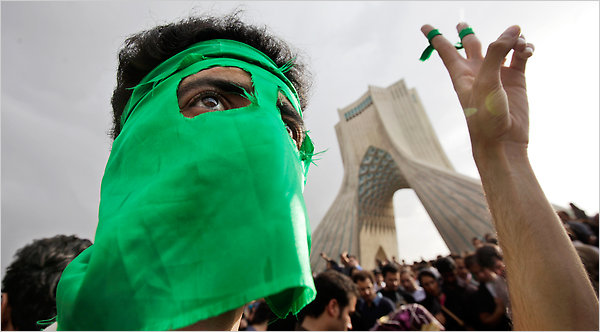
Iran a year later

Summary news analysis piece in NYT a year later.

Iran has changed since the political crisis of June 12, 2009.

In scores of interviews conducted over the past several months with Iranians from all strata of society, inside and outside the country, a clear picture emerged of a more politically aware public, with widened divisions between the middle class and the poor and — for the first time in the Islamic republic’s three-decade history — a determined core of dissenters who were opposed to the republic itself.

The political grievances have merged with more pragmatic concerns, like high unemployment and double-digit inflation, adding to the discontent.

“I was on the bus the other day and there was a man, you would not believe the kind of information he had,” said a 59-year-old who works for the government. “He started to talk about the foreign currency reserves of different countries and began to criticize the government.”

Mr. Ahmadinejad and his patron, the supreme leader, Ayatollah Ali Khamenei, are stronger today than they were a year ago, political experts say, although their base of support has narrowed.

They are relying heavily on force and intimidation, arrests, prison terms, censorship, even execution, to maintain authority. They have closed newspapers, banned political parties and effectively silenced all but the most like-minded people. Thousands of their opponents have fled the country, fearing imprisonment.

As a formal political organization, the reform movement is dead.

All pretty much know--unfortunately.

Now for the change:

The crisis accelerated and institutionalized a transfer of power that began with the first election of Mr. Ahmadinejad in 2005. The shift was from the old revolutionaries to a generation that came of age during the eight-year war between Iran and Iraq, hard-liners who deeply resented the relatively liberal reforms promoted by former President Mohammad Khatami.

The vanguard of the new political elite is now the Islamic Revolutionary Guards Corps, which oversees Iran’s nuclear and missile programs and has extended its control over the economy and the machinery of state. It has improved its ability to control the street, to monitor electronic communications and keep tabs on university campuses, and its alumni head the government’s security organs.

This is the key thing to understand: the new generation is not the original revolutionary one led by the mullahs, who now serve more at the pleasure of the Guards than the other way around. It is the Iran-Iraq War generation, and here's where the comparison to Brezhnev's crew in the USSR is salient.

These guys want their sacrifice recognized and rewarded. They're survivalists, not ideologues. Their quest is regime survival, not revolutionary fervor. They see nukes providing them global recognition for their deeds, safety for their regime, and a means enabling Iran's continued rise as a great power--along with energy.

This package is not new to us, nor is it unique. We have the tendency to swallow its propaganda and remember its motives in the past tense, and this hobbles our thinking.

For now, the nukes are perfect for Iran: gets everyone talking that vice the regime-v-opposition, keeps the whole Islam-v-Israel thing up front, plays to national honor, etc. So long as it's just Israel as counterparty, there's no danger of negotiations being forced upon Iran.

But once that twosome is joined, most likely in rapid time by Saudi Arabia and/or Turkey, then the international pressure by great-power patrons will be intense.

And when Iran starts having to talk with the devil, just like the Sovs did in their own quest for global recognition, the revolution is extinguished for good, because revolutions cannot survive such deals with "unplacable foes."

So everybody thinks nukes locks Iran into all sorts of new power, when it's the other way around. Nukes will be no more usable for Iran than they've been for anybody else.

In the end, nukes will be the Revolutionary Guards' undoing, just like the Sovs.

The USSR cuts its first nuke deal in 1972, and 17 years later the Wall falls. It'll be a much shorter timeline with Iran.

12:07AM

As the New Core seeks food security, the Gap suffers less of the same

AP story via Vonne Barnett.

The basic problem persists:

Families from Pakistan to Argentina to Congo are being battered by surging food prices that are dragging more people into poverty, fueling political tensions and forcing some to give up eating meat, fruit and even tomatoes.

Scraping to afford the next meal is still a grim daily reality in the developing world even though the global food crisis that dominated headlines in 2008 quickly faded in the U.S. and other rich countries.

With food costing up to 70 percent of family income in the poorestcountries, rising prices are squeezing household budgets and threatening to worsen malnutrition, while inflation stays moderate in the United States and Europe. Compounding the problem in many countries: prices hardly fell from their peaks in 2008, when global food prices jumped in part due to a smaller U.S. wheat harvest and demand for crops to use in biofuels.

Majeedan Begum, a Pakistani mother of five, said a bag of flour for bread, the staple of her family's diet, costs three times what it did two years ago in her hometown of Multan. She can no longer afford meat or fruit.

"My domestic budget has been ruined," said Begum, 35.

The U.N. Food and Agriculture Organization's food price index — which includes grains, meat, dairy and other items in 90 countries — was up 22 percent in March from a year earlier though still below 2008 levels. In some Asian markets, rice and wheat prices are 20 to 70 percent above 2008 levels, it says.

Many governments blame dry weather and high fuel costs but critics in countries such as India, Argentina and Egypt say misguided policies are making shortages worse and collusion by suppliers might be pushing up prices.

No single factor explains the inflation gap between developing and developed countries but poorer economies are more vulnerable to an array of problems that can push up prices, and many are cropping up this year.

Farmers with less land and irrigation are hit harder by drought and floods. Civil war and other conflicts can disrupt supplies. Prices in import-dependent economies spike up when the local currency weakens, as Pakistan's rupee has this year.

Costs also have been pushed up by a rebound in global commodity prices, especially for soy destined for Asian consumption. That has prompted a shift in Argentina and elsewhere to produce more for export, which has led to local shortages of beef and other food. The global financial crisis hurt food production in some countries by making it harder for farmers to get credit for seed and supplies.

An old paradigm approach (developed versus developing) hides the underlying reality: the price rises aren't a West-versus-rest dynamic, but a New Core-versus-Gap dynamic.  An emerging middle class in the New Core eats better--and more--and that demand for commodities drives up prices for everybody (to the extent that government subsidies are overwhelmed).

Yes, amidst that compelling dynamic, you can cite all the usual suspects in developing and underdeveloped economies, but you're missing the new forest for the usual trees.

Clearest evidence are New Core pillars and rich Arab petrocracies buying up farmland across the Gap.  The West isn't doing that.

So understand this as a problem of globalization's success, and stop defining it in old-speak.

12:06AM

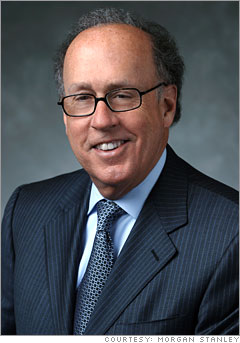
Roach on resilient Asia

As someone with a lopsided head myself, I got to love this crooked face.

Fabled Stephen Roach in the FT. He decouples as chairman of Morgan Stanley Asia and joins the faculty of Yale this summer.

Roach is famous for his bearishness.

Here, he's pretty bullish.

Three lessons stand out from his three years in Asia, he says:

First, Asia learnt the painful lessons of the 1997-1998 regional crisis very well

Hence, the huge build-up in reserve currencies.

Second, there is the China factor.  As I have criss-crossed the region, there has been no mistaking Asia's new China-centric character.

Another frequent theme here.

Third, Asia cannot presume that just because it weathered the global crisis it has discovered the holy grail of economic prosperity.  In an increasingly complex and integrated world, trouble has an unpredictable way of mutating.

I'm on board for all three judgments, as readers of this blog will attest.

Roach notes that in the late 1990s, exports made up 35% of GDP among developing economies.  Now it's 45%. Asia has a "full plate," says Roach, when it comes to the rebalancing issue.

I also concur with Roach's concluding fear, something I've been saying for the past decade actually:

But I leave Asia with one big worry--that the rest of the world doesn't get it.  I worry, in particular, about the steady drumbeat  of China-bashing in Washington--especially as we approach mid-term elections this year.  

Thus Roach heads off to academia to change some minds as best he can.

We can only wish him well, cause they come no smarter.

12:04AM

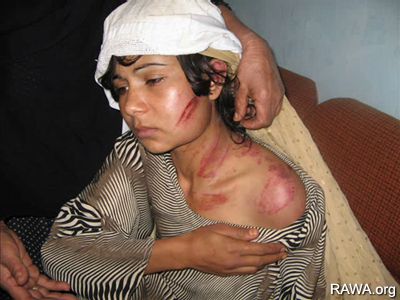
'It was my decision to die. I was getting beaten every day'

Brutal stuff from Japan Times via WPR's Media Roundup.

Picture found here, along with the quote above.

No surprise:  where you find the Taliban you find one of the most dangerous places in the world to be a woman. An old theme for me: given the choice, most women would prefer living in the Core to the Gap; hence, they welcome globalization's embrace far more than men inside the Gap, because it liberates them disproportionally.

The usual details on the plight of women in Afghanistan, but then this jumps out at you:

It is not surprising, then, that the average life expectancy for a woman in Afghanistan is only 44 years.

Women don't fare any better in education. It is estimated that 87 percent of Afghan women are illiterate. Many girls fear going to school for lack of security. Although some aspects of their lives have improved, women are still at a clear disadvantage with men.

"Women who try to advocate for their rights in public life are subject to violence and physical attacks," said Zia Moballegh, acting country director for the International Center for Human Rights and Democratic Development.

"Violence against women and girls is widespread and deeply rooted in society," Norah Niland, chief U.N. human rights officer in Afghanistan, said last year.

"Our field research finds that rape is under-reported and concealed, a huge problem in Afghanistan," Niland added. "It affects all parts of the country, all communities and all social groups."

It is estimated that one in three Afghan women experience physical, psychological or sexual violence at some point in their lives. Paradoxically, shame is usually associated with the attacks, and the victims often find themselves prosecuted for adultery rather than the perpetrators. While adultery is punishable by jail sentence, no provision in the Afghan penal code criminalizes rape.

A sad result of this oppressive atmosphere is that an increasing number of women in Afghanistan are choosing suicide as a way to escape the violence and abuse in their daily lives, according to a human rights report prepared by Canada's Foreign Affairs Department. "Self-immolation is being carried out by increasing numbers of Afghan women to escape their dire circumstances, and women constitute the majority of Afghan suicides," states a report completed at the end of 2009.

Something to remember as the Long War proceeds.

12:03AM

Central Asia for the long haul

Eurasia.net story via WPR's Media Round-Up.

I remember getting in trouble while working in OSD for saying in a public speech that the US would have military bases in Central Asia for decades.

Well. . .

The Pentagon is preparing to embark on a mini-building boom in Central Asia. A recently posted sources-sought survey indicates the US military wants to be involved in strategic construction projects in all five Central Asian states, including Turkmenistan and Uzbekistan.

In perhaps the highest-profile project, the Pentagon intends to construct an anti-terrorism training center in southern Kyrgyzstan. The facility was originally intended to be built in Batken. But now it appears that it will be situated in Osh.

According to the notice posted on the Federal Business Opportunities (FBO) website in mid-May, the US Army Corps of Engineers wants to hear from respondents interested in participating in “large-scale ground-up design-build construction projects in the following Central South Asian States (CASA): Kazakhstan; Kyrgyzstan; Tajikistan; Turkmenistan; and Uzbekistan.”

Just so we remember who the neighbors are, because they have a HOA known as the Shanghai Cooperation Organisation.

12:02AM

Separated at birth: the difference is the globalization socialization


Scientific American piece on new Jared Diamond book (with Harvard poli sci prof) called, Natural Experiments of History.

Naturally, the Haiti-Dominican Republic comparison is explored.

What's highlighted, according to the mag piece, is the difference is connectivity with the outside world over time:

When both the Haitians and Dominicans gained their independence in the 19th century, we see other comparative differences. Haitian slave revolts were violent, and Napoleon’s draconian intervention for restoring order resulted in the Haitians distrusting Europeans and eschewing future trade and investments, imports and exports, immigration and emigration. Haitian slaves had also developed their own Creole language spoken by no one else in the world, which further isolated Haiti from cultural and economic exchanges. Collectively, those barriers meant that Haiti did not benefit from factors that typically build capital, wealth and affluence and that might have led to prosperity under independence. In contrast, Dominican independence was relatively nonviolent; the country shuttled back and forth for decades between independence and control by Spain, which in 1865 decided that it no longer wanted the territory. Throughout this period the Dominicans spoke Spanish, developed exports, traded with European countries, and attracted European investors, as well as a diverse émigré population of Germans, Italians, Lebanese and Austrians, who helped to build a vibrant economy.

Finally, even when both countries succumbed to the power of evil dictators in the mid-20th century, Rafael Trujillo’s control of the Dominican Republic involved considerable economic growth because of his desire to enrich himself personally, but his policies led to a strong export industry and imported scientists and foresters to help preserve the forests for his profiteering timber holdings. Meanwhile Haiti’s dictator François “Papa Doc” Duvalier did none of this and instead further isolated the Haitians from the rest of the world.

Fits nicely with my view of things: Dictators with harsh agendas lead to disconnectedness; sticking with obscure languages does nobody any good; trade is an absolute good so long as it leads--sustainably--to more of the same.

Most importantly: isolation and disconnectedness in general only serves the purposes of the elite, hence globalization is overwhelming a creature/tool of the masses.

12:01AM

Chart of the day: It's not easy being gay--in the Gap 

The Economist's point:  it ain't just because of "local culture."

Some 80 countries make homosexuality illegal, and guess what?  They're overwhelming located inside the Gap, where women's rights are much harder to obtain as well.

So check out the chart and notice they are all Gap countries.

Story ends with that old Hubert Humphrey bit about a society/government being measured by how it treats its most vulnerable members.