Buy Tom's Books
  • Great Powers: America and the World After Bush
    Great Powers: America and the World After Bush
    by Thomas P.M. Barnett
  • Blueprint for Action: A Future Worth Creating
    Blueprint for Action: A Future Worth Creating
    by Thomas P.M. Barnett
  • The Pentagon's New Map: War and Peace in the Twenty-first Century
    The Pentagon's New Map: War and Peace in the Twenty-first Century
    by Thomas P.M. Barnett
  • Romanian and East German Policies in the Third World: Comparing the Strategies of Ceausescu and Honecker
    Romanian and East German Policies in the Third World: Comparing the Strategies of Ceausescu and Honecker
    by Thomas P.M. Barnett
  • The Emily Updates (Vol. 1): One Year in the Life of the Girl Who Lived (The Emily Updates (Vols. 1-5))
    The Emily Updates (Vol. 1): One Year in the Life of the Girl Who Lived (The Emily Updates (Vols. 1-5))
    by Vonne M. Meussling-Barnett, Thomas P.M. Barnett
  • The Emily Updates (Vol. 2): One Year in the Life of the Girl Who Lived (The Emily Updates (Vols. 1-5))
    The Emily Updates (Vol. 2): One Year in the Life of the Girl Who Lived (The Emily Updates (Vols. 1-5))
    by Thomas P.M. Barnett, Vonne M. Meussling-Barnett
  • The Emily Updates (Vol. 3): One Year in the Life of the Girl Who Lived (The Emily Updates (Vols. 1-5))
    The Emily Updates (Vol. 3): One Year in the Life of the Girl Who Lived (The Emily Updates (Vols. 1-5))
    by Thomas P.M. Barnett, Vonne M. Meussling-Barnett
  • The Emily Updates (Vol. 4): One Year in the Life of the Girl Who Lived (The Emily Updates (Vols. 1-5))
    The Emily Updates (Vol. 4): One Year in the Life of the Girl Who Lived (The Emily Updates (Vols. 1-5))
    by Thomas P.M. Barnett, Vonne M. Meussling-Barnett
  • The Emily Updates (Vol. 5): One Year in the Life of the Girl Who Lived (The Emily Updates (Vols. 1-5))
    The Emily Updates (Vol. 5): One Year in the Life of the Girl Who Lived (The Emily Updates (Vols. 1-5))
    by Vonne M. Meussling-Barnett, Thomas P.M. Barnett, Emily V. Barnett
Search the Site
Powered by Squarespace
Monthly Archives
12:03AM

Connectivity: it starts at the port

FT story on the need for port privatization across Africa to boost connecting trade, especially in countries where past civil strife led to a deterioration of infrastructure.

Maputo, Mozambique is held up as shining example, thanks to privatization seven years ago, with DP World taking over 40% ownership (yes, the very same company we ran out of America on this very subject).  DP also has a 60% share in the container terminal there, partnered with a railroad company.

Overall, DP runs 3 ports in Africa, a Danish company runs six, and a Hong Kong company runs one.  In each instance, experienced hands are upgrading infrastructure and improving operations and--most importantly--convincing regular customers to move in.

No, privatization is no panacea, and the roads issue can still starve a port, but once you establish the potential for throughput, you trigger more demand for better roads, etc.  The business will come, all right, if you give them a good reason.

12:02AM

The right kind of aid for Pakistan


Ignatius in WAPO complaining bitterly about Congress' inability to make special investment/jobs-creating zones in Pakistan's Federally Administered Tribal Areas.

I am embarrassed when I think back to a conversation last October in Wana, South Waziristan -- deep in the tribal areas -- with Maj. Gen. Khalid Rabbani, the commander of Pakistani forces there. He was about to launch an offensive against Taliban fighters, but he worried that the "clear and hold" phase of the campaign would fail if Pakistan couldn't also "build" through economic development.

Be patient, I told him. Congress is working on a bill that will take a first step toward bringing more jobs to the region.

Nine months later, Congress is still caught in partisan gridlock over the plan to create Reconstruction Opportunity Zones in Pakistan's Federally Administered Tribal Areas, or FATA. 

Usual fight back here about jobs being lost, but if you don't incentivize the "build," there ain't no sense in Pakistan sacrificing much in the "clear," argues Ignatius.

It's a very valid point.  

But I have to wonder:  should we be aspiring to this A-to-Z coverage?  Or, if Obama is going to use political capital, as Ignatius encourages him to do, shouldn't we more logically entice regional powers into the economic "build"?  I mean, if something this logical and simple encounters such political resistance here, shouldn't we be encouraging more localized stakeholders--the kind who would remain interested long after we're gone?

12:01AM

Chart of the day: the aging of Europe

Economist piece that notes:

Between 2005 and 2030 the working-age population of the European Union will shrink by 20m, and the number of those over 65 will increase by 40m. Thanks to the focus on crumbling public finances, that demographic time-bomb is now a common part of European public debate. Governments in places like Britain or the Netherlands have been able to propose paying pensions at 67 or even 70, without angry protests.

Far bigger changes will inevitably ensue.  Europe will invariably be forced to backfill even more than it is today, which leads many thinkers to propose the EU pre-emptively embraces the entirety of the Mediterranean in the manner of the old Roman Empire.

Can't beat 'em demographically, so might as well join them.

9:48AM

WPR's The New Rules: Globalization's Staying Power a Triumph of American 'Hubris'

There’s no question that globalization, in its modern American form of expanding free trade, just went through its worst crisis to date.  But while economists debate whether or not we in the West are collectively heading toward a 1938-like “second dip,” it’s important to realize just how myopic our fears are about the future of a world economy that America went out of its way to create, defend, and grow these past seven decades.
Read the entire column, which you can consider my oblique response to Peter Beinart's "Icarus Syndrome" book, at World Politics Review.
See the references for my inspiration on this piece.
12:10AM

Wikileaks: the transparency standard we inevitably face in the Long War

NYT story on Wikileaks' motives in publishing what the Times is calling "the war logs," which they and several other big mainstream media players were given access to a while back by the organization, leading to the flood of analyzing stories we shall now encounter.

In "Great Powers," I praised Wikileaks for serving as a "wormhole between the two communities--the secret and the unclassified," describing it as "the Radio Free Europe of the surveillance age."  To me, the organization characterizes an emerging standard of transparency in what many call the "long war," and what I refer to as the integration of frontiers as part of globalization's continuing expansion.  It's this emerging transparency standard, sometimes generated by well-meaning friends, other times by insurgents simply looking to brag or recruit others by displaying their deeds, that pushed me to argue, as one of my "grand compromises" between America and the world, that we will eventually pursue an openness WRT to our security efforts around the planet that will mimic what Americans expect from their own police departments--as in, every round accounted for, like the NYPD has done for the last couple of decades.

Why reach for such an amazingly high standard?  Because the ballooning transparency of this networked world will simply demand it--from the bottom up.  Wikileaks is part of that bottom-up demand, and no matter what you think of its motivations, its impact will be viral--and lasting.

This is the inevitable--and painful--evolution we face: the Leviathan can stay in the secret shadows, but the SysAdmin is held to a supremely more difficult standard--behavior so clean that it can assuage shareholders' values, because if it can't, there's no hope of connecting investments by multinational corporations--aka job creation, and jobs are the only exit strategy.

As usual, such arguments are considered by some in the warrior class as complete nonsense--the fantastic attempt to civilize that which is inherently uncivil.  But stepping back from the challenge is simply to admit that we cannot play in this arena, which in my estimation is damn near the whole enchilada going forward. Yes, we can pull back, stock up on our preferred platforms, and dream of getting it on with China over some distant lithium mine.  But that would be holding on to the past instead of moving toward the future.  China will simply disappoint.

So the US military either moves to that impossible standard over time, or it will forced out of the global policing business, only to see all manner of other entities fill that space sub-optimally.  We can either lead or follow.

Because if done well, displaying sufficient progress over time, we will set a profound example that will revolutionize global security. 

12:09AM

Score one for Obama's talking strategy?


Moscow Times op-ed by way of WPR's Media Roundup.

The argument is simple enough: Obama spoke and Moscow actually listened.

During his visit to Moscow one year ago, U.S. President Barack Obama announced what was essentially a new policy toward Russia. After listening to his speech at the New Economic School, the Russian elite, who are accustomed to viewing the world in black-and-white terms, were at a loss. What did Obama propose? A deep and lasting friendship or another Cold War? It seemed obvious that he was offering neither. The most common reaction to Obama’s speech was bewilderment.

Nonetheless, now that one year has passed it is possible to state with some caution that Russia’s political leadership has not only listened to Obama’s suggestions for a new relationship but also accepted some of them in practice.

Above all, Obama gave a broad description of the U.S. position regarding such questions as NATO, international terrorism and economic cooperation. He also said Washington would choose its course independently of Moscow, and that if Russia desired closer relations with the United States, it would get them. If, however, it wanted a new Cold War, it would get that instead. Everything, Obama said, depends on Russia.

That is why it was so difficult for the Russian elite to formulate a reaction to Obama’s speech. They are not accustomed to assuming so much responsibility. Russian policy toward the United States has always been purely reactive. The United States sets the course, and Russia responds to it. Now Washington has offered Moscow a full menu of options, along with full responsibility for its choice.

It was no great surprise that Obama took that position. His choice of Michael McFaul as his top Russia adviser was a sign that there would be neither warm hugs nor a new Cold War. The greatest surprise for me was that the Russian leadership apparently took Obama’s message seriously.

Credit where credit is due, yes?

Old point of mine:  no one acts responsibly until you give them responsibility.

12:08AM

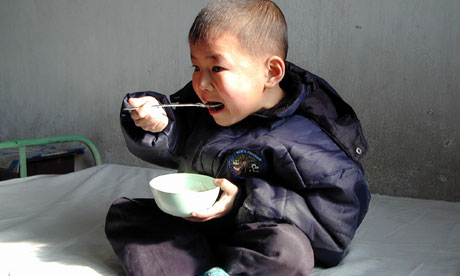
Latest NGO warning on NorKo's enduring malnutrition issue

Guardian story by way of WPR's Media Roundup.

The gist is familiar enough to long-time watchers:

A desperate picture of the health of North Korea's population is painted by a report describing a country of stunted children, where the hungry eat poisonous plants and pigfeed, amputations are conducted without anaesthetic and doctors are paid in cigarettes.

Almost two decades after it was hit by a famine that killed an estimated 2 million people, North Korea again faces widespread food shortages and is unable to provide even basic healthcare for its people, according to the report, published today by Amnesty International.

The human rights organisation accuses the North Korean regime of systematic neglect and calls on the international community to intervene to prevent a humanitarian disaster.

Based on interviews with aid workers and North Korean defectors, the report says hospitals lack essential equipment and drugs, which forces the sick to treat themselves with medicines bought from markets. Major operations are routinely conducted without anaesthetic, while malnutrition has paved the way for a tuberculosis epidemic.

Nice.

Another factoid:

Last year Unicef said that between 2003 and 2008, 45% of North Korean children under five were stunted, while 9% suffered from wasting and a quarter were underweight.

The longer this goes on, the bigger the ultimate aid bill.  How South Korea turns a blind eye on this always amazes me, even more so than China's cynical exploitation of the situation to loot the place of minerals.

12:08AM

The India-China rivalry in south Asia

FT full-page analysis by James Lamont that depicts India worrying that its economic clout in South Asia isn't translating effectively into local influence in the face of rising Chinese efforts to do the same.

Nepal is depicted as a potential flashpoint, a la the short but bloody 1962 war between China and India in the Himalayas.

India doesn't even have a rail link with its neighbor, we are told.

By comparison, China – Asia’s other great emerging economic power – has made huge efforts to improve relations with its neighbours during the past decade, settling a number long-running border disputes, making large investments in infrastructure and offering preferential trade terms.

Tensions between China and some of its neighbours have increased, however, especially over what some countries see as Beijing’s increasingly assertive approach to territorial disputes in the South China Sea.

A lack of regional cohesion will put the area at an economic disadvantage to the more dynamic markets of east Asia.

It also poses big security risks for India, most importantly from China, in what is likely to become a tussle for regional dominance in the coming decades. Ashok Mehta, a retired general and respected security analyst, says that if China one day controlled the heights of the Himalayas in Nepal, it would have no need of a nuclear arsenal trained on India. He views the country as a strategic linchpin whose loss would cost New Delhi dearly.

I will admit, this is the one bilat in the world that worries me WRT great-power war potential, and it all involves the very relativistic fears of falling behind.

The weird thing is, it's India that is racing ahead economically in south Asia, far faster than its neighbors, who, in turn, are more welcoming to Chinese economic penetration as a balancing function.

India, it would seem, needs to borrow a page from Turkey's foreign policy of "zero problems with its neighbors."

12:07AM

Sudan's expected remapping & expectations of violence

NYT op-ed by Dave Eggers and John Prendergast.

Looking ahead to Sudan's upcoming (Jan 2011) plebiscite on dividing the country north and south--the legacy of the 2005 peace deal to end all those years of civil war.

The assumption in Sudan is that when the referendum comes, southerners will vote overwhelmingly for secession. Since Sudan became independent in 1956, the people in the south have been marginalized, terrorized and subjected to countless human rights violations under successive regimes in Khartoum, and the possibility of forming a new nation in 2011 is viewed by southerners as a sacred right.

But the referendum is scheduled for January, a mere six months away, and all signs indicate that the Khartoum government will undermine the voting process or not recognize its results. The ruling National Congress Party has stalled on virtually every pertinent part of the peace agreement, and the national and local elections in April — which most international observers agree were stained by fraud — are a foreboding precedent.

If January comes and goes without a referendum, or if the results are manipulated, then fighting will break out. Both sides have been arming themselves since the peace agreement, so this iteration of north-south violence will be far worse than ever before. And if war resumes in the south, the conflict in Darfur, in western Sudan, will surely explode again.

The Obama Administration's point man on the subject is quoted as saying the US has no real leverage, which sounds a bit like James Baker saying "we don't have a dog in the fight" WRT the Balkans way back when.

And yet, don't be surprised if we get pulled into any resulting civil war. What'll be interesting will be the Chinese response, given the oil bond.  But since the Chinese like to hedge all bets, I wouldn't be surprised to discover China playing both sides as it unfolds--as in, lotsa dogs, all barking.

12:05AM

A new breed of young female workers in China

NYT story, which presents not-your-average, just-off-the-farm-and-willing-to-work-at-any-price female laborer:

If Wang Jinyan, an unemployed factory worker with a middle school education, had a résumé, it might start out like this: “Objective: seeking well-paid, slow-paced assembly-line work in air-conditioned plant with Sundays off, free wireless Internet and washing machines in dormitory. Friendly boss a plus.”

As she eased her way along a gantlet of recruiters in this manufacturing megalopolis one recent afternoon, Ms. Wang, 25, was in no particular rush to find a job. An underwear company was offering subsidized meals and factory worker fashion shows. The maker of electric heaters promised seven-and-a-half-hour days. “If you’re good, you can work in quality control and won’t have to stand all day,” bragged a woman hawking jobs for a shoe manufacturer.

Ms. Wang flashed an unmistakable look of ennui and popped open an umbrella to shield her fair complexion from the South China sun. “They always make these jobs sound better than they really are,” she said, turning away. “Besides, I don’t do shoes. Can’t stand the smell of glue.”

Assertive, self-possessed workers like Ms. Wang have become a challenge for the industrial titans of the Pearl River Delta that once filled their mammoth workshops with an endless stream of pliant labor from China’s rural belly.

In recent months, as the country’s export-driven juggernaut has been revived and many migrants have found jobs closer to home, the balance of power in places like Zhongshan has shifted, forcing employers to compete for new workers — and to prevent seasoned ones from defecting to sweeter prospects.

Long predicted by demographers, China starts a long uphill climb on labor costs and demands.  The supply of young workers has peaked and will drop by a third over the next decade or so.

As usual now, we are told that this generation ain't interested in the "eat bitterness" sacrifices of their parents, nor are they interested in returning to the land:

Guo Yuhua, a sociologist at Tsinghua University, said the new cohort of itinerant workers was better educated, Internet-savvy and covetous of the urban niceties they discovered after leaving the farm. “They want a life just like city folk, and they have no interest in going back to being farmers,” said Ms. Guo, who studies China’s 230 million-strong migrant population.

Listen to this 28-year-old male laborer:

“Money is important, but it’s also important to have less pressure in your life.”

WHAAAT?

The generational divide should strike any developing/developed economy as familiar:  parents see lazy kids who expect entitlements and kids see parents afraid to buck the system and make their legitimate demands known.

I would say the ideological infection is complete.

12:04AM

Increasingly secularism among European Muslims hardly remarkable

Rare enough that my old friend Dan Pipes posts any good news on developments in the Islamic world, so I jump on this post, thanks to reader Dan Hare.

Pipes I know from my Naval War College research days (he too spent a stint there as prof), and although he comes off to many as THE firebrand, I personally know him to be a gentle soul and a first-class thinker, so I read him and listen whenever he's on TV, despite disagreeing with him a lot--no surer sign of respect.

What he notes from a European newspaper report on a recent study of mosque attendance:

It sounds unlikely, but Aftenposten, relying on new statistics, may be on to an important new trend ofdeclining Muslim mosque-going in Europe. Here, as reported by the "Islam in Europe," are some snippets:

The number of church-goers has dropped steadily for decades, but now there also a lot of space in mosques around Europe. Recent data from the extensive European Social Survey (ESS) show that the number of Muslim immigrants who regularly go to the mosque drops significantly after they've lived in their new homeland for some time.

The ESS figures, which are being published for the first time in Europe in Aftenposten, show that 60.5% of Muslims immigrants who have lived less than a year in Europe regularly go to the mosque. But after they've lived more than a year in their new homeland, the figure drops to 48.8%. More than half rarely or never go to the mosque to pray.

"In all European countries we see that Muslim immigrants are integrated and adapt to their new society. Part of that is that they become less religious and that they reject the traditional religious practice which their parents had in their homeland. They become more secular, says the famous Finnish religion-sociologist Heikki Ervasti from the University of Turku.

Ervasti, who analyzed the ESS figures, emphasizes that this development doesn't happen quickly. "This secularization process will take generations, and for the individual the changes aren't as dramatic. Even it it doesn't happen fast, it's a clear trend," says Ervasti, who says that this same development also occurs among immigrants of other faiths.… 

What this data reminds us of is the underlying reality that, when people immigrate from a more religious environment to a less religious environment, they're not doing it to export their religion but to take advantage of the economic opportunities they are certain they will find there.  Given enough time and opportunity, secularization follows.  But not all succeed in this quest, and those dissatisfied types are particularly susceptible to radicalization--in that classic, Marxist alienated sense.

Thus, a big flow of immigrants sees two trends emerge:  1) an overall slow secularization among the bulk; and 2) a scary radicalization among the vastly unsuccessful minority.  On the second point, don't assume that economic failure is required to qualify, because anything that makes you unhappy in your new life can do it. Thus the classic case is the moderately successful, well-educated type who, for some combination of reasons, feels deeply alienated in his new world.

And yeah, a certain lack of success in one's personal life is frequent within this crowd, so maybe they got the education, and maybe they're struggling a bit in their career, but what really irks them is this sense that life has not panned out as hoped for in terms of success in marriage, family and so on.  EVERYBODY is susceptible to this disillusionment in life, but discombobulated immigrants more so.  And when a radicalized alternative pathway is dangled in front of one's face by recruiters, it can easily become the path of least resistance. Immigrants are particularly susceptible because they feel some guilt for leaving the homeland and the old ways.

Point being, keep some perspective on both the macro (positive) and micro (negative) trends when evaluating immigrant flows.

12:03AM

China's squeeze play on US software industry

WAPO story by way of WPR's Media Roundup.

Subject is China's squeeze play on American software providers:

Nearly four out of five software applications running on PCs in China have been stolen instead of paid for, the market research firm IDC has found. China has made commitments to the U.S. government to reverse this trend by enforcing intellectual property rights, but IDC data show no discernable progress. Indeed, between 2005 and 2009, the commercial value of stolen personal computer software in China doubled, to $7.6 billion. Roughly half that amount should have been paid to U.S. companies, which could have used the money to hire more U.S. workers and invest in research and development for new products.

With most of this rampant theft occurring in Chinese businesses, the economic impact reaches far beyond the software industry. Software is a critical tool for production in every sector of the economy. Stealing gives Chinese companies an unfair cost advantage over their paying American counterparts.

Beijing late last year compounded matters for the software industry and several others -- from makers of clean-energy technology to producers of telecommunications equipment -- by instituting a heavy-handed "indigenous innovation" strategy that excludes foreign companies from important segments of the Chinese market, such as government procurement, and tries to compel transfers of intellectual property rights for key technologies as the price of market access. This squeezes us at both ends -- shutting many of our innovative products out of the market and stealing the rest.

The industry is fighting mad and pushing the Obama Administration for a generalized get-tough stance that avoids the past tactic of complaining about one trade obstacle, only to have it removed and replaced by a new one two steps over.

The hope?  Correcting the relationship like we did with Japan previously:

In Japan, for example, software theft was pervasive in the early 1990s -- accounting for two-thirds of all PC applications. In little more than a decade, however, thanks to public education and a strong judiciary system, the piracy rate there has dropped to 21 percent, a level on par with that of the United States.

So a discouraging and encouraging message at the same time. Nice piece.

12:02AM

The IRGC does just fine with the "crippling sanctions"

Newsweek story, via WPR's Media Roundup, on Iran's $12B-a-year smuggling market, virtually all of which is controlled by the Islamic Revolutionary Guard Corps.

Analysts say the organization has the structure of a mafia network, with dozens of seemingly legitimate front businesses that mask illicit enterprises or serve as money laundries. “[They’re] extremely creative [with] front organizations, which they’ll open and shut regularly,” says Levitt. The IRGC’s business operations began more than 20 years ago, at the end of the Iran-Iraq War. Fearful of potential unrest among newly unemployed young men flooding back from the front lines, then president Ali Akbar Hashemi Rafsanjani approved a plan for the IRGC to open companies and bid on government contracts.

The IRGC’s involvement in smuggling began about the same time, when Rafsanjani established free-trade areas in Kish and Qeshm, two islands across the Gulf from Dubai. On paper, the islands’ duty-free goods were tightly controlled; to thwart profiteers, a national ID was required for each purchase. But the IRGC gamed the system using a list of its members’ ID numbers to import scarce household appliances and resell them on the black market. The IRGC had its own private jetties, recalls Mohsen Sazegara, one of the group’s founders, who now lives in exile in Virginia: “I saw the Qeshm one personally. The Customs officer wouldn’t dare go near them. All the years [when] importing household goods—like radios, TVs, refrigerators—was prohibited, the shops in [Tehran’s] Jomhouri Street were stocked full. [Shop owners] would say that travelers had brought the items in from duty-free, but in reality the Revolutionary Guards were bringing it all in from Qeshm.”

Traffic only expanded from there. 

This truly reminds me of Brezhnevian Russia: where officially everything was banned and unofficially everything could be had, so long as the officials got their cut.

Iran's legit businesses hate the smuggling, which gets around all the sanctions while their stuff does not.

The usual outcome with sanctions is thus achieved:  the elite rich get richer and the ordinary businesses lose out and atrophy--the opposite of a connectivity strategy.

12:01AM

Chart of the day: GOP closing fast?

From the Economist, in a piece that predicts the GOP will win 42 House seats while losing 3 for a net gain of 39—just enough to get control at 218 to 217, with John Boehner taking the gavel from Nancy Pelosi.

Charlie Cook thinks it will be a bit worse.

What has gone wrong for the Dems?  “Almost everything,” says the newspaper.

All polls say Republicans and Independents are far more fired up to vote in the mid-terms than Dems.

What has gone right for the Dems?  The Tea Party’s beyond-the-pale histrionics.  But with share of voters labeling the Dems “too liberal” rising from 39% to 49%, the Tea Party’s excesses might simply be more reflective of the larger mood than subtractive for the GOP.

12:05AM

Left hand, right hand on Afghanistan

WAPO piece about Petraeus butting heads early on with Karzai about creating local militias to battle Taliban:

As he takes charge of the war effort in Afghanistan, Gen. David H. Petraeus has met sharp resistance from President Hamid Karzai to an American plan to assist Afghan villagers in fighting the Taliban on their own.

A first meeting last week between the new commander and the Afghan president turned tense after Karzai renewed his objections to the plan, according to U.S. officials. The idea of recruiting villagers into local defense programs is a key part of the U.S. military strategy in Afghanistan, and Karzai's stance poses an early challenge to Petraeus as he tries to fashion a collaborative relationship with the Afghan leader.

Senior U.S. officials say that the United States would like to expand the program to about two dozen sites across Afghanistan, double the current number, and are hoping to overcome Karzai's concerns. But the issue is delicate to many who fear that such experiments could lead Afghanistan further into warlordism and out-of-control militias.

You have to wonder if the "fear of warlordism" is just a clever rationale for a Karzai eager to get his desired deal with his fellow tribesmen Taliban, because if the deal is cut with Taliban, doesn't that present the same problem--just with preferred winners as far as Karzai is concerned?

Makes you wonder about a disconnect between an Obama administration thinking about deals with the Taliban and a US military pursuing the local defense path.  Of course, the two can also work together nicely, under the right conditions, but again, once you make peace with the Taliban, you arguably are forced down the path of leaving the locals defenseless against their encroachments.

Eventually, the Afghan government approved the program.  The deal puts the forces under the Ministry of Interior, assuaging Karzai's fears of a loss of central control.

Fair enough, but you see the underlying tension between a US military strategy that accepts or promotes local empowerment and a government approach that fears that outcome.

12:04AM

Again with the "climate wars"!

The Economist bemoaning the flurry of new books predicting climate wars.

Yet surprisingly few facts support these alarming assertions. Widely touted forecasts such as for 200m climate refugees in the next few decades seem to have been plucked from the air. Little or no academic research has looked at questions such as whether Bangladeshis displaced by a rising sea would move a series of short distances over a long period, or (more disruptively) a greater distance immediately.

And yet the next edition of the IPCC report will have a chapter exploring this issue.  A recent conference in Norway explored the issue.  What was proposed was pretty weak.

The hardest evidence for a link so far comes from a team led by Marshall Burke of the University of California, which studied African wars from 1980 to 2002 and found that rising temperatures are indeed associated with crop failure, economic decline and a sharp rise in the likelihood of war. It predicted a “50% increase” in the chance of civil war in Africa by 2030.

But that claim is now heavily revised, since researchers redid their sums to take account of the more peaceful period of 2002-08. Others say that political and other factors such as ethnic conflict and outside intervention are far better indicators of the likelihood of fighting.

Take the widely cited case of the war in Darfur, the western region of Sudan. Ban Ki-moon, the UN secretary-general, described it as “an ecological crisis, arising at least in part from climate change”. Environmental problems have probably worsened the Darfuris’ dreadful plight, offering grist to those who call climate change a “threat multiplier”. Average rainfall in the region fell abruptly (by a third or more) in the early 1970s and Darfur repeatedly suffered droughts. Clashes over grazing and then displacement of villagers were followed, from 2003, by horrific war.

Yet the connection is elusive. Roughly three decades elapsed between the rain stopping and war starting. Many other factors—political, ethnic, demographic and economic—conspired to stoke violence. Those were specific to Darfur, whereas the sharp drop in rainfall hit the whole Sahel, without intensifying conflict elsewhere.

Another commonly cited example is violent competition for scarce grazing between nomadic herdsmen in the Horn of Africa. Yet a study of fighting among pastoralists on the border between Kenya and Somalia in the past 60 years (presented at the conference) showed instead that conflict worsened when grazing was abundant and fell during droughts. Hungry people were too busy staying alive, or too exhausted, to fight. By contrast, when rains made herdsmen’s lives easier, they could release surplus young labour for the violent sport of raiding other groups.

Honestly, this all sounds like a bunch of academic pinheads looking to create fear out of thin gruel. We just have a hot topic and a lot of people chasing money. Predicting 50% higher chances of civil war in Africa simply on the basis of global warming, while ignoring the obvious commodity and connectivity boom going on, is just silly.  It is reductionism to an absurd degree, something modern political science is amazingly adept at pursuing.

12:03AM

79 photos from Ethiopian adoption trip now posted

Go here, or draw down on the Pix menu item above.

12:02AM

Deep Reads: "The Price of the Phoenix" (1977) & "The Fate of the Phoenix" (1979)

I have read a lot of Star Trek novels and fan fiction over the years, but this book remains my favorite.  It's almost exclusively a Kirk-Spock book for long stretches (exploring their unique friendship), although it contains my all-time favorite ST villain in Omne, a rogue leader of an anti-Federation insurgency of bad-ass planets.

The backcover teaser:

Captain Kirk is dead--long live Captain Kirk!

Spock, Doctor McCoy and the other crewmen of the Starship Enterprise experience a stunning double shock.  The first, painful blow is Captain Kirk's tragic death.  Then, Captain Kirk's miraculous rebirth reveals the most awesome force the Enterprise has ever encountered.  Spock is forced into a desperate gamble for Kirk's human soul against Omne--the ultrahuman emperor of life beyond life, and death beyond hell . . .!

Bonus:  The " Romulan commander" (Joanne Linville) is brought back from "The Enterprise Incident" episode (season 3) and plays a big role.

The sequel to the novel (The Fate of the Phoenix") is almost as good.  

Both were written by Sondra Marshak and Myrna Culbreath.

12:01AM

Movie of My Week: "Spartacus" (1960)

Watched it with son Jerome in home theater, and I must say, it's really worthwhile to get the blu-ray version, because the restoration is just lovely to look at.

Tons of stars, almost all of whom overshadow Kirk Douglas's wonderfully understated performance.  This movie, produced by Douglas with a firm grip, was originally directed by Anthony Mann, who Douglas forced out, only to give to his friend (and then still largely unknown), up-and-coming Brit director Stanley Kubrick, with whom he had worked three years previously on the antiwar classic, "Paths of Glory."  Kubrick and Douglas fought incessantly during production, and it killed their relationship forever.  It was the only movie Kubrick ever directed without his usual control, all of which lay with Kirk.  Interestingly enough, it won four Oscars, including the only one ever for a Kubrick actor (best supporting to Peter Ustinov).

It remains one of my favorite Laurence Olivier movies ("I'm not after glory!  I'm after Spartacus.").

12:06AM

Obama's Machiavelli? Does "guard dog" McDonough qualify?

David Ignatius worries in WAPO that Obama has no Machiavelli on par with Kissinger or Brzezinski:

But if ever there were a moment when a battle-fatigued United States needs a wily strategist to explore options, this is it.

Just who could play this role among the administration's current cast of characters isn't obvious, and that's a problem President Obama should address.

 The closest thing offered so far is Denis McDonough, chief of staff at NSC, but the WAPO profile makes him sound more like a classic, make-the-trains-run-on-time XO than serious thinker:

Mr. McDonough is intensively protective of the president, and is well known for picking up the phone — or his BlackBerry — to take people to task, from reporters to Washington talking heads to other Obama officials who go off message. He spent the entirety of his bike ride home to Takoma Park, Md., from the White House late one recent night arguing on the cellphone with a reporter who he believed had mischaracterized an internal administration debate over Iraq policy.

He has berated some of the Democratic Party’s most distinguished foreign policy dignitaries when they have dared to critique Mr. Obama publicly, leaving a miffed Washington establishment in his wake muttering — off the record, of course — about just who this guy thinks he is.

His e-mail messages are legendary across Washington, and usually appear right after a critique hits the Web. When David Rothkopf, a national security expert and Commerce Department official in the Clinton administration, wrote a column for The Washington Post last August that praised Mrs. Clinton — and notably, not Mr. Obama — as overseeing “profound changes” to American foreign policy, the first e-mail message Mr. Rothkopf received came from you-know-who.

“Interesting choice for a profile,” Mr. McDonough wrote.

“Political figures like to have people who are watching their back,” Mr. Rothkopf said in an interview. “I understand why people are bugged by McDonough; they’re jealous of his access to the president. But the president deserves to have someone like him.”

We're told he's the real go-to, trusted mind on foreign policy, but the profile offers nothing on his thinking and concentrates totally on his pit-bull role of protecting the president.  Can anybody provide any evidence of this guy's vision--anywhere?  I'm not being accusatory; I'm just curious if this guy has ever projected any agenda other than protecting his principal, which is laudatory but not exactly comforting given his perceived gatekeeper role.

The piece is not comforting in this regard, proclaiming that one can forget about Clinton or Gates or anybody else making similar "closeness to the president" claims, because McDonough is the be-all and end-all in this regard--the first and last to be consulted, the one brain hard-wired to Obama's blackberry.

In the end, we are still left with the suspicion that Obama is such the control freak on the subject that he remains his own foreign policy guru--a brain trust of one, protected by Rahm Emannuel's foreign policy double.

And that disturbs me somewhat.  I mean, shouldn't this guy have more to him than "legendary" crack-the-whip emails?