Buy Tom's Books
  • Great Powers: America and the World After Bush
    Great Powers: America and the World After Bush
    by Thomas P.M. Barnett
  • Blueprint for Action: A Future Worth Creating
    Blueprint for Action: A Future Worth Creating
    by Thomas P.M. Barnett
  • The Pentagon's New Map: War and Peace in the Twenty-first Century
    The Pentagon's New Map: War and Peace in the Twenty-first Century
    by Thomas P.M. Barnett
  • Romanian and East German Policies in the Third World: Comparing the Strategies of Ceausescu and Honecker
    Romanian and East German Policies in the Third World: Comparing the Strategies of Ceausescu and Honecker
    by Thomas P.M. Barnett
  • The Emily Updates (Vol. 1): One Year in the Life of the Girl Who Lived (The Emily Updates (Vols. 1-5))
    The Emily Updates (Vol. 1): One Year in the Life of the Girl Who Lived (The Emily Updates (Vols. 1-5))
    by Vonne M. Meussling-Barnett, Thomas P.M. Barnett
  • The Emily Updates (Vol. 2): One Year in the Life of the Girl Who Lived (The Emily Updates (Vols. 1-5))
    The Emily Updates (Vol. 2): One Year in the Life of the Girl Who Lived (The Emily Updates (Vols. 1-5))
    by Thomas P.M. Barnett, Vonne M. Meussling-Barnett
  • The Emily Updates (Vol. 3): One Year in the Life of the Girl Who Lived (The Emily Updates (Vols. 1-5))
    The Emily Updates (Vol. 3): One Year in the Life of the Girl Who Lived (The Emily Updates (Vols. 1-5))
    by Thomas P.M. Barnett, Vonne M. Meussling-Barnett
  • The Emily Updates (Vol. 4): One Year in the Life of the Girl Who Lived (The Emily Updates (Vols. 1-5))
    The Emily Updates (Vol. 4): One Year in the Life of the Girl Who Lived (The Emily Updates (Vols. 1-5))
    by Thomas P.M. Barnett, Vonne M. Meussling-Barnett
  • The Emily Updates (Vol. 5): One Year in the Life of the Girl Who Lived (The Emily Updates (Vols. 1-5))
    The Emily Updates (Vol. 5): One Year in the Life of the Girl Who Lived (The Emily Updates (Vols. 1-5))
    by Vonne M. Meussling-Barnett, Thomas P.M. Barnett, Emily V. Barnett
Search the Site
Powered by Squarespace
Monthly Archives
12:03AM

Defense, and especially aerospace, looks to emerging (country) sales

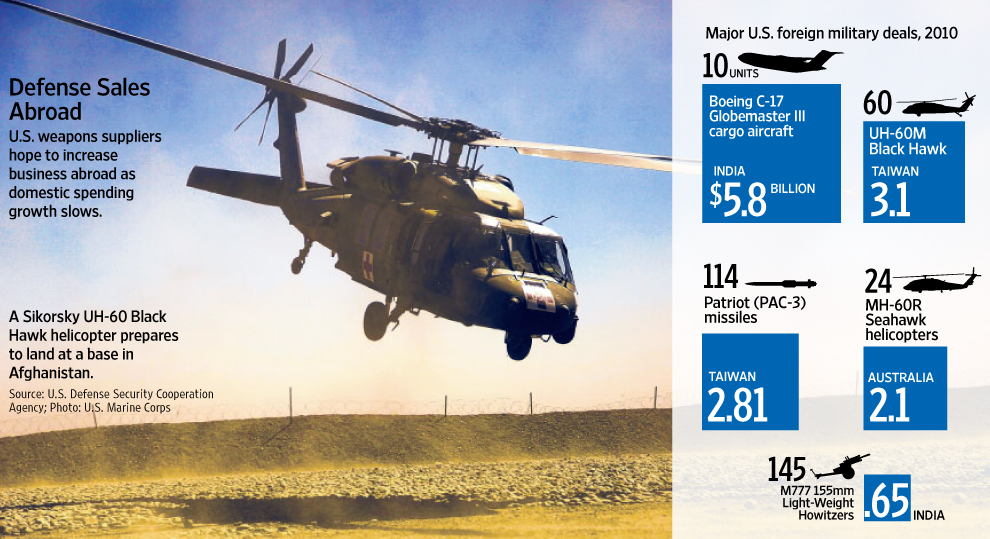
WSJ story on US defense firms finding their future in foreign sales in light of coming flat Pentagon budgets, with Asia and the Middle East obvious targets (follow the money), with Brazil, India and China leading the way. No choice, as everybody is predicting a global--as in, Western--defense spending downturn of great length. Second FT article on Italian defense firm says the same.

Wil it be sufficient offset?

No way, but it cushions the blow for pure defense firms.  Those who sell civilian aerospace too will do better.

12:02AM

Open season on Chinese business practices

FT front-pager.

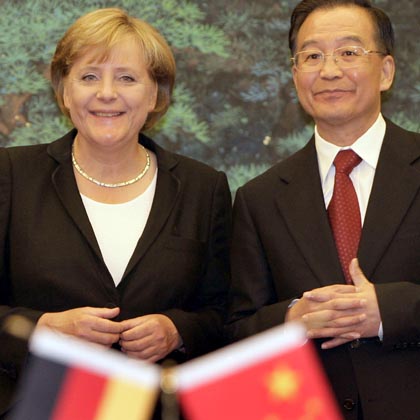
One thing for GE to bitch and moan, as Americans as expected to complain about China, but another for Siemens and BASF, two traditional ostriches, to squawk so.  If anything, these guys have been vocal China boosters in the past.

But their unprecedented complaints come "against a backdrop of rising discontent among foreign businesses operating in China."

Especially striking is that the German CEOs said this to Wen Jibbao's face--in Beijing!  Wen countered with bland denials that the investment environment had deteriorated.

Merkel tried to smooth it over afterwards, but I think we're seeing the start of something big.

Being numero uno means being the world's biggest target for complaints.  We'll see how China likes that.

12:01AM

Chart of the day: China's loosened peg changes little

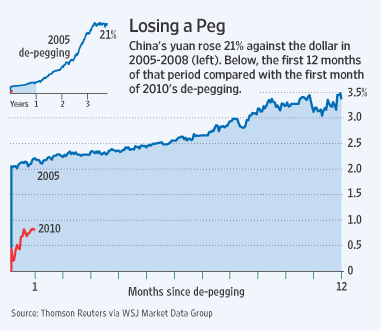
WSJ story noting that, after China's pledge to ease its peg to the dollar, the yuan has gained a whopping 0.7% over a month. Based on the 2005 de-pegging, no big change as hoped for.

Early judgment, yes, but the first month gives a strong hint that we won't get much relief this way.

The fight for depegging within China has been led by the People's Bank of China, but for now it seems that this view has not won out.

So expect more Congressional threats and some action, after a while.

Next pressure point will be the IMF's review of the Chinese economy.  China and the IMF have feuded specifically over this issue.

12:10AM

The great debate on too much-v-not enough stimulus

So many thundering op-eds to choose from on the subject that I instinctively cite the estimable Martin Wolf from the FT.

The opening:

To tighten or not to tighten – that is the question. It is one to which policymakers have started changing their answers. Are they right to do so? That is the issue addressed in the Financial Times this week, echoing the fierce debates of the 1930s. If arguments for tightening are correct, failure to do so would bring fiscal and financial shocks in some of the world’s most important countries. If arguments for tightening are false, decisions to do so threaten recovery and might trigger further financial shocks.

What has everyone agitated was the communique coming out of the recent G-20 that spoke of reducing public deficits by half by 2013.

So why the abrupt change after previous meets saw the 20 pledging whatever it took?

The first answer is that the world economy is recovering more strongly than expected. In April 2009, at the time of the London G20 summit, the consensus of forecasts for global economic growth this year was 1.9 per cent. By last September it had reached 2.6 per cent. By June 2010, it was 3.5 per cent. In the US, the consensus forecasts for 2010 were 1.8 per cent in April 2009, 2.4 per cent last September and 3.3 per cent in June 2010. Even for the eurozone, the consensus of forecasts has moved a little, from 0.3 per cent in April 2009, to 1 per cent last September and 1.1 per cent in June 2010.

The second answer is Greece, to put it simply.

Wolf covers the arguments:

At the anti-deficit extreme are those who argue fiscal deficits have no impact on activity since they lead to offsetting behaviour by private people. Thus, if governments run deficits, private people save, since they understand that their taxes will ultimately rise. Another, very different, extreme position comes from those who believe a deep slump would purge past excesses, and so lead to healthier economies and societies. While people who think in these radical ways influence the broader politics, they have limited direct influence on policymakers. So what is the latter debate about?

The “cutters” argue that such huge fiscal deficits – never seen in peacetime in big developed countries, notably the US – threaten long-term fiscal credibility and depress private confidence and spending. While piling fiscal stimulus on top of the built-in stabilisers made sense in the panic of 2008 and early 2009, the time has come for swift consolidation . . .

Finally, should economies weaken after a fiscal tightening, monetary loosening would be highly effective . . . Many cutters also argue that the best response would be to reduce spending. That is the lesson, they say, from past fiscal retrenchment.

The “postponers” agree there must be decisive slowing of the growth of long-term spending. But they emphasise the fragility of recovery and, in particular, the huge private sector financial surpluses. This private frugality has caused the fiscal deficits, they insist, not the other way round. The sequence of events makes that evident.

Moreover, add postponers, we have seen a strong flight to safety . . . 

Moreover, postponers would add, with interest rates close to zero, monetary policy is ineffective, except to the extent that it supports fiscal loosening. Fortunately, countries with their own central banks can finance fiscal deficits directly. This is untrue for members of the eurozone, which are, in effect, operating with a foreign currency. So long as excess capacity remains so large and normal bank lending so weak, such reliance on the central bank “printing press” creates no inflationary danger. On the contrary, the danger is rather that premature fiscal tightening would trigger a sharp economic slowdown, as in Japan in the 1990s, so pitching important economies into deflation.

The interaction of high indebtedness with deflation could, they argue, create a downward spiral. A Japanese-style “lost decade” . .  .

Wolf admits he sides with the postponers for now but says no one can be sure which side is correct for now. The answer, however, probably determines whether Obama is a one-termer or two.

12:09AM

Chinese custom meets the FCPA

The Chinese have a wonderful custom of gift-giving, which is why, whenever I go there, I pack a lot of small gifts--especially preferring to give out books.  If you don't, you'll end up feeling weird when your Chinese hosts give you all sorts of gifts at each stop, a lot of it being traditional crafts with company or agency logos attached.

But here's the rule for Americans or any company that lists here: whenever gov officials are involved, to include state-run companies, there are strict dollar limits on the value allowed for gifts exchanged. These limits aren't all that hard to meet, so long as you're not in the serious graft business.

But even in that more exalted realm, US agencies are more vigorously prosecuting violations of the Foreign Corrupt Practices Act (FCPA):

In late June, more than 150 executives from Siemens (SI), the German industrial giant, met in Beijing to discuss compliance with Chinese and U.S. anticorruption laws. That a multinational would spend millions to strategize about avoiding bribery charges in a country where bribery is rampant shows how much business is changing in China.

U.S. prosecutors, empowered by the Foreign Corrupt Practices Act of 1977 (FCPA) to investigate allegations of bribery anywhere in the world, have been stepping up their activities in China, where a tradition of gift-giving in business often degenerates into serious graft. The FCPA bans U.S. companies from bribing foreign officials. It also applies to foreign companies like Siemens that list their securities on U.S. exchanges. Companies that violate the FCPA face millions in fines, and executives can go to prison.

Yes, yes, it's a thin red line that separates pleasant custom from corruption.

Says one former USG official involved in compliance, it's all about "reconciling Chinese customs of entertainment and gift-giving with the culture of compliance."

Beware of enabling middlemen, says the article, because they can get you in trouble.

The more you connect, the more you're subject to the rules--and customs--of others.  I see this rule-set clash going down rather quietly, like the rustling of red envelopes.

12:08AM

Castro's great achievement of vast underemployment threatened--by Castro himself!

Is nothing sacred in this post-Cold War world?

AP story by way of Stewart Ross:

At a state project to refurbish a decaying building in OldHavana, one worker paints a wall white while two others watch. A fourth sleeps in a wheelbarrow positioned in a sliver of shade nearby and two more smoke and chat on the curb.

President Raul Castro has startled the nation lately by saying about one in five Cuban workers may be redundant. At the work site on Obispo street, those numbers run in reverse.

It's a common sight in communist Cuba. Here, nearly everyone works for the state and official unemployment is minuscule, but pay is so low that Cubans like to joke that "the state pretends to pay us and we pretend to work."

Now, facing a severe budget deficit, the government has hinted at restructuring or trimming its bloated work force. Such talk is causing tension, however, in a country where guaranteed employment was a building block of the 1959 revolution that swept Fidel Castro to power.

Such vast underemployment is a chronic condition in underdeveloped countries.  Castro great success comes in making it a staple of socialism.  Do it long enough and you can effectively kill a people's will to work, truly infantilizing them.

It'll be interesting to watch Cubans disown this clown once he's dead and buried and the creaking system collapses.

Paging Oliver Stone! 

12:07AM

The ultimate opportunity insurance policy for your Chinese kid

Interesting NYT story on a nifty trick being pulled off by a China-based consultancy WRT to America's 14th Amendment that says, anybody born here is a US citizen, no matter where the parents come from.

Zhou and Chao, a husband and wife from Taiwan who now live in Shanghai, run one of China's oldest and most successful consultancies helping well-heeled expectant Chinese mothers travel to the United States to give birth.

The couple's service, outlined in a PowerPoint presentation, includes connecting the expectant mothers with one of three Chinese-owned "baby care centers" in California. For the $1,475 basic fee, Zhou and Chao will arrange for a three-month stay in a center -- two months before the birth and a month after. A room with cable TV and a wireless Internet connection, plus three meals, starts at $35 a day. The doctors and staff all speak Chinese. There are shopping and sightseeing trips.

The mothers must pay their own airfare and are responsible for getting a U.S. visa, although Zhou and Chao will help them fill out the application form.

At a time when China is prospering and the common perception of America here is of an empire in economic decline, the proliferation of U.S. baby services shows that for many Chinese, a U.S. passport nevertheless remains a powerful lure. The United States is widely seen as more of a meritocracy than China, where getting into a good university or landing a high-paying job often depends on personal connections.

"They believe that with U.S. citizenship, their children can have a more fair competitive environment," Zhou said.

There are no solid figures, but dozens of firms advertise "birth tourism" packages online, many of them based in Shanghai, and Zhao said the number has soared in the past five years. But he said that many are fly-by-night operations, unlike his high-quality service.

"The customers we serve are very successful and very affluent," he said.

'We are not snakeheads'

Zhou and Chao insist that everything they do is legal, noting that the 14th Amendment to the U.S. Constitution, ratified in 1868, says anyone born on U.S. soil has the right to citizenship.

The environment that allows for "life, liberty and the pursuit of happiness"--still our greatest competitive advantage.

12:06AM

Hard to do SysAdmin by proxy

WAPO story on AMISOM's difficulties in avoiding civilian casualties in Mogadishu as it fights al Shabaab:

An African Union peacekeeping force, funded by hundreds of millions of dollars from the United States and its allies, has killed, wounded and displaced hundreds of Somali civilians in a stepped-up campaign against Islamist militants, according to medical officials, human rights activists and victims.

Led by Ugandan and Burundian troops, the force has intensified shelling in recent weeks as Somalia's al-Shabab militia, which is linked to al-Qaeda, has pushed closer toward the fragile government's seat of power. The shells are landing in heavily populated areas, in some cases even neighborhoods controlled by the government. Al-Shabab leaders say the peacekeepers and the shelling are the key reasons it bombed two venues in Uganda's capital last Sunday, killing 76 people watching broadcasts of the World Cup final.

More to the point, the ultimate blame, as far as the locals are concerned, still lies with us:

"When one kilogram of mortars are fired by al-Shabab, AMISOM replies with 100 kilograms of artillery," said Abdulqadir Haji, director of a volunteer ambulance service, using the acronym for the African Union force. "It is America and the West who support them. America and the West are the silent killers in Somalia's war."

In the Long War, you may escape the casualties--on your side--by contracting out, but you cannot escape the blame when things go badly.

Bottom line:  the Gap's high demand for SysAdmin services will not be going away any time soon.  The only question is who is actually on the front line and what is the level of their professionalism.

12:05AM

Personal data as a sellable asset

Our Bynamite heroesNYT story that I've been waiting a while to read:

On the Internet, users supply the raw material that helps generate billions of dollars a year in online advertising revenue. Search requests, individual profiles on social networks, Web browsing habits, posted pictures and many Internet messages are all mined to serve up targeted online ads.

All of this personal information turns out to be extremely valuable, collectively. So why should GoogleYahooFacebook and other ad businesses get all the rewards?

That is the question that animates Bynamite, a start-up company based in San Francisco. “There should be an economic opportunity on the consumer side,” said Ginsu Yoon, a co-founder of the company. “Nearly all the investment and technology is on the advertising side.”

Bynamite, to be sure, is another entry in the emerging market for online privacy products. The business interest in such products, of course, is being fed by worries about how much personal information marketers collect. Also playing a part are recent outcries after Facebook changed its privacy practices and Google introduced a social networking tool, Buzz, that initially shared information widely without users’ permission. Venture capital has been pouring into Web-based monitoring and privacy protection products like ReputationDefender and Abine, as well as services that help parents protect children’s privacy online, like SafetyWeb and SocialShield.

Bynamite brings a somewhat different perspective to the privacy market. “Our view is that it’s not about privacy protection but about giving users control over this valuable resource — their information,” Mr. Yoon said.

Both the protection and the value approaches to the privacy market could well pay off, says Randy Komisar, a partner at Kleiner Perkins Caufield & Byers, the venture capital firm. “What’s intriguing about Bynamite,” he said, “is its emphasis on privacy as revolving around choice and ownership of data, and ultimately a notion of an exchange of value.” (Kleiner Perkins is an investor in ReputationDefender but not in Bynamite.)

I think this is a great step forward toward an inevitable future. In my mind, the Googles of the world are largely ripping us off and achieving way too much power.  The backlash will come, but this is the right way to channel it.

12:04AM

Get used to this headline WRT too-expensive Chinese labor

NYT story with headline:  "Bangladesh, with low pay, moves in on China" WRT textiles.

The gist:

As costs have risen in China, long the world’s shop floor, it is slowly losing work to countries like Bangladesh, Vietnam and Cambodia — at least for cheaper, labor-intensive goods like casual clothes, toys and simple electronics that do not necessarily require literate workers and can tolerate unreliable transportation systems and electrical grids.

Li & Fung, a Hong Kong company that handles sourcing and apparel manufacturing for companies like Wal-Mart and Liz Claiborne, reported that its production in Bangladesh jumped 20 percent last year, while China, its biggest supplier, slid 5 percent.

Despite its many handicaps, Bangladesh doubled its textile exports over the past half-decade, mostly at China's expense.

We are going to find that China's "century" will be very short indeed, and that, my friends, is a fifth-generation warfare win in the worst way.

12:03AM

The unique practices die once the isolation ends and connectivity rules

NYT story on how polyandry (a wife shared by two or more men) dies out rather rapidly in remote, northern India, once the connectivity of globalization ends its isolation--and presumably the restrictions that led to the practice.

Details:

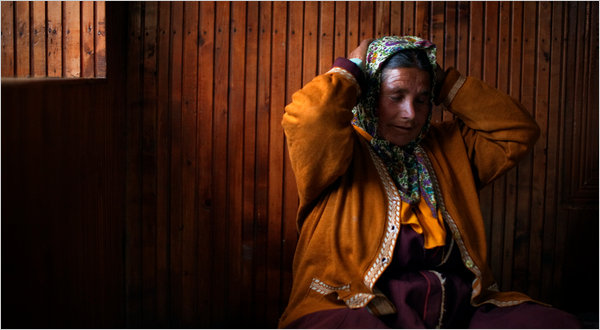
Now 70 and a widow who is still married— one of her husbands is dead — Ms. Devi is a ghost of another time, one of a shrinking handful of people who still live in families here that follow the ancient practice of polyandry. In the remote villages of this Himalayan valley, polyandry, the practice of multiple men marrying one wife, was for centuries a practical solution to a set of geographic, economic and meteorological problems.

People here survived off small farms hewed from the mountainsides at an altitude of 11,000 feet, and dividing property among several sons would leave each with too little land to feed a family. A harsh mountain winter ends the short planting season abruptly. The margin between starvation and survival is slender.

“We used to work and eat,” Ms. Devi said, her face etched by decades of blistering winters, her fingers thick from summers of tilling the soil. “There was no time for anything else. When three brothers share one lady, they all come back to one house. They share everything.”

Polyandry has been practiced here for centuries, but in a single generation it has all but vanished. That is a remarkably swift development in a country where social change, despite rapid economic growth, leaping technological advances and the relentless march of globalization, happens with aching slowness, if at all.

After centuries of static isolation, so much has changed here in the Lahaul Valley in the past half-century — first roads and cars, then telephones and satellite television dishes, and now cellphones and broadband Internet connections — that a complete social revolution has taken place. Not one of Ms. Devi’s five children lives in a polyandrous family.

“Times have changed,” Ms. Devi said. “Now nobody marries like this.”

You see this all the time with connectivity.  Think of the Mormons with polygamy in isolated Utah, until they want to join the United States for real and they decide to ditch the practice, with the usual hardcores holding on.  Same will happen with female circumcision in places like Kurdistan as it opens up to globalization.

Time and again, "sacred traditions" are ditched because they either no longer are necessary or because they hold you back in your interactions with the larger world.

I wave such cultural distinctiveness a fond farewell.

12:02AM

Ahmadinejad gets explicit: there is only one party

NYT analysis that notes how brazen Ahmadinejad is becoming in his words and deeds WRT declaring the Revolutionary Guards a single-party dictatorship.

Having successfully suppressed the opposition uprising that followed last summer’s disputed presidential election, President Mahmoud Ahmadinejad and his supporters are now renewing their efforts to marginalize another rival group — Iran’s traditional conservatives.

Conservative rivals of Mr. Ahmadinejad are fighting back, publicly accusing him of sidelining clerics and the Parliament, pursuing an “extremist” ideology, and scheming to consolidate control over all branches of Iran’s political system.

“Now that they think they have ejected the reformists, maybe they think it is time to remove their principalist opponents,” said Morteza Nabavi, the editor of a mainstream conservative newspaper, in an unusually blunt interview published Friday in the weekly Panjereh. Iranian conservatives, including Mr. Ahmadinejad’s group, prefer the term “principalism” to “fundamentalism.”

The strikes that broke out in the Tehran bazaar last week, while provoked by a proposed income tax increase, reflect the growing rift between the conservative factions, with the merchants, or bazaaris, on the side of the traditionalists.

Mr. Ahmadinejad has often fed the traditional conservatives’ fears; he has referred to the divide among conservatives, warning that “the regime has only one party” in a speech published Monday on his official Web site that provoked outrage among his conservative rivals.

“I think we are seeing a kind of Iranian McCarthyism, with Ahmadinejad disposing of all the people who are not with him by accusing them of being anti-revolutionary or un-Islamic,” said an Iranian political analyst, who refused to be identified for fear of retribution.

More to the point, those of the original revolutionary generation, with ties to Khomenei, are being reduced:

The rift is partly a generational one, with Mr. Ahmadinejad leading a combative cohort of conservatives supported by Iran’s elite Revolutionary Guards. On the other side is an older generation of leaders who derive their authority from their links to Ayatollah Ruhollah Khomeini, the leader of Iran’s Islamic Revolution in 1979. Reformist lawmakers now represent a largely impotent minority in the Parliament.

Ahmadinejad, feeling confident in his president-centric single-party state, now consolidates his grip, signaling a further diminishment of the clerical elite.

12:01AM

Chart of the day: Iran's major trade partners

FT analysis of sanctions' effects on Iran included this cool graphic, which I scan.

Clear realities:

1) Asia is replacing Europe as primary trade partners;

2) China is clear #1 at almost 16%, a rough doubling since 2003 (almost a quarter of all Iranian trade is concentrated in China and Japan, and if you add India and Korea you're at about 40%);

3) by comparison, the US is a non-entity at less than 1/2 of one percent, hence all our efforts at sanctions are about getting other people to deny Iran trade, with only our European friends and Japan going in that direction and the rising East completely picking up that slack.

It's like a giant teeter-totter with Asia pushing down and Europe being lifted and Turkey serving as the steady fulcrum.

I think you could say that about a lot of things today.

12:10AM

Moving towards the arms control concept in the cyber realm

WAPO story on how a number of major powers have signaled a willingness to explore the use of arms control vehicles to reduce the risk of cyber attacks on one another.

While I have never felt that borrowing deterrence notions from the nuclear realm for cyberwarfare made a lot of sense, because I tend to view cyberwarfare as being more akin to chemical and bio weapons than nukes, I do see the logic of mutually agreeing to limit their use via arms control treaties like we've done successfully with chem and bio.

The good news:

Although the agreement, reached this week at the United Nations, is only recommendations, Robert K. Knake, a cyberwarfare expert with the Council on Foreign Relations, said it represents a "significant change in U.S posture" and is part of the Obama administration's strategy of diplomatic engagement.

Among other steps, the group recommended that the U.N. create norms of accepted behavior in cyberspace, exchange information on national legislation and cybersecurity strategies, and strengthen the capacity of less-developed countries to protect their computer systems.

When the group last met in 2005, they failed to find common ground. This time, by crafting a short text that left out controversial elements, they were able to reach a consensus.

Do I expect states to eschew pursuing cyber capacities as an asymmetrical hedge in the event of great-power war?  No.  I just expect them to agree to the notion that, outside of augmenting possible kinetics, advanced states will refrain from messing with each other with such capabilities.  Why?  Bigger and better fish to fry--all things being peaceful.

Expecting more is naive, but assuming the worse is unduly alarmist.  In a connected world, there are no clear and unambiguous advantages to be gained in cyberwarfare casually pursued (meaning outside the context of real war), but there are clear and identifiable costs to be shared.

12:09AM

Chinese ex-pats: vulnerable strangers back home

Disturbing WSJ feature about a subject that has long intrigued me WRT my Chinese-born daughter, Vonne Mei.  Whenever you hear about "foreign nationals" being arrested in China, it is almost invariably a China-born Chinese who later got citizenry elsewhere and then returned for work, only to suffer this jeopardy.

Frankly, it is why we readopted Vonne Mei in US Courts.

Bottom line: no matter your citizenry, if you're China-born Chinese and you're in-country, you can suddenly find yourself in a grey zone--but only so far as the Chinese government is concerned.  

When things go well and there are opportunities to be grasped, the overseas Chinese, with their inside-track appreciation of the distinctive modus operandi in the People's Republic, ride high. When the complex nexus of national interest, party-family ties, local power brokers and influence peddlers is antagonized, however, these intuitive insiders, the commercial compradors with local knowledge, are particularly vulnerable. The protective sheath of foreign citizenship proves to be little more than a gossamer.

And yeah, I do find that notion a bit scary when considering any return visit with my daughter, not so much that she might get in trouble but that I could inadvertently do the same by antagonizing someone powerful. I think it's a rather far-fetched concern; it's just not something I'd have to worry about traveling anywhere else with her.

Why?  Because, it's still the case that the Chinese government retains--in its mind--the prerogative to declare what is and isn't fair according to China's unique situation and national needs:

The Chinese authorities claim a monopoly right to define and interpret the nation's unique conditions. In reality, social change, evolving attitudes and widespread aspirations continue to challenge the status quo. 

But the Party claims the right to decide, when it chooses, to declare what any Chinese, caught on its soil, owes the state--no matter the citizenship.  The dynamic has a sort of mafia-like ring to it--as in, no matter how you may view your new situation, the Chinese government retains the right to pull you back into the family and to punish you at will.

How long can that version of Chinese exceptionalism last? Hopefully not much longer, because it represents the myopic selfishness of a scared state, and the Chinese people deserve something a helluva lot more mature.

12:08AM

Brazil pushes the soft power

Economist story on Brazil's punching-above-its-weight approach to foreign aid:

ONE of the most successful post-earthquake initiatives in Haiti is the expansion of Lèt Agogo (Lots of Milk, in Creole), a dairy co-operative, into a project encouraging mothers to take their children to school in exchange for free meals. It is based on Bolsa Família, a Brazilian welfare scheme, and financed with Brazilian government money. In Mali cotton yields are soaring at an experimental farm run by Embrapa, a Brazilian research outfit. Odebrecht, a Brazilian construction firm, is building much of Angola’s water supply and is one of the biggest contractors in Africa.

Without attracting much attention, Brazil is fast becoming one of the world’s biggest providers of help to poor countries. Official figures do not reflect this. The Brazilian Co-operation Agency (ABC), which runs “technical assistance” (advisory and scientific projects), has a budget of just 52m reais ($30m) this year. But studies by Britain’s Overseas Development Institute and Canada’s International Development Research Centre estimate that other Brazilian institutions spend 15 times more than ABC’s budget on their own technical-assistance programmes. The country’s contribution to the United Nations Development Programme (UNDP) is $20m-25m a year, but the true value of the goods and services it provides, thinks the UNDP’s head in Brazil, is $100m. Add the $300m Brazil gives in kind to the World Food Programme; a $350m commitment to Haiti; bits and bobs for Gaza; and the $3.3 billion in commercial loans that Brazilian firms have got in poor countries since 2008 from the state development bank (BNDES, akin to China’s state-backed loans), and the value of all Brazilian development aid broadly defined could reach $4 billion a year (see table). That is less than China, but similar to generous donors such as Sweden and Canada—and, unlike theirs, Brazil’s contributions are soaring. ABC’s spending has trebled since 2008.

"Far reaching implications" are explored in the piece, but hard to see anything but pure upside for the system. China can use the competition, and whatever Brazil's ambitions are, its heart is in the right place.

Biggest worries are that the aid flow is growing too much too fast.

12:07AM

California toques the lead on legal pot!

Economist story on how California always leads with new rules, and always leads on pot, so inevitable the two strains shall meet in this age of stressed state public finances.

Not that America leads the way on decriminalizing pot--far from it.  We're bringing up the rear in the Core.

A bill now working its way in Sacramento:  treat pot just like alcohol.  

I think this is the path we're on.

Much shturm und drang to follow, but I see this happening eventually.

12:06AM

Al Shabaab branching out

Although al Qaeda made more than a few threats and feints in the direction of the World Cup in South Africa, prompting all sorts of warnings from friends about my traveling there for the Global Forum, all the group could manage was a soft-target attack in Uganda, not all that far from where I ended up traveling with Vonne a couple of weeks earlier in southern Ethiopia next door.

At once, it's unimpressive and troubling, because it suggests the usual regionalization strategy of somebody looking to internationalize their domestic fight--al Shabaab controls the southern quarter of Somalia but can't seem to expand that control.  One way to overcome such resistance or lack of success is to plunge the country into worse violence as a result of intervening troops.  Another way is to push those troops out, like Uganda's African Union peacekeepers.  By bombing soft targets in Kampala, al Shabaab gets it both ways:  trying to intimidate Uganda into leaving and trying to create enough fear in the West to go back to Somalia.  For now, it's a fat chance on both.

Most of the reporting on these strikes highlights the "new" linkages between al Shabaab and AQ, but they've been there all along, by most expert accounts, in that usual fellow-traveling way.

All this goes back to a long-standing prediction of mine (in all three trilogy books):  as you squeeze AQ with failure in the Persian Gulf, it can go NE into Central Asia or SW into Africa. More regional powers up north willing to fight to stop that than in the south, so the path of least resistance in through the Horn.  

Back to my "Americans Have Landed Piece" logic, this is why we set up Combined Joint Task Force-Horn of Africa in the first place, and ultimately, it's why we set up AFRICOM in a strategic flanking maneuver, just like the Shanghai Cooperation Organization was set up by China and Russia in a pre-emptive fashion before even 9/11--same geostrategic instinct.

Point of this story being, expect more of the same over time.  Our hope is that we strengthen local security to handle it just well enough, and their hope is a direct fight.

12:05AM

Iron Dome basically operational in Israel

graphic here

Glenn Kessler in WAPO:

This week, Israel successfully conducted a test of a new mobile missile-defense system designed to shield Israeli towns from small rockets launched from the Gaza Strip. When the "Iron Dome" system is fully deployed in the next year, about half the cost -- $205 million -- will be borne by U.S. taxpayers under a plan advanced by the Obama administration and broadly supported in Congress.

While public attention has focused on the fierce diplomatic disputes between Israel and the United States over settlement expansion in Palestinian territories, security and military ties between the two nations have grown ever closer during the Obama administration.

As well it should.  You don't ask friends to do difficult things (or accept difficult realities) without incentivizing them.

As always, I like my missile defense close in, covering those whom MAD cannot address except by extension (always mistrusted).

To me, this sort of stuff is exactly how we handle Iran's inevitable achievement of nuclear weapons, which isn't about achieving anything militarily, because nothing can be militarily achieved in this manner.  Instead, it's about other subjects, where logically we can and should give Iran just enough rope to hang itself on the question of regime legitimacy--or the popular lack thereof.  

In short, you deprive them of the enemy, which is how you Gorbachev their Brezhnevian carcass.

12:04AM

Deutch: don't obsess over the BP disaster; instead look ahead on gas

John Deutch (MIT and former gov bigwig) is the latest to tout the "revolution" on the horizon.  He worries that accidents like BP's Gulf disaster or Three Mile Island (great example) have too much lasting--and negative--impact on US energy policy.

Actually, the entire Core stands to benefit from the shale gas revolution, as it re-empowers a host of countries who previously viewed themselves as energy dependent.

Two huge impacts:  

  1. Short-run: gas crowds out coal in electricity generation--crucial for coal-gobbling China especially (although hard to shift percentages when your energy use grows that fast); and
  2. Long run: gas becomes more attractive for transportation.

Guess who leads the world in NG use in transpo?

That would be Pakistan, with 2.4m vehicles and 3000 fueling stations.  The US has only 100k vehicles and 1300 stations, meaning gas now accounts for 0.1% of the 12mbd oil we use for transpo.

As energy "independence" arguments go (I usually hate them), this one is pretty sound.