Buy Tom's Books
  • Great Powers: America and the World After Bush
    Great Powers: America and the World After Bush
    by Thomas P.M. Barnett
  • Blueprint for Action: A Future Worth Creating
    Blueprint for Action: A Future Worth Creating
    by Thomas P.M. Barnett
  • The Pentagon's New Map: War and Peace in the Twenty-first Century
    The Pentagon's New Map: War and Peace in the Twenty-first Century
    by Thomas P.M. Barnett
  • Romanian and East German Policies in the Third World: Comparing the Strategies of Ceausescu and Honecker
    Romanian and East German Policies in the Third World: Comparing the Strategies of Ceausescu and Honecker
    by Thomas P.M. Barnett
  • The Emily Updates (Vol. 1): One Year in the Life of the Girl Who Lived (The Emily Updates (Vols. 1-5))
    The Emily Updates (Vol. 1): One Year in the Life of the Girl Who Lived (The Emily Updates (Vols. 1-5))
    by Vonne M. Meussling-Barnett, Thomas P.M. Barnett
  • The Emily Updates (Vol. 2): One Year in the Life of the Girl Who Lived (The Emily Updates (Vols. 1-5))
    The Emily Updates (Vol. 2): One Year in the Life of the Girl Who Lived (The Emily Updates (Vols. 1-5))
    by Thomas P.M. Barnett, Vonne M. Meussling-Barnett
  • The Emily Updates (Vol. 3): One Year in the Life of the Girl Who Lived (The Emily Updates (Vols. 1-5))
    The Emily Updates (Vol. 3): One Year in the Life of the Girl Who Lived (The Emily Updates (Vols. 1-5))
    by Thomas P.M. Barnett, Vonne M. Meussling-Barnett
  • The Emily Updates (Vol. 4): One Year in the Life of the Girl Who Lived (The Emily Updates (Vols. 1-5))
    The Emily Updates (Vol. 4): One Year in the Life of the Girl Who Lived (The Emily Updates (Vols. 1-5))
    by Thomas P.M. Barnett, Vonne M. Meussling-Barnett
  • The Emily Updates (Vol. 5): One Year in the Life of the Girl Who Lived (The Emily Updates (Vols. 1-5))
    The Emily Updates (Vol. 5): One Year in the Life of the Girl Who Lived (The Emily Updates (Vols. 1-5))
    by Vonne M. Meussling-Barnett, Thomas P.M. Barnett, Emily V. Barnett
Search the Site
Powered by Squarespace
Monthly Archives
12:03AM

Religion scorecard: the Catholics still rule!

Carl Bialik's "The Numbers Guy" column in WSJ.

He cautions that the numbers are pure swag, since the census doesn't collect such info, so the surveys employed at a bit patchy. Compared to the rest of the world (70 nations do ask on the census), America has little sense as to the faith of its citizenry, says Bialik.

Important?  He uses the example of the proposed lower Manhattan mosque.  Experts say NYC has 600k Muslims, with some saying 600-800k in Manhattan alone!  If anywhere near true, then the 1.3m estimate above is clearly wrong.

Some experts say the real Muslim number is above 2m and perhaps as high as 7m.  Of course, there's the subset of who's really active, but that can be balanced by kids if the surveys focus only on adults, like above

Since the slide above only adds up to about 228m, I guess you can surmise that about 75m kids are absented, but because you can probably split those out similarly, then you arguably boost everybody's total by a quarter, so 72m Catholics, 3.4m Jews, 1.6m Muslims and so on.

But even on that basis, it seems weird that there are 5 Catholic Supreme Court justices and 4 Jews.

Other interesting factoid:  if you add up the atheists, agnostics, refuseniks and other non-religious, and then plus in the extra quarter, you're talking upwards of 60m non-participants, or one-in-5 Americans.   That seems high, based on other stuff I've seen, but about right when youth are pinged in surveys.

12:01AM

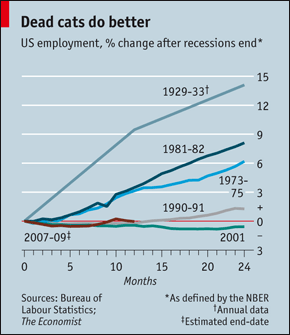
Chart of the day: In relative terms, the jobless recovery

Economist chart explaining why Obama feels little love over the recovery.

Compared to previous recoveries, this one is bested only by 2001 as being weaker on job hiring.

Seems to be a pattern in the sense that the best recovery was when we were a far less mature economy, the middlng ones were decades ago, and the worst ones happened in the last decade.

The Economist's verdict:  "Not since records began has so deep a recession been followed by so shallow a recovery in employment"--as in, "slightly fewer Americans are working now, a full year into the recovery, than when the recession ended in the middle of 2009."

So the recovery is what?  Fewer workers working a lot harder.

And that does not equate into political love for anybody.

12:10AM

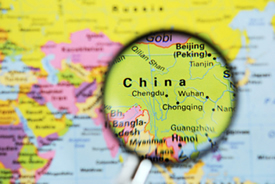
The growth China needs and that we all want it to have

Pull back that lens, comrade!

One FT op-ed and two full-pager analyses.

The op-ed from Yu Yongding, a Chinese academic and former official of the Chinese central bank:  the fear of lots of wasted investment with this public-spending infrastructure splurge, plus deep concern over the stunning rise in housing costs over the past couple of years.  The good news?  Chinese tightening of the money supply seems to be working.  Problem is, any slowdown always freaks the central gov, which now considers pumping more money back in.

Better the gov stands firm, says Yu, and let housing prices drop. Chinese banks have the assets to deal with even a 30% dive in prices.

The bigger problems:  "over-dependence on investment and external demand, an unacceptably wide gap in incomes, too few social goods and an underdevelopment of the service sector." Reforms and anti-corruption efforts have also slowed.

Over time, Yu says, the investment route (or what I refer to as extensive growth) will reach natural ceilings "imposed by social, environmental and natural resources."  Meanwhile, China's push for more exports is creating a bad backlash abroad.

The conclusion:

China has concentrated obsessively on GDP growth for far too long.  But growth is not a good excuse for postponing much-needed structural adjustment.

And adjustments naturally translate into slowdowns:  hence the op-ed's title that "China needs slower, better growth."

The two full-pagers give some sense of the regional danger (can Asia sustain enough growth to become the engine of the global economy for the next stretch?) and the internal hope (China's second-tier cities in the next geographic band inward from the coast now service as the engine of growth for the nation itself.

I think the latter, which I've talked about years ago in previous books, is finally coming to pass--and just in time.  It's good for China's stability, the region's economic trajectory, and the world economy at large.  As I always say in briefs, we don't want to own the problem of China's interior poor, thus we must accept that China's protectionism and "cheating" will need to continue for some time.

After the interior belt is developed, however, all China is left with is the vast, relatively uninhabited West.

For now, the competition is clear enough:  when the coastal jobs go, do they go to Vietnam and others in the region?  Or do they go inland?

Tricky row for China to hoe.  Can't be too piggy, but need to be selfish enough.

However much China succeeds, its vision is turned somewhat inward--not necessarily a good thing for the world at large.

12:09AM

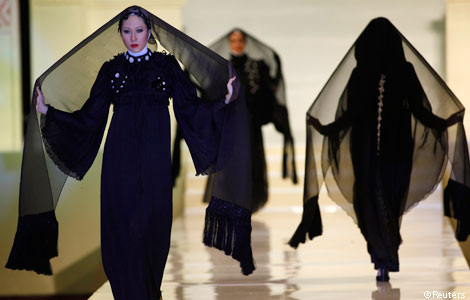
Indonesia leads the way--down the runway

Just another pleasant story (FT) on how Indonesia, much like Turkey, provides a hugely positive example for the rest of the Islamic world.  Here the story is on Jakarta's ambition to make itself the fashion capital of Islam.

As the director of Indonesia's Islamic Fashion Consortium puts it:

Our main strength is that we are an Islamic country.  We are immediately outstanding.  Who can compete with us on in that?

Certainly not crabby old Iran or stick-in-the-mud Saudi Arabia.

Diversity reigns:

"Every single island, every single community has its own type of Islamic dress.  There is no one who says: 'No!  You have to do it like this'," Ms Hadi [editor-in-chief of Noor, the country's leading Islamic lifestyle magazine] said.

Ooh!  You just know how much Osama loves to hear that argument.

12:08AM

Eventually, the push comes to shove on the new mercantilism

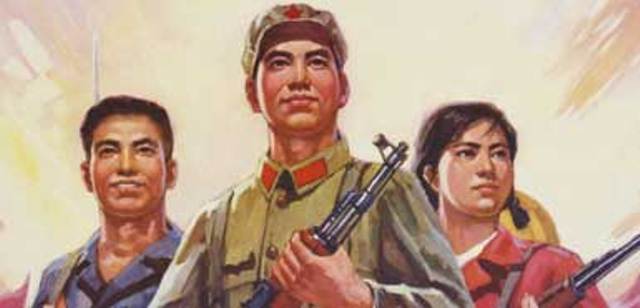
FT column by David Pilling on why China's telecom equipment giant, Huawei, is distrusted across the Old Core West:  it is seen as a front for the People's Liberation Army--a tie it claims is dead and buried, but many in the West aren't so sure.

Two sides to the larger dynamic, both well argued here:

In the view of Mr Prestowitz, who recently wrote The Betrayal of American Posterity, a book about the country’s loss of competitiveness, the US is repeating the mistake that Britain made at the end of the 19th century. Then, he says, the UK put too much faith in the workings of the free market, throwing away its advantage to mercantilist nations such as US and Germany. Japan and other south-east Asian nations such as Taiwan, got away with similar industrial policies in the context of the cold war. Now China is at it, but on a far larger scale, he says. “I’m not saying the Chinese are wrong to be doing what they are doing. I’m just saying that the US should not be as dumb as the Brits.”

Orville Schell, a China expert at the Asia Society, has a different take. He worries that the US is in danger of being overly wary of Chinese investments. As a result, he fears, it could miss out on the huge amounts of capital now flowing out of China. He points to a recent case in which 50 US lawmakers objected to plans by China’s Anshan Steel to invest $175m in America’s (hardly booming) steel industry. “The river of capital is flowing backwards,” he says of China’s huge foreign exchange reserves and its need to invest in real assets. “I understand national security concerns, but we shouldn’t cut ourselves off from these capital flows.”

This is the dilemma now facing the US. 

You want the kid to grow up and do well, but when he grows up just enough, you begin to fear him--his ambition, and his corner-cutting ways.

But getting in front of the money, as Steve DeAngelis and I like to say . . . well, that's a hard opportunity to pass up.

12:07AM

Since when did government picking winners ever work?

Economist editorial and briefing.

The pertinent reminder of this foolishness:

In the 1980s, the last time industrial policy was in fashion, the West was in awe of Japan and its inexorable rise; now it is in awe of China and its state capitalism.

Deja voodoo

Yet the overwhelming reason for China's miracle is that the state released its stifling grip and opened the country to private enterprise and to the world . . . Part-privatization and competition created in a short time what decades of industrial policy had failed to do.

In the rich world, meanwhile, the record shows, again and again, that industrial policy doesn't work . . . However, many new justifications are invented for the government to pick winners, and coddle losers, it will remain a bad old idea. 

And the kicker:

Thanks to globalization and the rise of the information economy, new ideas move to market faster than ever before.  No bureaucrat could have predicted the success of Nestle's Nespresso coffee-capsule system--just as none foresaw that utility vehicles, vacuum cleaners and tufted carpets . . . would have been some of America's fastest-growing industries in the 1970s. 

And the original sin?

Officials ignore the potential for innovation in consumer products or services and get seduced by the hype of voguish high-tech sectors.

Much the story of our venture-capitalist-in-chief, Obama, and green technologies.  Now we race China to see who can sink more public money on that one, because government investments are the BEST WAY TO GO!

And please, do not cite DARPA's internet as the great counter. Unless you think only the government could come up with that, or that Al Gore invented it, or that it took off primarily because it was kept in government hands instead of turned loose to the public.

In the briefing, four reasons are cited for the current vogue:

  1. The weakness of the world economy (in the West, that is)
  2. The desire of Old Core economies to rebalance from too many imports
  3. Emergency use of industrial policy in response to the crisis has whetted the public's appetite for more, and 
  4. The West is mindlessly aping the Chinese, whose "genius" consists of extensive growth and nothing more.

What a world!

12:06AM

Iran's devastating achievement creates its own regional balancing act

This story writes itself.

Elliott Abrams in the WSJ noting how both US and Israeli relationships with Arab neighbors of Iran are much improved with each step Tehran takes toward nuclear weapons capacity:

Who will stop the Iranian nuclear weapons program, the Arabs wonder; they place no faith in endless negotiations between earnest Western diplomats and the clever Persians.

Israel is the enemy of their enemy, Iran. Now, the usual description of Arab-Israeli relations as "hostile" or "belligerent" is giving way to a more complex picture. 

Once begun, the Big Bang is never done.  We topple the Taliban and Saddam, and Iran must reach for protection.  That protection creates its own backlash, and so it goes.  No going back.  The speeding up of history: speeding the killing, speeding the threats, speeding up the dynamics.  Top-down solutions emerging after decades of wasted bottom-up efforts to forge the perfect peace plan.  Nukes clarify the mind all right.

And we are all better off for that scary journey.

12:05AM

Russians to fuel Iranian reactor: out-of-the-blue shock at 11!

WSJ front-pager.

Russia saying it's going to help start up the Bushehr reactor, a stance the US now supports as quid pro quo for gaining Moscow's agreement to the recent--and fourth--round of UN sanctions.

And so the Obama admin spins positively on the development, even as many experts do the exact opposite. The White House hopes and prays the sanctions work new wonders, but this train continues to roll . . ..

12:04AM

Waiting on the first civil suit: GPS-aided stalkers

Phone companies pretty much always know where you are--to within 100 feet.  Annually, about 25,000 people are stalked across these United States.

Eventually the two trends meet, to the detriment of the stalked.

Therapists who work with domestic-abuse victims say they are increasingly seeing clients who have been stalked via their phones. At the Next Door Solutions for Battered Women shelter in San Jose, Calif., director Kathleen Krenek says women frequently arrive with the same complaint: "He knows where I am all the time, and I can't figure out how he's tracking me."

In such cases, Ms. Krenek says, the abuser is usually tracking a victim's cellphone. That comes as a shock to many stalking victims, she says, who often believe that carrying a phone makes them safer because they can call 911 if they're attacked.

There are various technologies for tracking a person's phone, and with the fast growth in smartphones, new ones come along frequently. Earlier this year, researchers with iSec Partners, a cyber-security firm, described in a report how anyone could track a phone within a tight radius. All that is required is the target person's cellphone number, a computer and some knowledge of how cellular networks work, said the report, which aimed to spotlight a security vulnerability.

Inevitably, protections will be put in place, and those who are lax about respecting them will be sued by victims--in part because their pockets are deep and they should know better.

Now abuse shelters tell women to turn off their phones the minute they walk through the door, but this is a sad state of affairs.  Eventually, the phone companies will have to become part of the solution.

How that might work:

The organization put that policy in place after a close call. On Feb. 26, Jennie Barnes arrived at a shelter to escape her husband, Michael Barnes, according to a police affidavit filed in a domestic-violence case against Mr. Barnes in New Hampshire state court. Ms. Barnes told police she was afraid that Mr. Barnes, who has admitted in court to assaulting his wife, would assault her again.

Ms. Barnes told a police officer that "she was in fear for her life," according to court filings. The next day, a judge issued a restraining order requiring Mr. Barnes to stay away from his wife.

Later that day, court records indicate, Mr. Barnes called his wife's cellular carrier, AT&T, and activated a service that let him track his wife's location. Mr. Barnes, court records say, told his brother that he planned to find Ms. Barnes.

The cellular carrier sent Ms. Barnes a text message telling her the tracking service had been activated, and police intercepted her husband. Mr. Barnes, who pleaded guilty to assaulting his wife and to violating a restraining order by tracking her with the cellphone, was sentenced to 12 months in jail. 

The cat and mouse on this one will be fascinating to watch.  New rules galore.

12:03AM

Debt hiding, China style

Bloomberg Businessweek story.

Ah yes, China has so many dollars ($2 trillion or so among its $2.5T reserves) that it can buy the U.S. economy--lock, stock and smoking barrel.

Except, of course, the US economy is a bit larger that $2T, and it turns out that China has let its local governments, using shell entities (local investment companies, or LICs, who borrow what the local governments are forbidden to borrow legally on their own), borrow upwards of about $2T, according to the estimable Victor Shih of Northwestern U.

There are 8,000 such LICs in operation across China, and most are used by local governments to finance infrastructure build-outs.  

How many bridges to nowhere--as in, non-performing or unuseful loans?

Who knows.  Certainly the rush to spend was great, so assume tons of waste.

The key bit:

Many of the LICs have borrowed heavily to back the building of roads, railroads, and power plants, as well as hotels, convention centers, office buildings, and more. While some LICs have gotten land from local governments that they can use as collateral, many banks must rely on pledges from local city halls that the loans the LICs secured will be repaid. Shih figures outstanding LIC debt at the end of 2009 was $1.68 trillion—34 percent of China's gross domestic product. "A lot of this money is being invested in money-losing infrastructure projects [as well as] real estate," says Shih. Western investment firms are wondering what impact the LICs will have on Chinese banks if they cannot pay back the bulk of their debts. "Unfortunately, this smells like China's last banking crisis," says Shen Minggao, an Asia-Pacific economic analyst with Citigroup (C).

Point being:  that $2T can go quickly, under the right circumstances.

Cheap money makes dummies of us all.  The Chinese are no different.

12:02AM

Chart of the Day (part duh!): NATO-Russia convergence of a different sort

Finally read George Friedman's The Next 100 Years and came away thoroughly disappointed.  I think he got some of the ancillaries right, like women's rights, demographics (albeit selectively) and emerging energy technologies, but the scenario?  A thinly-veiled reworking of the 20th century (Russia and China fragmenting, then crisis in the 30s, then world war (Japan again! Turks subbing for Nazis, Poland subbing for Stalinist Russia), America triumphs while discovering new energy technologies and a golden age ensues, only to be threatening by too damn many Mexicans showing up in the 90s.

Whew!

The part that really lost me was Russia having to launch a second cold war this decade because of its extremely exposed northwestern flank (you know, the terrain both Hitler and Napoleon used to invade), as if anybody wants to invade that place!

This Economist piece is about such remnants of the first Cold War. What caught my eye was the Russian military's declining share of GDP.

Seems the Putinesque economic miracle, for as long as it lasted, didn't equate to more attention being shown on the military, especially when the US splurged big time across the decade.

Again, the Russians disappoint.  (Sigh!)

Give Moscow enough time, and I'm sure we'll finally achieve the fabled convergence.

12:01AM

Chart of the day: Who adds labor and who doesn't

From WSJ column by David Wessel--always good.

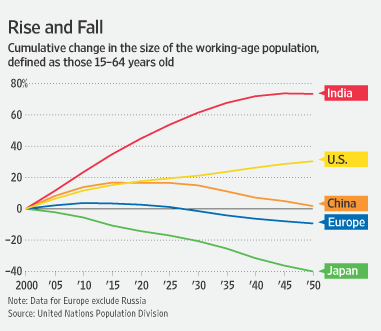
This is the most interesting demo slide I've seen in a long while. Already put it into the brief.

What I note:

  1. the decline of Europe and Japan (almost off the chart--pun intended)
  2. how closely China's trajectory mirrors Old Core Europe
  3. America as Old Core outlier without peer
  4. India's fantastically long "golden hour" of declining ratio of dependents to workers--much longer than China's was.

But it's the numbers that jump out at you. Between now and 2050 we add 35m workers, China loses 100m and India gains 300m.

12:02AM

Finally, some intelligent analysis on the "death" of network-centric warfare

Sean Lawson writing at his ICTs and International Relations blog.

Simply put, the guy sees the flow of history here, instead of presenting the usual simplicity of who's-up-and-who's-down.

Very intelligent piece.

NCW did its thing, made its permanent impressions, and the system moved on--as it always does.  It was neither the great "savior" nor the great "satan"--just another paradigm iteration that shaped things for the better.

All such paradigms are like scientific "truths":  they're the best you've got until something a bit more accurate comes along.

12:02AM

The regular blog returns tomorrow

12:01AM

Blast from my past: "What next?" Rolling Stone (2004)

What Next?

ROLLING STONE convenes a panel of experts to discuss what went wrong in Iraq--and where we can go from here


By AMANDA GRISCOM

Rolling Stone, 8-22 July 2004.

At the end of 2002, as the Bush administration prepared to invade Iraq, Rolling Stone convened a panel of experts to assess the march to war. Things have since gone far worse than most imagined. There is no evidence that Iraq possessed weapons of mass destruction -- the rationale used to justify the invasion. The fighting continues to escalate long after Bush declared "mission accomplished," and the White House tried to ignore the abuse and humiliation of Iraqi prisoners by American soldiers. As the U.S. prepares to hand over control to an interim Iraqi government, we reconvened key members of our panel, along with some new experts, to examine the current situation in Iraq. What went wrong -- and what should we do now?


Before we look forward, let's look back. What have been our biggest strategic blunders since we invaded Iraq?

Gen. Anthony Zinni: We've had a year of disasters. The strategy going into Iraq was patently ridiculous -- this idea that we'd generate Jeffersonian democracy and plant the seed of freedom in the Middle East. The rationale was even worse: We grossly overstated the threat and cooked the books on the intelligence. Then we put on the ground a half-baked pickup team that has alienated the people and can't connect to viable leadership.

Gen. Wesley Clark: We went in with far too few troops and seat-of-the-pants planning. We've been there for more than a year, and the borders still aren't being controlled -- jihadis and extremists are coming in from Syria, Iran and Saudi Arabia. Fuel convoys are getting routinely attacked; oil facilities and police stations are regularly targeted.

Rand Beers: The precondition to freedom is security. You can't succeed in beating the insurgents unless you can convince the people that they can be protected.

Thomas P.M. Barnett: It was a major mistake for the Bush administration to say to potential allies, "If you're too big a pussy to show up for the war, we're not going to let you in on the peace or rehab process -- and don't expect any contracts." We had such a macho view of war that we completely miscalculated the dangers of peacekeeping.

Fouad Ajami: Now we're a Johnny-come-lately for a U.N. resolution to internationalize the political process. You might call it deathbed multilateralism.


What about the blunders behind the scenes at the White House?

Sen. Joseph Biden: I've been a senator through seven administrations, and this is by far the most divided one I've ever served with. The internal discord is rampant. It's not just Colin Powell, who has differed with Vice President Cheney at every turn. It isn't just Richard Clarke and the others on the intelligence team who have angrily defected. It's General Eric Shinseki, who was fired for telling the truth. It's Lawrence Lindsay, Bush's economic adviser, who was fired for saying the war was going to cost $200 billion. The price tag is even higher now, and still they submit a budget for 2005 without a single penny for Iraq. What in the hell is going on?

Bob Kerrey: Karl Rove's hair is on fire -- he's worrying about what the polls are saying about America's attitude toward Iraq. Voters want out. The greatest risk is that we'll make decisions for political reasons -- that Rove will say we've got to call it quits or we're not going to win in November.

What would happen if we did pull out in a hurry?

Zinni: To pull out now would be a tremendous defeat. It would accelerate the path to civil war and make us and the region extremely vulnerable. The boys aren't coming home anytime soon.

Youssef Ibrahim: We've got to cut our losses -- the sooner the better. Our presence is only aggravating the chances for civil war. The best-case scenario at this point is for the U.S. to declare victory and get the hell out. Iraqi resistance is rising by the day, and the United Nations, NATO and the Europeans are refusing to come in. There is no fig leaf to put on this.

Biden: It would be strategic suicide if America withdrew anytime soon. I meet regularly with a group of seven four-star generals about Iraq; each one says we don't have enough force protection to even withdraw in an orderly fashion. It could be a bloodbath on the way out, and hasten civil war.


Would civil war spill over the borders to create a regional conflict?

Biden: Very likely. If civil war breaks out in Iraq, the Sunni Triangle will become a snake pit and violence will spiral throughout the region. Within five years you'll see the emergence of another strongman in Iraq. Afghanistan will fall and become a new hotbed of terror. Radical Islamists will seize control in Pakistan and Saudi Arabia, and the same thing could occur in Iran, which will become the major power in the region.

Beers: It could spill over the borders -- no question about it -- but would it drag the other states in? More likely, the border states would do everything to contain the conflict to Iraq. Let's be cautious about dreaming up extreme scenarios. The situation in Iraq is still salvageable.


So let's assume we're in it for the long haul. How do we even begin to regain control?

Zinni: Security is the most important issue short-term. I'm talking probably at least a year and twice the number of boots. People won't help build a new Iraq unless they can walk to a police station -- much less a voting booth -- without fear of getting killed.

Barnett: The Bush team needs to eat crow and make the tough deals necessary to internationalize this. They need to call a summit meeting of the major powers, including Russia, China and India, and say, "We have a problem in Iraq. Our loss would be as big a loss for you -- economically and otherwise -- as for us. What will it take to get 10,000 Chinese troops, 10,000 Indian troops, 10,000 Russian troops? What do you want in return?" We know what the deals are. India would probably demand, for example, that we don't declare Pakistan a major ally. Russia wants full membership in NATO. China might ask us to stop planning a missile defense in northeast Asia.

Zinni: The international soldiers have to be there. You have to see the bar scene from Star Wars, where there's a lot of different uniforms, not just all American desert cammies.

Biden: We need to rapidly train an Iraqi army and police force. They need to feel they are fighting for themselves. If I'm president of the United States, my orders to our generals and ambassador are, "If I see you once on Iraqi television, you're fired. I want Iraqi faces on Iraqi television." It should take two to three years to get 35,000 Iraqi troops out there.


Should we even be talking about a June 30th hand-over? Are we prepared?

Clark: That date was picked as a political gambit before there was a real plan for what to do. We're not prepared, but we're not going to be able to renege on that commitment.

Ibrahim: June 30th is the biggest joke around. There will still be 135,000 American soldiers in Iraq. We will pick a new governing council -- a whole bunch of new lackeys. A superambassador -- John Negroponte -- will command an embassy of 3,000 Americans. Every controversial thing that the new government does will look like Negroponte's fault.

Sir Jeremy Greenstock: The interim government will be sovereign in the sense that Iraqis will be equal partners in every decision made by America and the international community -- in running the budget, trying Saddam, determining the future of the oil industry. Decisions cannot be executed without their agreement.

Ajami: We have to transfer power. This should have happened long ago. We could have gotten an Iraqi to run the country the way we got Hamid Karzai to run Afghanistan. America would still have had considerable influence behind the scenes, but we should never have had an American out front -- it's why the polls show that eighty-two percent of Iraqis want us to leave immediately.

We keep hearing that the violence will escalate around June 30th and the year-end elections -- that it will only get worse before it gets better.

Chas Freeman: It's not rocket science to figure out that the easiest way for the interim Iraqi authority to establish credibility among its people will be to turn on the U.S. By refusing to give authority, we will create a situation in which they will feel obliged to seize it from us.

Zinni: If you're going to have an election, the first thing you have to do is determine the form of government you're going to have: parliament, a federated system, a confederated system? You need political parties. I don't see that happening. Iraqis don't understand what kind of government they're going to have. They are going to be told how to vote in Friday prayers by some mullah.

Kerrey: Any time you have disorder, any radical who stands on a stump and gives a speech wins the day. So I can get up and say to a religious Shiite in Baghdad, "We didn't have prostitution in the old days, so vote for me, and anyone who is a prostitute will be beaten. If you don't like this disorder, we'll bring order back with a strict interpretation of Islamic law." He'll get a standing ovation.


We went into Iraq thinking it was a secular state, but the political rhetoric among Shiite and Sunni leaders has intensified. Is religion taking the place of politics?

Ajami: I supported the war in part because Iraq had in it the roots of secular culture, which I believed positioned it well to adopt a representative government. What I never imagined was how quickly the Sunni Arabs -- who relied on the secret police to control the country under Saddam -- would fall back on the mosques as their weapon of control. More surprising was that the Shiites -- the oppressed underclass who represent sixty percent of the population -- have also begun to use Islam as a political tool. It connects them, the dispossessed, to the united Muslim world at large.

Greenstock: Iraqis are a proud people, in no small part because hundreds of years ago they ruled the known world from Baghdad. That's embedded in their national psyche.


Is the concern that as the religious tenor among Iraqis intensifies, they will begin to identify their struggle as part of the larger conflict of Islam vs. the West?

Zinni: This is a key point. Everybody I know in this part of the world says you cannot let this become a religious war. You can't let this become Islam vs. the West. I fear that's what it's become. We're viewed as modern crusaders. We have our own mad mullahs in America -- the Jerry Falwells, the Pat Robertsons -- who criticize Islam. They are heard much louder over there than they are here.

Ibrahim: It's worse than that. Bush himself is seen to be a mad mullah. The president has repeatedly asserted that God is on our side in Iraq, that he's consulting with a "higher" father. The zealotry even infects the military. General William Boykin recently said, "My God is much bigger than their Allah" -- this was all over the Arab media. He was never fired or reprimanded for making that statement. Prisoners have given accounts of being forced to thank Jesus and denounce Islam. The perception in the Gulf, where I live, is that this administration is vehemently anti-Muslim. Like it or not, we are in a war with 2.1 billion Muslims.

Beers: Even though the clash between Islam and Christianity during the Crusades took place 1,000 years ago, those terms clearly still have resonance in the Islamic community and Al Qaeda. To invoke religion is to give our opponents ammunition in the larger war on terrorism.


We often hear that the war on terror has supercharged radical Islam and energized the recruitment of terrorists. What evidence do we have to support this?

Freeman: Increasing sophistication in the ambush tactics and improvised explosive devices used to kill American troops indicate growing cooperation between secular Iraqi factions and religious extremists like Al Qaeda. Sunni insurgents in Iraq are being helped by Hamas from the Palestinian occupied territories, and the Shiites are being assisted by Hezbollah from Lebanon. All these forces are cooperating, even though many have historically been mortal enemies. Clearly, the U.S. is a big enough enemy for everyone in the region to put aside their differences.

Beers: We're seeing the development of tactics in Iraq, such as suicide bombing. Insurgents have been driving cars with explosives into hotels and office buildings. The recruitment may be even more prolific outside Iraq. Intelligence shows Al Qaeda recruiting in places as far-flung as Indonesia, Thailand, Pakistan, Kenya, Somalia and Nigeria, as well as in Saudi Arabia and Syria.

Ibrahim: In Saudi Arabia, where Al Qaeda is waging a daily war, at least fifty people have died in the last month alone. They bombed five housing complexes and an American school. In the heart of the industrial sector, four Americans from oil companies were shot and one was dragged by a car for four hours.


Should we view radical Islam as the enemy?

Zinni: Any time we look at an "enemy," we look at it at three levels. At the tactical level, the enemy is the terrorist organizations and the financing they get. The operational level is the enemy's center of gravity -- it's the rationale, which is radical Islam. At the strategic level, it's the continuous flow of young people so desperate and angry that they're willing to believe it. At the tactical level, we could be winning - we could be hurting Al Qaeda and capturing its leadership. But as an ideology, it's strengthening. It is probably stronger now than before September 11th, in terms of recruiting manpower willing to kill themselves.


Surely the Abu Ghraib prison scandal didn't help. Should Defense Secretary Donald Rumsfeld or other Bush officials resign?

Beers: The Navy has a custom -- if a ship runs aground, the captain is relieved regardless of who is responsible. That's how Abu Ghraib should be handled.

Biden: I was in the Oval Office the other day, and the president asked me what I would do about resignations. I said, "Look, Mr. President, would I keep Rumsfeld? Absolutely not." And I turned to Vice President Cheney, who was there, and I said, "Mr. Vice President, I wouldn't keep you if it weren't constitutionally required." I turned back to the president and said, "Mr. President, Dick Cheney and Don Rumsfeld are bright guys, really patriotic, but they've been dead wrong on every major piece of advice they've given you. That's why I'd get rid of them, Mr. President -- not just Abu Ghraib." They said nothing. Just sat like big old bullfrogs on a log and looked at me.


Speaking of Cheney, how does this instability affect contractors such as Halliburton?

Zinni: Halliburton is spending staggering sums of money building fortified workplaces. It's killing the American taxpayer, who's footing the bill. There are two bodyguards for every worker. For $100,000 a year, you've got a truck driver from West Virginia. If I'm an Iraqi, I say, "For that cost, you could hire ten of us as drivers. And if I'm getting a paycheck, I'll have a vested interest in that truck getting through." Even the way we do contracting makes no sense.


What about our oil concerns? We often hear that a prime reason we went into Iraq was to get access to its oil as our ties to Saudi Arabia falter.

Greenstock: Oil is not the big bogey we should be worried about. Oil will go on flowing come what may, so long as there is reasonable order in the oil-producing countries. Whatever the character of the regime, it always wants to sell its oil. Look at Iran, Saudi Arabia, even Qaddafi in Libya.

Freeman: Yet the oil system is extremely vulnerable to shock. There's a rule in the Middle East that you don't need these fancy seismic studies to locate oil reserves -- if you find the Shiites, there's usually oil. There are more than 1 million Shiites in the eastern province of Saudi Arabia, which is where the oil is. They've suffered persecution by the religious majority in Saudi Arabia, and they're vulnerable to spillover from the anti-American struggle in Iraq. The global nightmare is that there would be terrorist action among Saudi Shiites directed at the oil pipelines, ports and refineries. For Americans, that would mean four or more dollars per gallon of gas.

Ibrahim: The sixty-year relationship we've had with Saudi Arabia is on the verge of collapse. How many times have we asked them to please, please open the spigots so we can bring prices down? There's a new 900-pound gorilla coming called China. In ten years, it's going to be the largest consumer of oil in the world, which means that the people who produce oil are no longer kissing America's ass -- they're beginning to kiss China's ass.


Has the war at least produced a new respect for American military power?

Ibrahim: Hardly. We are no longer loved because of Iraq, and we are also no longer feared because of Iraq. The neoconservative dream of regime change throughout the region -- in Syria, Iran, Lebanon, Libya and Somalia -- is dead. Do you really think any of those countries are afraid of us after watching us bleed in the streets of Iraq?

Biden: The perception of us is that if we don't succeed, we're a paper tiger. We can project power, but we don't have staying power. The Bush administration has seriously damaged the legitimate and necessary role of power in our foreign-policy arsenal. What happens if we have another Milosevic? Will there be support for a U.S. president in taking down a genocidal maniac? No.


What does the future of war look like? Will we face World War III?

Zinni: My son is a Marine captain, and he's going to face a changed battlefield -- messier than Haiti, Bosnia, Somalia, Iraq. It's no longer honorable fighting, where you defeat the forces of a nation-state on the battlefield. He's going to face all sorts of violent components -- insurgents, terrorists, warlords -- as well as environmental challenges and humanitarian problems.

Barnett: We're going to end up replicating the struggle again and again. Like spraying the cockroaches in one apartment and scattering them to the next -- we're driving terrorists to the next country over. Sort of like rooting out old Japanese warriors on some isolated Pacific island twenty years after World War II, we're going to be killing off the last of these guys years from now in deepest, darkest Africa.


In the near term, is a change of administrations the best way out of the quagmire?

Ibrahim: I voted for Bush, but I'd sooner die than vote for him again. The neocons are vampires through which we have to drive a wooden stake. Neoconservatism must end as an ideology if you want America to recover its position as leader of the world.

Kerrey: We need a coalition of the pragmatic in the White House, not of the religious or ideological. John Kerry will be much more capable of making the tough deals necessary to bring in the allies and make it work. In an odd way, that's good news for Bush. I predict that in the end, the two of them will celebrate a great bipartisan foreign-policy victory in Iraq, begun by President Bush and finished by President Kerry.

Biden: About six months ago, the president said to me, "Well, at least I make strong decisions, I lead." I said, "Mr. President, look behind you. Leaders have followers. No one's following. Nobody."


9:18AM

WPR's The New Rules: The Changing Food Security Equation

While the world doesn't yet face a food crisis on par with the summer of 2008, it's clear that the drought currently affecting the Black Sea trio of Russia, Ukraine and Kazakhstan -- all big-time global exporters of wheat and barley -- has suddenly made food inflation a primary threat to the somewhat fragile and decidedly uneven global economic recovery. At the very least, it reminds us just how tight global food markets are, due to the contradictory combination of rising middle-class demand and the enduring commitment by brittle governments around the world to keep prices low -- at whatever the cost.

Read the entire column at World Politics Review.

12:01AM

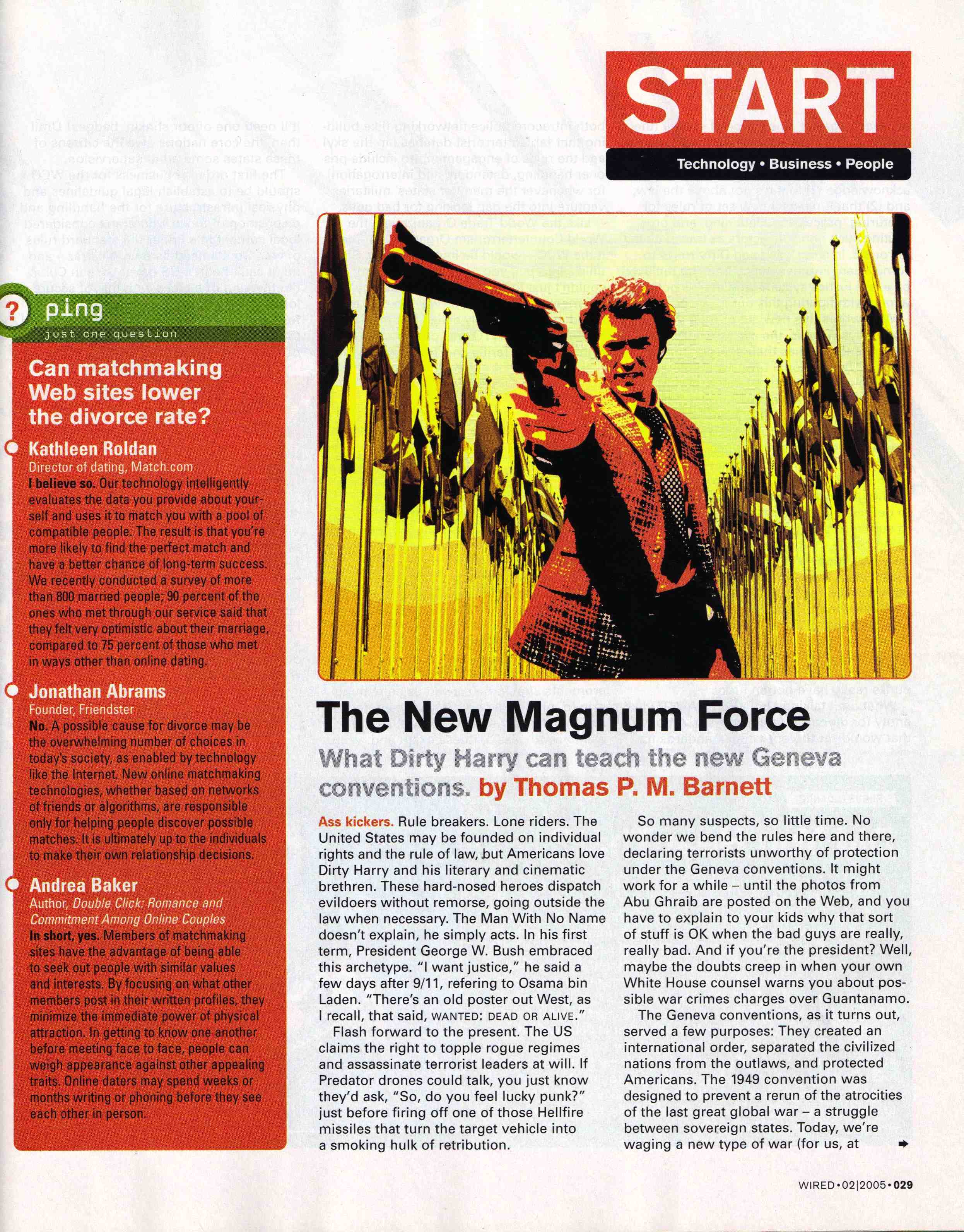
Blast from my past: "The New Magnum Force" (2005)

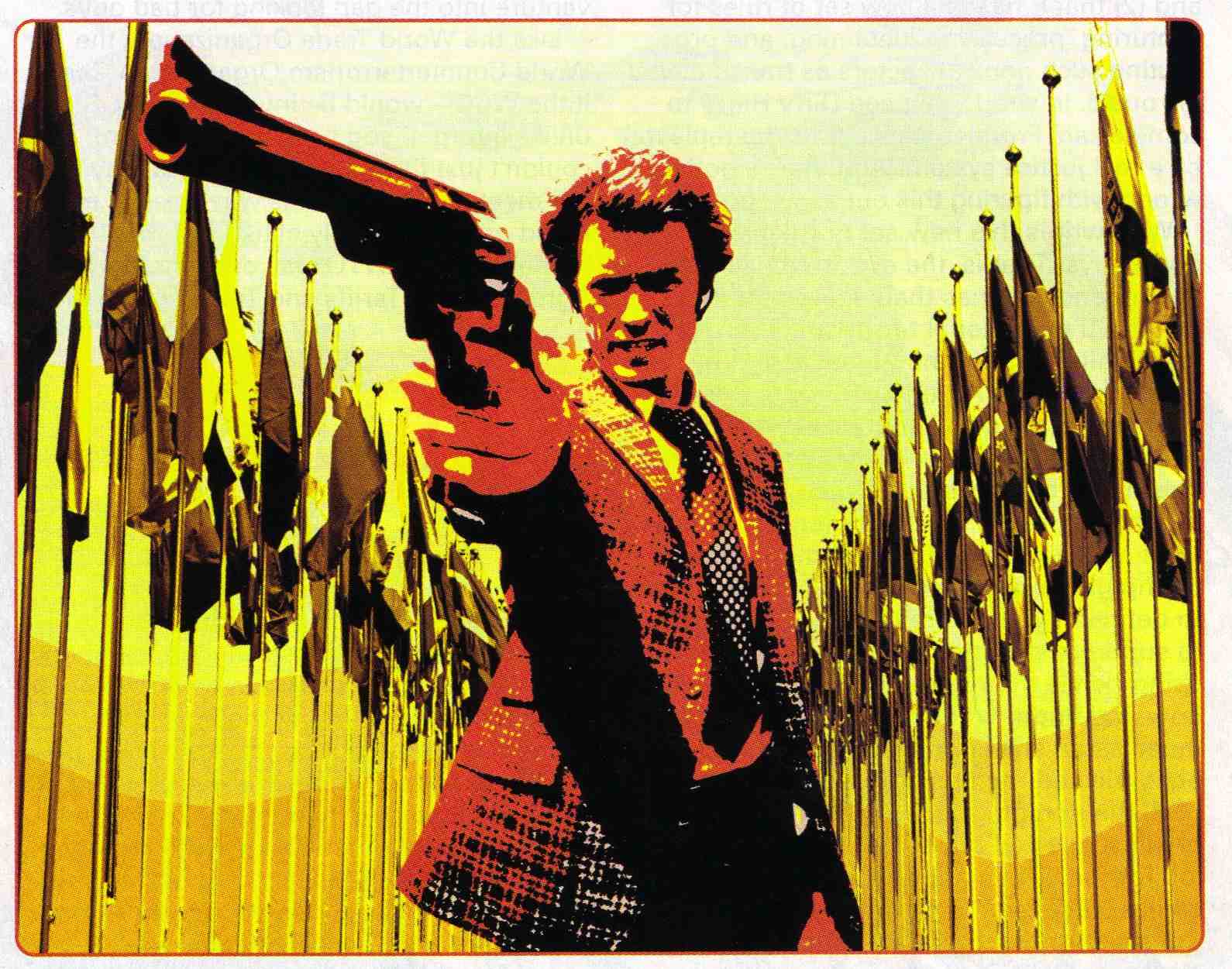
The New Magnum Force:  What Dirty Harry can teach the new Geneva conventions


by Thomas P.M. Barnett


Wired, February 2005, pp. 29-30.


Ass kickers. Rule breakers. Lone riders. The United States may be founded on individual rights and the rule of law, but Americans love Dirty Harry and his literary and cinematic brethren. These hard-nosed heroes dispatch evildoers without remorse, going outside the law when necessary. The Man With No Name doesn't explain, he simply acts. In his first term, President George W. Bush embraced this archetype. "I want justice," he said a few days after 9/11, refering to Osama bin Laden. "There's an old poster out West, as I recall, that said, Wanted: Dead or Alive."

Flash forward to the present. The US claims the right to topple rogue regimes and assassinate terrorist leaders at will. If Predator drones could talk, you just know they'd ask, "So, do you feel lucky punk?" just before firing off one of those Hellfire missiles that turn the target vehicle into a smoking hulk of retribution.

So many suspects, so little time. No wonder we bend the rules here and there, declaring terrorists unworthy of protection under the Geneva conventions. It might work for a while - until the photos from Abu Ghraib are posted on the Web, and you have to explain to your kids why that sort of stuff is OK when the bad guys are really, really bad. And if you're the president? Well, maybe the doubts creep in when your own White House counsel warns you about possible war crimes charges over Guantanamo.

The Geneva conventions, as it turns out, served a few purposes: They created an international order, separated the civilized nations from the outlaws, and protected Americans. The 1949 convention was designed to prevent a rerun of the atrocities of the last great global war - a struggle between sovereign states. Today, we're waging a new type of war (for us, at least) against a new type of enemy (the Man With No State). Unless we want to spend the rest of this conflict trying to rationalize police brutality and torture, the US needs to acknowledge (1) that it's not above the law; and (2) that it needs a new set of rules for capturing, processing, detaining, and prosecuting such nonstate actors as transnational terrorists. In short, we need Dirty Harry to come clean. Frontier justice must be replaced by a real justice system. And there's nothing wrong with figuring this out as we go along.

Who writes this new set of rules? The good guys. That is, the states whose interdependence defines their shared vulnerability to transnational terrorism. There is a functioning core of the global economy: the nations in North America, Europe, Russia, the rising and established pillars of Asia, and the major economies of South America. These are the connected states, and one of the things that connects them most tightly right now is a shared commitment to combating global terrorism. The new rules need to define how the core countries cooperate to suppress terrorist activity within the core using police methods. And they'll lay out how and under what conditions it's OK for those same states' militaries to go into the unconnected regions of the world - what I call the nonintegrating gap - to snatch or kill suspected terrorists. This is not a job for the UN. In a global legislative body where Libya gets to chair the Human Rights Commission (who's next, Sudan?), some punks really have gotten lucky.

What am I talking about here? A WTO-like entity for global counterterrorism. A body that would set the operating standards for both intracore police networking (like building that fabled terrorist database in the sky) and the rules of engagement (to include prisoner handling, detention, and interrogation) for whenever the member states' militaries venture into the gap looking for bad guys.

Like the World Trade Organization, the World Counterterrorism Organization - call it the WCO - would be invitation-only. So unlike Interpol, you (yes, you, Pakistan!) couldn't just flash a badge on your way into the meeting. Starting this way doesn't make it bad or unacceptably elitist, just realistic. Remember, the WTO was once the General Agreement on Tariffs and Trade, which grew out of Bretton Woods, which resulted from a few developed nations colluding behind closed doors. Let's allow this baby to grow up some before we toss out the dirty bathwater. It won't be pretty. More mistakes will be made, but along the way terrorists will get dead.

Maybe it smacks of paternalism to let big ol' core militaries simply walk into gap states and do what they must. But we're talking about only the most disconnected societies, where feeble or nonexistent governments should be viewed as something akin to minors. In short, a nonintegrated nation can grow up and out of the gap. It will have to pass a fitness exam and, yeah, it'll need one of our stinkin' badges! Until then, the core nations owe the citizens of these states some adult supervision.

The first order of business for the WCO should be to establish legal guidelines and physical infrastructure for the handling and disposition of those who aren't considered legal combatants under the standard rules of war. So it'll need its own Alcatraz - and no, it can't be in a US naval base in Cuba. I'm thinking of a place with lots of secure locations, like a supermax Switzerland. As for the trials? Prisoners should be funneled toward the International Criminal Court, because you've got to make the UN happy at some point in the process.

All this may sound risky, but either we can wait on some UN universal declaration full of noble nouns and awe-inspiring adjectives - or we can let the cops who walk the beat inside the gap get started writing the book that, eventually, some upstanding Perry Mason can throw at the bin Ladens and al-Zarqawis when they stand in the docket at the Hague. Until then, let Dirty Harry do his thing.

Thomas P. M. Barnett (t_p_m_barnett@hotmail.com) is the author of The Pentagon's New Map: War and Peace in the Twenty-First Century.

9:53PM

Girls are in the house

Short story, as I am not sure I will be posting anything longer:

Vonne and I fly over Thursday, 19 October, on Lufthansa via Frankfurt into Addis.  We meet friends from last trip at Frankfurt and ride in with them to the TDS Guesthouse Friday evening.  We got the "big" suite on top, meaning a good sized hotel room with balcony, bit of a antechamber between that and bathroom, which is big, but very mid-level Addis. We crash and I get up to do some yoga, only to find the floor covered in ants, which me no like.

Later that day I get the staff to work the issue a bit, but I eventually hit a local bodega for my own spray and do the unit up right (former superintendent talking here).  

Saturday we go over to the WACAP Transition Home and meet the girls for the first time in many weeks.  Both are bronchial and wheezing, as is everyone there.  It's the rainy season, but we are mindful that this is how their father passed (something small becoming something big during rainy season).  The girls seem good. Vonne brought all these balloons and I blew them up for the kids.  Then I painted hands and arms with my face paints. That was a lot of fun.  Metsu and Abbie looked good, but both--again--carried a whiff of the coming problems.

We then did some shopping to kill the rest of the afternoon, going back to the area around the post office, where we bought little.  Then we went to a jewelry shop (by general acclaim, the best in Addis) and got gifts for ladies who helped watch our kids over the two trips.  Then an interesting jaunt to a cooperative staffed by former female fuel carriers who now weave these great shawls.  Got one myself as a scarf for winter. Tweeted a shot from there.

For the life of me, I cannot remember what we did for dinner that night.  We had skipped lunch after the breakfast at the guesthouse.  Oh, wait a tick!  We all went out for the usual cultural evening at this fabulous restaurant that had a band, singers, and lots of traditional dancing.  It was a spectacular show, even if my vodka martini turned out to be a snifter of brandy (lost in translation).  I stared longingly at the Belvedere in the distance.

Sunday was the day we took custody of the girls.  Back to the orphanage for time with them, then they ate lunch, and then a bit of ceremony with pictures taken and video shot.  Some docs (past histories) turned over. Then sad farewells and we're in the van heading back over to the guesthouse.  Minutes later we're alone for the first time together--a point I remember well with Vonne Mei in Nanchang, China.  It went well.  Older one, Metsu, is a bit of a Carol Burnett, as in, never seen an audience she didn't like.  Very much the mischief-maker in her threesomeness.  Finds herself hilarious--all the time.  Abebu was a bit off, and we found out soon enough:  discharge (fairly heavy out of right ear).  I happened to be carrying ear drop antibiotics, along with Vonne's pre-planned antibiotics (oral), so we dosed both and tossed the rather not-too-good-looking antibiotic we got from the orphanage, but kept the other drug (for airway congestion) and started using on both.

I race out for take-out--not very good burgers and fries.

Abbie had a terrible night with the ear pain, something I remember all too well from similar times in my life. Nothing was going to work too well first night, but we eventually got a platypus water bottle to work with hot tap water from the shower as an impromptu heating pad for her head.  After she suffered cramps around 3am and I successfully got her to the head on time (another plot line that's common), she finally fell asleep around 4am, only to wake up at 0700 Monday with Metsu.

After breakfast downstairs, we do paperwork with the lawyer from the orphanage in anticipation of our all-important US embassy appointment on Tuesday.  I am fairly blitzed and take a long time filling the forms out in double--for both girls.  After I crash for about 30, I head back over to the orphanage with other parents and relatives and we decorate a nursery and an outdoor alcove with giant stickers the various couples had amassed in anticipation of our trip.  It was fun work and really revived me and it improved the bare walls by a ways.

Back to the room, Vonne was doing okay with the girls, so I headed out for take-away (favorite Italian restaurant run by Indian lady, we get beef stroganoff and spag alfredo--both of which go over big).  Second night we get the girls to crash with much greater ease, after Metsu does her usual and tries on about six pairs of PJs before deciding (a continuing problem).

Tuesday is the all-important visit to the embassy, which culminates in a right-hand-raised oath-swearing before a USG official.  The whole trip, from stem to stern, runs about 4 hours.  This night I start packing up, because I flew out at midnight.  I take everything I can that we're not donating so Vonne has little to work with the girls when she returns three nights later.  Back to same Italian place for pizza, and I'm out the door at nine.

For some reason I get bumped to biz class on flight back to Frankfurt, but I still can't sleep any.  While in Frankfurt airport for six hours, I rework the briefs for upcoming talks, actually getting a ton of work done.  I also do some reading. 

Get into Dulles Wednesday around dinner time, get rental, and head to Mandarin.  I lay down on bed to relax a bit and wake up with call from front-desk (smart on my part) 12 hours later, Thursday morn.  Up and quickly suited up, I get picked up by intern from McNair and am driven to the Industrial College of the Armed Forces, where I've opened the school year now for something like 8 years (two of my talks are CSPAN vids).  Usual great scene and great audience, and after I warmed up a bit, I did nicely.   Went 70 and then 15 Q&A.  Then further Q&A with two State economists.  

Spent afternoon at Center for Naval Analyses with old colleagues, then evening with DeAngelis downtown. Then late night drive to Quantico, checking into Comfort Inn just outside main gate.  Crash.

Up at 0700 Friday, suit up, and then drive onto base.  Cruise down Barnett Avenue on way to US Marine Corps University.  Speak to same "economics of national security" class that I've addressed now for several years (always new students, but same instructors).  The history-of-America chapter (3) from "Great Powers" was the required reading that week.  They ask a lot of questions, right through the brief.  With break, total brief was about 120.  Q&A went 45.

Drove back to DC and just made 1300 meet at Eurasia Group.

Then dash to airport and get home just in time to meet kids (Em off to college in meantime) arriving home from middle-child's cross-country practice.  We eat out, watch something in the home theater, and then crash.

We're up early Saturday morn and drive as family to Ohare (3.5 hours, with oldest son driving most of way) to meet Vonne and girls, who walk out of customs around 1330. Tough ride for Abbie (still ear problems), so we dash back to Indy, and I and my oldest son take the girls to the ER to get checked out.  Perforated eardrum for Abbie and both with infections in ears (actually, mine back now too since I turned over my ear drops to Abbie in Addis).  We get materials to collect other samples (don't ask) and get home late.  Wipe the girls down and they are off to bed.  We use the intercom as monitoring system (cool feature). 

Our first full day together is today. Some errands by me and oldest son, but rest of day is simply Vonne catching up on sleep, me organizing house, and kids playing with Metsu and Abbie all day long.  

We expect many more days of such cocooning before we take them anywhere.  It all goes well--amazing really, with the only tears being Metsu's usual ones when I put her in her PJs (she hates having clothes chosen for her--a lot!).

I type this as I wait for the girls to crash in their room (they sleep with Vonne Mei, our Chinese daughter). Metsu's tears go about 4-5 mins.

All in all, we feel very blessed.  We're figuring the GI trouble is Hep A, which is cropping up among other kids once home.  We're checking for all the usual parasites (internal only), and Metsu walks a bit funny on one side and has a rather common wart on one leg, but other than that and the ears and the residual bronchial stuff, the girls are in great shape, prettier than ever, and wonderfully fun to have around. 

We are really using the dutch doors throughout the first floor, however.  They keep the girls from wandering into inappropriate/dangerous spots and still allow the 3 Siberian cats the ability to go where they want (we keep the top sections open). Never knew we'd use those so much.

Brain dead.  Need to get up to run everybody to school and then begin a very long workday. 

I'm hoping Vonne got all her sleep back . . ..

Now that the girls are home, I don't plan on posting any further pix, just like with Vonne Mei.  But if you're lucky enough to get an Xmas card from us, note that I've already bought two Packer cheerleading outfits for the girls for the group shot.

Plotting the blog's regular return for Wednesday.

[POSTSCRIPT MONDAY MORNING:  Looking back over the day, I remain amazed at how peacefully it unfolded. It was a quiet, calm household throughout, one that allowed me time to fold laundry in the upstairs guest bedroom for about an hour undisturbed.  Yes, many difficulties lie ahead, along with some negative medical surprises, I am sure, but loads to be thankful for.  I ended the evening like I used to with Vonne Mei:  Abbie sleeping on my chest in the home theater.  Again, hard to complain.]

12:01AM

Blast from my past: "Romania Domino Stays Upright" & "Why Ceaucescu Fell" (1989)

Romania Domino Stays Upright


by Thomas P.M. Barnett


COPYRIGHT: The Christian Science Monitor, 1989 (11 December edition, p. 18)


A political earthquake is rumbling through Eastern Europe.

Stalinist leaders are toppled like dominoes, each succumbing to domestic unrest while Moscow looks on.

So far only Nicolae Ceausescu, Romania's 71 year-old dictator, has escaped this fate. Why are there no mass protests in Bucharest calling for his downfall? The answer is simple: Mr. Ceausescu has been preparing for this kind of political disaster for over 20 years.

The Romanian dictator realized long ago that a political chain of command existed in the Soviet bloc, and that he would have to establish autonomy from Moscow. This meant defending himself from two dangers: first that the Soviets would try to intervene militarily, and second that the Soviets would disavow socialism and undercut him politically.

The USSR's military channels of influence are restricted. No Red Army troops have been stationed in the Balkan country since 1958. Ceausescu built up his national defenses to such an extent that Romania can offer strong resistance to an invasion from any quarter.

Ceausescu also curtailed Soviet influence by distancing himself from Moscow's schemes to integrate Romania's economy into the Eastern bloc. While the USSR is Romania's biggest trading partner, Moscow's ability to force Ceausescu's regime into economic reforms is very limited.

The Kremlin also doesn't have any friends within the Romanian Communist Party. Ceausescu rooted out any Moscow sympathizers by making Romanian nationalism the litmus test of party loyalty.

Finally, Ceausescu severed the ideological umbilical cord connecting Bucharest and Moscow. Ceausescu realized that every Stalinist regime requires its own Stalinist anchor.

It was too risky to rely on Stalin's legacy alone. The whole edifice could collapse if, at some time, a Soviet leader repudiated Stalinism as Khrushchev had tried to do in 1956.

For now, Ceausescu is prepared to ride out the political shock waves resulting from Mikhail Gorbachev's perestroika. This is feasible because Ceausescu's despotism is home-grown. His rigid central planning keeps the economy in a straitjacket, while he stocks the leading political posts with relatives and cronies. His extensive police empire keeps the people cowed, and his personality cult rivals Stalin's.

Symbolically, Ceausescu has skillfully exploited Romania's deep nationalism and its historical weakness for paternalistic dictators.

While Mr. Gorbachev's leverage with Bucharest remains limited, the West's ability to encourage change is nonexistent. Ceausescu labored for years to win most-favored-nation trading status from the US in 1975. Yet just last year he was willing to forsake it when the State Department dared to link its renewal to improvement in Romania's abysmal human rights record.

Perhaps the best hope for change in Romania is Ceausescu's advanced age and poor health. While Ceausescu has lined up his wife and son as his political heirs, neither will sit comfortably, or for long, in a throne designed specifically for one man.

In the short run, Ceausescu's grip on power appears firm. Not only was he unanimously reelected at the recent Communist Party congress, but the tyrant vehemently denied the possibility of reforms. Sending a signal to reformist Hungary, Ceausescu even sealed the border with his Warsaw Pact neighbor.

For all his despotism, Nicolae Ceausescu is a shrewd and farsighted politician. Events in Eastern Europe may have caught the West unprepared, but Romania's present stability indicates that Ceausescu has been ready for this upheaval for quite some time.

Why Ceausescu Fell:  His Silent War Against the Romanian People Backfired


by Thomas P.M. Barnett


COPYRIGHT: The Christian Science Monitor, 1989 (28 December edition, p. 19)


The end finally came for Romania's Nicolae Ceausescu.

Literally scared out of office by an angry population that no longer feared his bullets, the fleeing tyrant and his wife were eventually captured, arrested, and executed after a secret trial. Genocide was the first of several charges leveled against the deposed leaders by the military tribunal.

Less than two weeks ago Ceausescu's dictatorship seemed immune to Eastern Europe's political upheaval. Now, new questions arise in light of the widespread violence that accompanied the end of this Stalinist regime.

Why was Ceausescu willing to wage open warfare against his people? And why would Romanians risk death rather than see his rule continue? The answers must be found in the silent war Ceausescu waged against his subjects for the last seven years.

This silent war dates back to 1982, when Ceausescu implemented severe austerity policies designed to retire the nation's foreign debt by 1990. Why so quickly? The Romanian dictator had witnessed Warsaw's near default on its large foreign debt. Poland's subsequent economic collapse convinced Ceausescu that his regime had to avoid this scenario at all costs.

Three elements drove him to this drastic conclusion:

First, a debt crisis would force the self-proclaimed "Genius of the Carpathians" to admit his economic mismanagement.

Second, such a crisis would cause Ceausescu's regime to lose credibility with the already hard-pressed workers. The ever-vigilant dictator could not allow a Romanian version of Solidarity to develop.

Finally, Ceausescu abhorred the idea of Western financial institutions gaining leverage over Romania's economy. The despot had spent years reducing Moscow's influence, and was not about to have it replaced by Western meddling.

Like his brash anti-Sovietism of the late 1960s, Ceausescu again cloaked his policies in the guise of defending Romania's sovereignty. But the cruel and uneven nature of his austerity program meant that ordinary Romanians were paying for the leader's paranoia with their lives.

Bucharest rapidly reduced its foreign debt over the 1980s, but the extreme rationing of food, basic amenities, and energy created virtual wartime conditions. Exiled dissident Mihai Botez estimates that at least 15,000 Romanians died annually from starvation, cold, and shortages.

Romania was rich enough to provide all these basic requirements, but Ceausescu chose not to do so. Instead, the debt was finally retired earlier this year.

Not everyone suffered these shortages equally. Ceausescu's ruling clan continued to live like modern-day Roman emperors, awash in luxury and decadence. The autocrat also kept his dreaded security police well paid so they would be willing to crush dissent wherever it arose.

After overseeing the economic strangulation of the Romanian people for seven years, it was not surprising that Ceausescu ordered the Timisoara massacre. What were another 4,000 dead to a tyrant who had already sacrificed 20 times that amount?

Similarly, when the security troops fought on like desperate gangsters after the regime's collapse, they were well aware of the people's deep anger over their long history of oppression.

It was anger so great, that when faced with their eighth straight winter of this silent war, Romanians were ready to choose death over Ceausescu. The turning point of the popular uprising occurred when military leaders realized that the people could be pushed no further.

With Ceausescu's downfall, Romania faces severe tests in the weeks ahead. The No. 1 task of the newly formed opposition, the National Salvation Front, is to contain the potential for continued violence.

The anger resulting from Ceausescu's silent war must be properly channeled in order to avoid a long and ugly backlash. An orderly and fully disclosed trial for Ceausescu would have gone a long way in releasing some of this pressure.

It is a good sign that the National Salvation Front is led by political figures—such as the interim president, Ion Iliescu—who, because of their past dissent, fell out of Ceausescu's favor many years ago. Their social stature will be instrumental in promoting new government policies which address Romania's present problems rather than dwell on its past.

Ceausescu subjected his people to any sacrifice necessary to maintain his absolute power. The end result was a nation isolated abroad and economically crippled at home. While the isolation has ended, the economic damage remains.

Both East and West have declared their readiness to aid in Romania's economic recovery. But both sides must also continue to be patient with Romania. It is a country coming out of a long and brutal conflict. While open warfare didn't break out until last week, Ceausescu's silent war had been claiming victims for years.

12:01AM

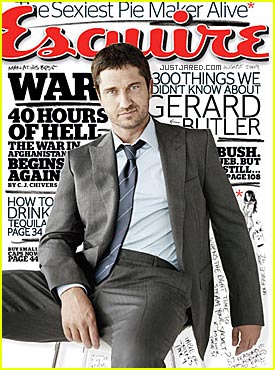
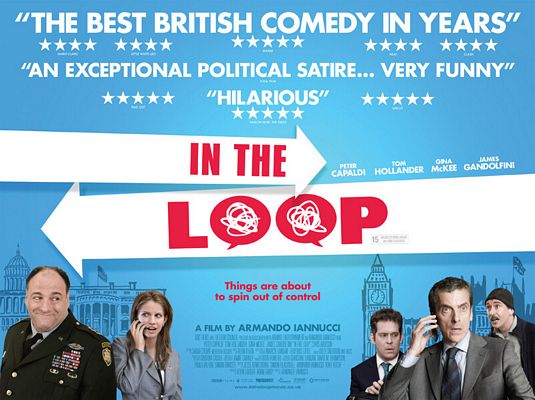
Blast from my past: "The Overly Qualified Critic: Esquire's National-Security Expert on the New Film 'In the Loop'" (2009)


The Overly Qualified Critic:  Esquire's National-Security Expert on the New Film In the Loop


by Thomas P.M. Barnett

Esquire, August 2009, p. 27.

In the Loop, by veteran British satirist and first-time director Armando Iannucci, is a deadpan farce that wickedly echoes the joint Anglo-American sales job on the Iraq invasion. Imagine dueling diplomatic versions of The Officecolliding at the United Nations over a proposed war resolution, with the decisive press leak sheepishly offered up by a two-timing British bureaucrat to his enraged Foreign Ministry girlfriend as evidence that his bedding an American counterpart was nothing more than an "antiwar shag."

The Brits are fronted by a peace-seeking but tongue-tied cabinet minister (Tom Hollander), who says things like "To walk the road of peace, sometimes we need to be ready to climb the mountain of conflict," triggering the prime minister's press flack (Peter Capaldi) to retort, "You sound like a fucking Nazi Julie Andrews." The warmongering Americans are captained by a Rummy-esque übercrat (David Rasche) who favors live hand grenades as desktop paperweights and pontificates to baby-faced aides, "In the land of truth... the man with one fact is the king."

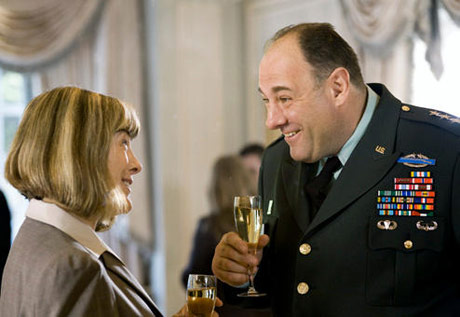
The film, which slips in an effortless turn by James Gandolfini (above) as a foulmouthed U. S. general, contains enough fucks to qualify for the Tarantino award at Sundance, where it premiered in January, yet it's the script's many accurate details that earn this former badge-holder's praise, to include: the ubiquitous acronyms whose actual meaning nobody knows, the constant backstabbing among careerists, senior officials who float their resignations with less thought than they give their office decor, and the vigorously hedonistic lifestyle of D. C.'s young single staffers.

Which makes it a hilarious and helpful primer for anyone new to Washington.