Buy Tom's Books
  • Great Powers: America and the World After Bush
    Great Powers: America and the World After Bush
    by Thomas P.M. Barnett
  • Blueprint for Action: A Future Worth Creating
    Blueprint for Action: A Future Worth Creating
    by Thomas P.M. Barnett
  • The Pentagon's New Map: War and Peace in the Twenty-first Century
    The Pentagon's New Map: War and Peace in the Twenty-first Century
    by Thomas P.M. Barnett
  • Romanian and East German Policies in the Third World: Comparing the Strategies of Ceausescu and Honecker
    Romanian and East German Policies in the Third World: Comparing the Strategies of Ceausescu and Honecker
    by Thomas P.M. Barnett
  • The Emily Updates (Vol. 1): One Year in the Life of the Girl Who Lived (The Emily Updates (Vols. 1-5))
    The Emily Updates (Vol. 1): One Year in the Life of the Girl Who Lived (The Emily Updates (Vols. 1-5))
    by Vonne M. Meussling-Barnett, Thomas P.M. Barnett
  • The Emily Updates (Vol. 2): One Year in the Life of the Girl Who Lived (The Emily Updates (Vols. 1-5))
    The Emily Updates (Vol. 2): One Year in the Life of the Girl Who Lived (The Emily Updates (Vols. 1-5))
    by Thomas P.M. Barnett, Vonne M. Meussling-Barnett
  • The Emily Updates (Vol. 3): One Year in the Life of the Girl Who Lived (The Emily Updates (Vols. 1-5))
    The Emily Updates (Vol. 3): One Year in the Life of the Girl Who Lived (The Emily Updates (Vols. 1-5))
    by Thomas P.M. Barnett, Vonne M. Meussling-Barnett
  • The Emily Updates (Vol. 4): One Year in the Life of the Girl Who Lived (The Emily Updates (Vols. 1-5))
    The Emily Updates (Vol. 4): One Year in the Life of the Girl Who Lived (The Emily Updates (Vols. 1-5))
    by Thomas P.M. Barnett, Vonne M. Meussling-Barnett
  • The Emily Updates (Vol. 5): One Year in the Life of the Girl Who Lived (The Emily Updates (Vols. 1-5))
    The Emily Updates (Vol. 5): One Year in the Life of the Girl Who Lived (The Emily Updates (Vols. 1-5))
    by Vonne M. Meussling-Barnett, Thomas P.M. Barnett, Emily V. Barnett
Search the Site
Powered by Squarespace
Monthly Archives
10:44AM

Metsu, in fine form

Since sister Abbie posted yesterday, I felt I owed one of Metsu. Both girls came out to local society last night at my younger son's cross-country meet (first of the year).  Jerry took a whopping 39 seconds off his personal best on a hilly course in 83 degree conditions, and secured a top-20 ribbon in a big, tough field (17th place). The girls were a bit wary of so many strangers, but by the time we were on our way home with Five Guys burgers in tow, they were chattering away in Sidama (their obscure tongue) and we considered the outing a huge success.

Today we find out, thanks to testing, that they have no internal parasites of any sort (whew!), so other than a nasty thigh wart and a rather odd gait on Metsu, we have no medical issues to address beyond making sure their ear infections went away.  We count our blessings, because our bank accounts are cleared out.  Then again, I wasn't put on this Earth to stockpile cash for my funeral.

12:10AM

Mullahs even more marginalized in Iran

FT story and editorial.

Story claims the split "deepens Ahmadi-Nejad's woes," but me thinks not.

The trigger:  "a highly controversial interpretation of the Shia faith advanced by close allies of Mr Ahmadi-Nejad, who advocate a radical mixture of Islam and nationalism."

In effect, Ahmadinejad's guys are saying that Shia Muslims "do not need the clergy . . . to connect with God and that direct links can be made with the last, or 'Hidden Imam', who is believed to have disappeared in 1947."

How convenient--for Mr. Ahmadinejad.

Meanwhile, we are told that "the supreme leader is under enormous pressure . . . to remove Mr Ahmadi-Nejad."

Still think the two are on the same side?

As I've argued for years now:  Ahmadinejad's whole scheme is to create a non-clergy-centric, president-centric single-party state with a firm grip over the economy--less a revolutionary state than a sad rerun of Brezhnevian USSR.  The generation of Iran-iraq War vets wants their piece of paper acknowledging their great "triumph" and accomplishments, just like Brezhnev and crew needed that piece of paper from Nixon declaring them a co-equal superpower (lot of good it did them).  

In the end, Ahmadinejad does God's work (pun intended) by disintermediating the clergy and aping the Sovs' sad ideological and economic decline.  He remains a step forward, despite the costs and risks, because, ultimately, those two will prove his undoing.  Nukes will buy him nothing but organized regional resistance, Sunni rapprochement with Israel, etc.

I still bet on Turkey cleaning up--hopefully with our blessing.

Maybe the clergy will strike back at the president, but I continue to bet that the Revolutionary Guard has won decisively in its military putsch and will continue to consolidate power.

12:09AM

Germany retools its military

I'm training here! I'm TRAINING!

image here

NYT story on new plan by German defense minister to end draft and cut end strength (number of troops) by 90k (from 250k to 163,000)  Currently, the Bundeswehr can project only about 7k troops abroad at any one time.  The goal, long expressed, is to double that to 14,000, but that couldn't be achieved absent this restructuring, says the defense minister.

Driving dynamic is to cut 8B euro from the budget over 2011-2014 timeframe.

If we're realistic, we admit Europe is a minor military partner in the decades ahead, leaving us to court million-man armies in Asia (India, China--a goal that's worthy simply for making sure the two don't mix it up for real).

Everything else is peanuts.

12:08AM

Venezuela: living in a gangsta' paradise

Simon Romero piece in NYT (I read it in International Herald Tribune coming back from Ethiopia) on how Venezuela is the murder capital of the world, which means Chavez can't even do authoritarianism well.

Turns out, as the piece argues, that citizens of Baghdad are a lot safer than those of Caracas:  same population, with 4600 civilian deaths in Iraq in 2009, but 16,000 murders in Venezuela.  Amazingly, even Mexico's drug war is less deadly (murders in Venezuela over the same time period are about 50% higher).

Caracas is without peer:  200 murders per 100k versus 22 in Bogota (Columbia) and 14 in Sao Paulo (Brazil), two cities usually held up as crime-ridden.

Murder rates in Venezuela have now tripled since Chavez took power ini 1998.

Sad state of affairs:

Reasons for the surge are complex and varied, experts say. While many Latin American economies are growing fast, Venezuela’s has continued to shrink. The gap between rich and poor remains wide, despite spending on anti-poverty programs, fueling resentment. Adding to that, the nation is awash in millions of illegal firearms.

Police salaries remain low, sapping motivation. And in a country with the highest inflation rate in the hemisphere, more than 30 percent a year, some officers have turned to supplementing their incomes with crimes like kidnappings.

But some crime specialists say another factor has to be considered: Mr. Chávez’s government itself. The judicial system has grown increasingly politicized, losing independent judges and aligning itself more closely with Mr. Chávez’s political movement. Many experienced state employees have had to leave public service, or even the country.

More than 90 percent of murders go unsolved, without a single arrest, Mr. Briceño-León said. But cases against Mr. Chavez’s critics — including judges, dissident generals and media executives — are increasingly common.

Haven't seen Oliver Stone's paean to Chavez, but I wonder if he covered any of this in his documentary.

12:07AM

Maybe the iPhone has it right: why bother making calls?

In case you didn't catch the Futuram iPhone episode . . .

FT front-pager that notes mobile operators predict app sales will outpace call revenues by 2013. Naturally, this raises a lot of those "net neutrality" issues (net neutrality is the principle that says deliverers of content shouldn't prioritize certain sites over others--for a price), because the telecoms want to start charging the Googles and YouTubes for all that flow.

Why?  Content is once again king, so operators are asking themselves, as one lawyer puts it, "Am I just a dumb pipe delivering that content, or can I secure a piece of that pie?"

Eventually, new pricing regimes must emerge and we all pay more for everything.

12:06AM

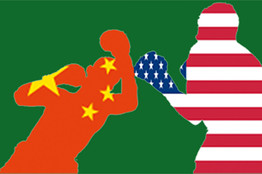
China's rise: it takes two to tango--and tangle

image here

FT op-ed by usually sensible Michael Pettis, who's unusually alarmist here (along with the headline of "The risk is rising of another global trade war"; did I miss the first one?).

Basic logic sound: the great imbalance is still there.  China still relies too much on exports and America's trade deficit is back up there. The kicker is rising unemployment + the election:

In the months ahead, the US will be forced to choose either protection or soaring trade deficits with rising unemployment.

Do we blame the American consumer?  No, says Pettis.  Blame it on the shift in global trade imbalances.

Five countries or regions have largely driven these imbalances in the past decade.   Three of them--China, Germany and Japan--run huge trade surpluses on which they are dependent for domestic employment growth.

Counterbalancing them have been the two trade-deficit champions--the US and trade-deficit Europe, dominated by Spain, Italy and Greece.

The financial crisis has undermined the precarious decade-long equilibrium between these blocs by forcing trade-deficit countries to reduce debt, especially household debt.  As they do, the excess demand they provide to the rest of the world must decline.  Trade-surplus countries have resisted this adjustment fiercely by trying to maintain or even increase their surpluses.

Which makes China lecturing America and Germany lecturing Greece all the more hypocritical.

Because we're such an open economy, we become absorber by default--until Congress steps in, argues Pettis. Currently we lack the industrial, currency intervention and interest-rate management policies that the trade-surplus state use at will.  So we're left with tariffs and import quotas.

Powerful argument.

Second cite, an FT op-ed by John Plender, makes similar points, with historical examples (the 1920s-1930s shift from British to US power) to scare one a bit more.

He sees two likely paths, both of which will increase US trade protectionism:  we go loose fiscally and rack up more debt, or the GOP prevents budget loosening while monetary policy stays lax. Either way, "creditor countries would ultimately see their chief market dry up."

12:05AM

Japan: easier to invest in China than invade

The weirdest part of George Friedman's Next 100 Years was his insistence on Japan returning to militarism in order to secure resources/labor.  I mean, I can't believe he's been there recently or spent any time with Japanese youth if he's still pushing that "coming war with Japan" shtick (his 1991 book--two decades wrong and counting).

And there's just no good logic for it: Japan has the bucks and the technology to take advantage of China in a wholesale fashion, including the reverse flow of Chinese tourists (who now spend as much as Americans in Japan).

Bottom line:  Japan's future is China's rise--pure and simple. China is 26 times the size of Japan and it presents more than 100 million-plus cities.  Then there's all the Chinese money that can be used to revitalize Japanese firms (and American ones too).

Yes, China will shoot ahead on gross output, but Japan's large lead on technology will remain and "will not close easily" because Chinese companies just don't invest in R&D anywhere close to the same degree, so a mutually beneficial relationship for a very long time.

The Asian integration process proceeds, with amazingly low danger of great-power war.

12:04AM

The Russian brain drain--very Blade Runner-ish

Anybody still watching?

Newsweek blurb (Newsweek is just columns and blurbs now, and virtually no reporting) on how Russia's professional class is fleeing the country.

So who gets left behind?  Not the get-up-and-go types, because--increasingly--they've gotten up and gone, boding very badly for Russia's business DNA pool. 

Reminds me of the death-and-dying vibe of Earthicans (Futurama term) left behind in "Blade Runner."  A very negative sign.

And once gone, Russian businessmen do not return out of fear of being jailed by policy, who are "colluding with organized criminals to seize control of legitimate businesses."

Putin started this whole trend; now Medvedev tries to reverse by decrying "legal nihilism."

Until the regime gets serious about this, Russia has only a present--no future.

12:03AM

The PLAN: "great concern" but "a long way to go"

WSJ story on the annual Pentagon report to Congress over China's build-up.  Because of the general deterioration of mil-mil ties after the $6.4B arms sale to Taiwan, the report will have little impact overall, except to justify growing enthusiasm inside the Building for the whole AirSea Battle concept (the Air Force and Navy searching for relevancy in a Long War world).

The usual references to China's aggressive cyber-snooping, which is annoying but results in no significant shift in the correlation of forces.

As for the new antiship missile, a senior defense official says it is of "great concern," but adds, "they still have a long way to go."

A non-hyperbolic assessment.

12:02AM

As if global ag isn't stressed enough, don't forget La Nina

Per my recent WPR column, the global cereal production chain is already under enormous strain thanks to the heat wave/drought in the Black Sea countries.  Then there's the floods in Pakistan.

The La Nina effect has already begun and will strengthen for the rest of the year.  Biggest losers likely the ABCs of South America (Argentina, Brazil, Chile), South Africa and Australia.

No upside whatsoever.

12:01AM

Chart of the day: democracy in Africa

From Economist story that declares, "The democracy bug is fitfully catching on.

I would argue two observations:  First, the impact of South Africa is crucial for the beachhead in the south; and America has had some role in enabling the weaker beachhead in the West.

Good underlying trend seen in second accompanying chart:

If the Chinese and Indians and Arab sovereign wealth funds now represent the dominant economic dynamic in the region, then you cannot say that it's resulted in more coups, even if the progress toward serious democracy is "fitful."

3:03PM

Couldn't resist

Abebu in my home office

12:10AM

A bad call by Obama on Turkey

FT front-pager on how Obama warns the Turks to change their stance on Israel and Iran or risk being denied US weapons.

This while we sell the store to the Saudis, birthplace of most of the 9/11 terrorists, and keep the pipeline open to the Pakistanis. Talk about screwed up.

This is an immature response to a maturing foreign policy.

An anonymous administration official is quoted as saying the Turks need to show that they take our national security interests seriously.

Definitely a realism deficit--on our side.

12:09AM

Pakistan finally wakes up on its own insurgency

WSJ story on how Pakistan now admits its own internal militant insurgencies problem is a bigger threat than India.

Hmmm.  About ten years and $10B in military aid too late.

No impact yet seen on troop positioning.  Pakistan has about 150k soldiers in the Taliban fight, with 100k in reserve.  350k keep a close eye on India to the south.

Experts say that the ISI (intell service) may be leaning this way, but the military still likes to use the militants as a tool against hated India.

America gives upwards of $2B a year in military aid to Pakistan.  No ultimatums issued by Team Obama--unlike in the case of Turkey.

The Pakistan Taliban kill about 1,000 Pakistanis every year since 2003.

12:08AM

China's alleged monopoly of rare-earth reserves


Wikipedia

WSJ story on how China is broaching notion of letting foreign companies enter into joint ventures on rare-earth mining/processing in Mongolia in exchange for access to technology--a well-established Chinese pattern that can backfire for foreign firms as time passes.  This is described as a shift from "technology for market" to "technology for resources."

China does control--currently--about 95% of production, but only because it's cheap prices drove other mines out of competition.

But in reality, China accounts for only 30% of the world's known reserves, and existing mines can all be restarted within a couple of years.  So China only "controls" because it keeps the price low.

China bans foreign companies from entering into the mining process itself, but allows cooperation on processing.  China also imposes export quotas, which inevitably--as even the Chinese admit--will encourage competing production around the world.

12:07AM

You heard it here first: Hillary and Joe switch jobs in 2012


FT column by Clive Crook.

You remember my Esquire column of 7/31/09?  It ended thusly:

End Game: A Swap with Biden?


Say Clinton puts in her four years dutifully, achieving a reasonable fraction of her ambitions. So what's her reward? Four more years of President Obama, quite possibly. But will Hillary be happy enough with four more for herself at State? Or could a bigger compensation package be in the works?

Let me lay out for you a scenario I consider most worthy for all sides to consider: Remember Don Regan and James Baker switching jobs between Ronald Reagan's two terms, with Regan going to White House chief of staff and Baker assuming the Treasury's top spot?

Well, try this one on for size: Biden has no legit hopes for the top slot in 2016, but Clinton can't be ruled out. Why not have them switch jobs in concert with the 2012 campaign run? Biden can run out his string in the job he's always wanted (four years at No. 2 is enough time served for anybody with his ego, yes?), and Hillary can make history as the first elected female vice president. Obama is thus doubly credited for shattering one glass ceiling and generously setting Hillary up to crack the ultimate one.

You heard it here first.

Well, Crook makes the argument for Hillary as a better running mate for Obama in 2012 without going the extra step of job-swapping, which I think would make the deal work for Biden (recalling Baker-for-Regan in Reagan II).

Crook's larger argument:  if you want a more successful Obama II, this would be a great way to shift course and move more to the center.  Crook actually explores doing this prior to the full-up election (as in, why would Clinton automatically rule out running in 2012?), but I don't consider that to be anything but fantastic.

I think the swap-out could work for everybody--at virtually no risk to anybody.

12:06AM

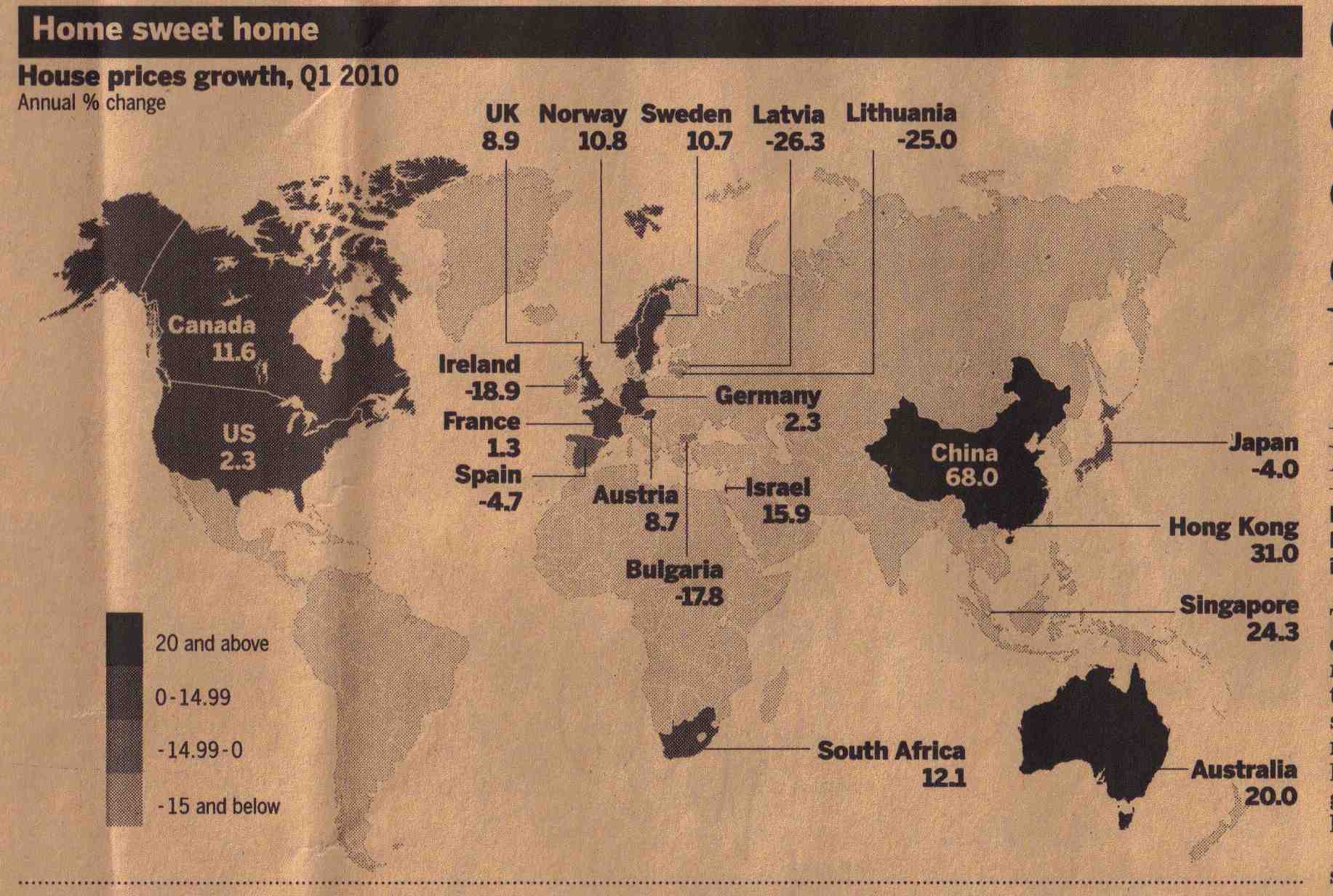
The housing bubble that is China

FT story.

Hard to see how 68% price rise in China is sustainable.  If the central gov's braking efforts are working, then I'd hate to consider the price rise without them!

China's rise 07-09 was amazingly modest compared to the last 12 months, which equates to roughly 4 times as fast a rise as the rest of Asia-Pacific.

12:05AM

Mexico talking decriminalization of pot

Economist story.

Felipe Calderon, president of Mexico, floating the idea that enough is enough.  His war on drugs (truly a war) has come at the cost of 28,000 lives in four years--with no let-up in sight.

We freak out, as a nation, over 4,000 troop deaths over twice the period, and we're three times the population of Mexico.  So fair to expect far more of a political freak-out on their side, which has remained really quite reasonable throughout.

So I guess I don't see why, as The Economist says, that "it came as a surprise when on August 3rd Mr. Calderon called for a debate on whether to legalise drugs."

If we had similar numbers of per-capita deaths, we'd be talking 84,000 deaths since 2006, or roughly 15 times what we've lost in Iraq and Afghanistan since 2002.  If we were suffering such losses, dontcha think we'd be talking decriminalization a lot more than we are now.  Hell, even with our relatively marginal losses, 30 out of 50 US states have passed or are considering medical pot/decriminalization bills.  So why such a surprise that mellow Mexico calls for just a debate?

Calderon's predecessor, Vincente Fox, has already called for legalization in response.  If California soon votes to legalize and tax pot sales to adults, then expect Mexico to more ahead, I say.  

12:04AM

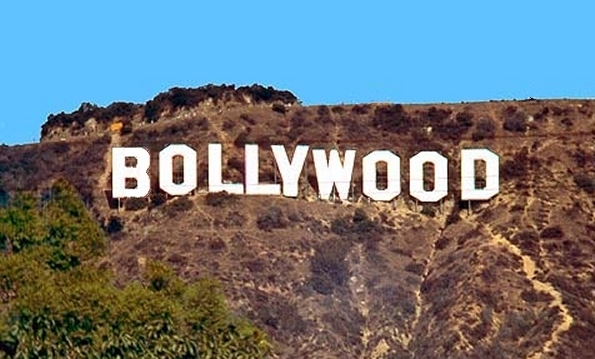
The middle class loves movies--3D or not!


image here

Trio of FT stories.

First one laments future of 3D in Hollywood after recent string of flops that prove only that bad films, when presented in 3D, still suck!  Avatar?  Alice?  Great flicks.  But the rest of the recent crop?  Complete crap--unsave-able by 3D, big surprise.

With roughly 2/3rds of Hollywood's take now from foreign markets, you wonder about the need to push 3D so extensively, especially given the theater costs involved and the higher ticket prices. Neither go well with an emerging global middle class, which is easier to please than that and doesn't necessarily want to shell out more money for fewer viewings.

Second story cites rising impact of India's middle class on theater-going there, as luxury cinemas (basically, a version of the modern US cinema but a big improvement over standard national fare) are going up all over India's big cities.  And even with Bollywood's immense draw there, the article says that the full force of the market is far from being felt to date.  Some chains are reporting 80% growth in attendance over the last year, as more people with more disposable income are flocking to films both native and foreign (Inception, for example, is doing very well in India).

Still, the numbers can only go up.  A blockbuster in the US will get 70m viewers out of a total population of 300m.  In India, a blockbuster gets maybe 50m out of 1.2B.  And we're talking an Indian demo that's half under 25 (or 600m in youth alone!).

Already, according to the third cite, we see Universal planning a big movie-theme park in Mumbai, one that would blend the best of Bolly and Holly.

A trend to watch.

12:03AM

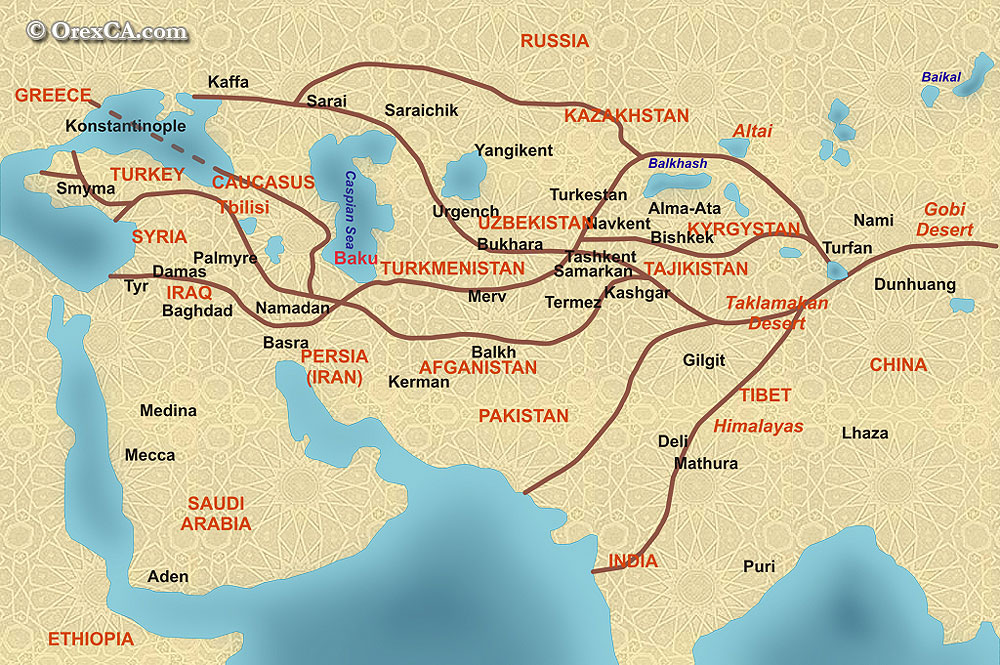
The Gap is Asia's to shrink economically

image here

Bloomberg Businessweek with goofy title (Really?  The new silk road doesn't lead to the U.S.?  Wow!  I would have expected otherwise, given our geographic position on the planet.)

All this piece confirms is that the economic integration and development of the Gap will be done primarily by the New Core--not the Old.  That's something I've argued for many years now.  It just makes sense:  the last in, the next integration begin.  Think of it as a staircase:  the higher up you are in the production chain, the less sense it makes for you to be the primary agent of slotting in those who come immediately behind you.

So Europe slotted in North America way back when, then we did the same to Asia and the ABCs of Latin America, and now they do the same to the Gap.

As one expert is quoted in the piece, "We saw the same phenomenon with American and European companies 100 years ago."

Yes, this all means more competition for markets and resources for companies across the Core, but the best of the Old Core's companies will clean up nicely--like a Caterpillar.

A good byproduct:  as the New Core-Gap trade explodes, more of it will be done in currencies other than dollars and euros, and that's a good disciplining pressure on the Old Core--especially the US.