Buy Tom's Books
  • Great Powers: America and the World After Bush
    Great Powers: America and the World After Bush
    by Thomas P.M. Barnett
  • Blueprint for Action: A Future Worth Creating
    Blueprint for Action: A Future Worth Creating
    by Thomas P.M. Barnett
  • The Pentagon's New Map: War and Peace in the Twenty-first Century
    The Pentagon's New Map: War and Peace in the Twenty-first Century
    by Thomas P.M. Barnett
  • Romanian and East German Policies in the Third World: Comparing the Strategies of Ceausescu and Honecker
    Romanian and East German Policies in the Third World: Comparing the Strategies of Ceausescu and Honecker
    by Thomas P.M. Barnett
  • The Emily Updates (Vol. 1): One Year in the Life of the Girl Who Lived (The Emily Updates (Vols. 1-5))
    The Emily Updates (Vol. 1): One Year in the Life of the Girl Who Lived (The Emily Updates (Vols. 1-5))
    by Vonne M. Meussling-Barnett, Thomas P.M. Barnett
  • The Emily Updates (Vol. 2): One Year in the Life of the Girl Who Lived (The Emily Updates (Vols. 1-5))
    The Emily Updates (Vol. 2): One Year in the Life of the Girl Who Lived (The Emily Updates (Vols. 1-5))
    by Thomas P.M. Barnett, Vonne M. Meussling-Barnett
  • The Emily Updates (Vol. 3): One Year in the Life of the Girl Who Lived (The Emily Updates (Vols. 1-5))
    The Emily Updates (Vol. 3): One Year in the Life of the Girl Who Lived (The Emily Updates (Vols. 1-5))
    by Thomas P.M. Barnett, Vonne M. Meussling-Barnett
  • The Emily Updates (Vol. 4): One Year in the Life of the Girl Who Lived (The Emily Updates (Vols. 1-5))
    The Emily Updates (Vol. 4): One Year in the Life of the Girl Who Lived (The Emily Updates (Vols. 1-5))
    by Thomas P.M. Barnett, Vonne M. Meussling-Barnett
  • The Emily Updates (Vol. 5): One Year in the Life of the Girl Who Lived (The Emily Updates (Vols. 1-5))
    The Emily Updates (Vol. 5): One Year in the Life of the Girl Who Lived (The Emily Updates (Vols. 1-5))
    by Vonne M. Meussling-Barnett, Thomas P.M. Barnett, Emily V. Barnett
Search the Site
Powered by Squarespace
Monthly Archives
12:01AM

Chart of the day: How loved is China?

From an Economist piece that declares that "the Beijing consensus is to keep quiet."

Yes, publishing houses in both China and the West are coming out with a slew of "China rules the world" books right now, and with the Shanghai Expo in full swing, China seems to be having its equivalent of America's 1893 Columbian Expo self-love-fest.

But the Chinese leadership is having little-to-none of this: they honestly don't want the responsibility of being a global model--yet.

What I got from the chart:  China gets the most love from Gap/Seam states where it's ramping up its investments, moderate love from fellow rising New Core powers (which feel some competition) and far less love from the Old Core West (for all the normal reasons).

Still, some outliers:  maybe the Brits and the Americans do see a younger version of their rising selves, and hence are less suspicious than China's historical regional rivals (India, Korea, Japan).  

12:04AM

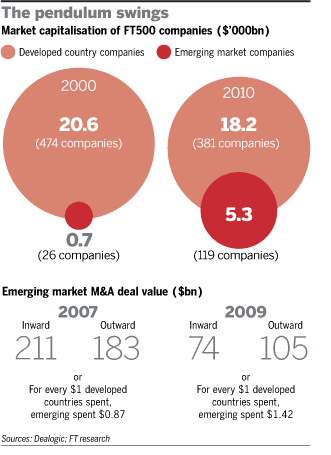
The fluctuating rule-sets that define emerging markets

FT piece that leads with recent acquisitions highlighted here previously (Geely buys Volvo, Bharti Airtel buys Zain's Africa telecom biz).  New Core corps are described, predictably enough, as "climbing up the value chain," meaning offering higher-end product and services or moving off the low-cost end of the spectrum.

We saw Germany do this after WWII, then Japan, then Korea, then the tigers, and now India and China and Brazil.  The big difference now is the speed of the climb.  These new corp giants are described as moving with far less caution than their Japanese predecessors did, for example--especially when it comes to aggressively acquiring Western companies and joint ventures with Western firms.  And when state-owned companies are involved, the political pushback from the West will only grow--as it should.

The quote that caught my eye: 

Securing global standards throughout an emerging markets-based organization is a difficult task.

Gist:  when you're rising, you make up a lot of new rules as you go, typically transgressing more than a few established ones--hence the sense among your competitors that you're shaking things up.

12:03AM

Soviet mining disaster: casualty of Soviet-era rules

Mining union official praises all the new gear miners have.  The big problem today, and the one that led to the recent explosions in a coal mine that killed dozens, "is with the management system, not the equipment."

Miners are paid by the tons of coal they pull out, or the output-volume-mania of the Soviet era.  When faced with meeting safety codes versus getting paid more, men pick the latter to their detriment. Example:  in order to meet monthly quotas (another Soviet-era mindset), miners will routinely turn off the methane detectors.

12:02AM

Deep Reads: Martin Wolf's classic "Why Globalization Works"

The temptation here is to cite his more recent, post-crash work ("Fixing Global Finance"), but if you want a soup-to-nuts explanation of why I believe in globalization's overwhelmingly positive impact on the world in recent decades, this 2004 book is still the ultimate primer in my mind--worth the long slow read.  It's like taking an international economics course.  So best to start here and then trying the more complex recent volume.

Whenever I get asked, "What's the single best book I can read on the global economy and globalization?" I always cite this book and will until probably Wolf dethrones it himself.  

I had the distinct pleasure of meeting Wolf at a regional Davos meeting (off the coast of Australia).  He saw me give the brief and we had dinner following, with my old friend Minxin Pei.  He is as charming and fascinating and intelligent in person as he appears in print.

12:01AM

Movie(s) of My Week: Bette Davis at her apogee

Just a couple I caught with Vonne last week, pulling them out of a 4-pack of remastered films on DVD.

First is "Now, Voyager," where she really plays three characters: 1) the young Charlotte Vale before her nasty, old-School Boston brahmin mom kills her spirit; 2) the crushed 40-something spinster who finds salvation with a psychiatrist's help (Claude Rains at his smooth best); and 3) the revived Charlotte who has a tragic, distant love affair with Paul Henreid (also at his best).  She is simply amazing throughout.  Plus there's a gloriously sophisticated camera movement during her first lunch with Henreid that is truly breathtaking.  Very modern look for a 1942.  She was nominated but did not win for Best Actress.

Yes, a chick flick, but it ages amazingly well.  To me, it reminds that people were not all that less sophisticated back then, and they tended to behave with a lot more authenticity and genuineness than today.  It is a sarcasm-free world, by comparison.

I had seen the movie many years ago and delighted in it again this time around, so much so that we teed up another in the series, "Dark Victory," a tear-jerker without peer.

But, it's got Davis in her prime (right after the Oscar-win with "Jezebel" in 1938), even if her performance was lost in the incredibly year of 1939 ("Gone with the Wind," "Oz," etc.).  The doctor in question (this a medical story) is awfully good (George Brent), plus you've got Ronald Reagan in a light but charming role as a society drunk.

I've always had a thing for Davis in her prime.  She reminds me of a good friend/lover from my youth.

I will confess to watching "Dark Victory" with a big martini, and I welled up more than once.  But I was struck--again--by the relative sophistication and honest emotion conveyed in the film.  I found it melodramatic alright, but--again--incredibly genuine.

12:06AM

Medvedev's influence emerging in proposed Western tilt?

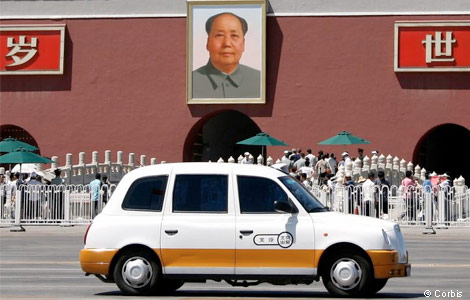
Pic here

Weir/CSM via WPR's Media Roundup and a WSJ article on the same:  internal leaked report from Medvedev side of the house calls for shift toward US as new strategic direction.  Report allegedly from Foreign Minister Sergey Lavrov to Medvedev.

Dmitri Trenin, the best of Russia observers (and based in Moscow), is quoted in the WSJ piece saying "It's a document that reflects the mainstream in today's Russian political leadership."  Team Obama's new tact is presented as a real opportunity.

Lavrov refers to "alliances of modernization," suggesting a general tilt to the West.

What this says:  Russia alternates between "We're special!" megalomania and "We must imitate the West" humility.  This goes back centuries. Putin represented a strong "special" burst after the chaos of the 1990s, but it only worked while oil was high and mindsets remained narrow.

Now we see an unsurprising rebound in the other direction.

Medvedev--however slowly he moves--continues to impress.

And yeah, it's getting a wee bit harder to tell who's the real power and who's the real power behind the throne.

12:05AM

China to India telecom market: pretty please, let us in!

Huawei is China's biggest telecom equip manufacturers.  It's working hard to get into India's booming market space, and recently India took a hard line on its imports, blocking orders on the rationalization that the gear might come with spy devices.

Now, Chinese expats are adopting local names (a famous Chinese trick) and dress and going heavy on the charm.

India is worth $1.4B of Huawei's revenue now, or 11%.

I like to see this tussle.  It's part of China's learning process:  the more it penetrates other markets, the more those markets will push back on its lack of democracy and everything that deficiency suggests about its business practices.

12:04AM

The May 6 market plunge: a web of rules with serious gaps

SEC chief Mary Schapiro spoke at a congressional hearing on the 11th concerning the 6 May 1,000-point drop in the Dow Jones Industrial Average that spooked America's other big markets.  Regulators, we are told, can't locate a single cause to explain it away, "but the lack of unified rules among stock exchanges played a role," Schapiro said (paraphrase).  

Classic problem, replicated today on a global basis.  Everybody is running on the assumption of harmonious rule sets, and plenty of players seem to be arbitraging that non-reality--some more dangerously than others.

The connectivity has outraced the rules--the essence of globalization today.

12:03AM

The upcoming political generation in India & what it means

Confession:  I was approached a while back by a young politician in India who said he was organizing a new party.  He wanted me as an adviser on international affairs and listed a few other Westerners already brought on board.  I said I would consider, and then, following some Googling, I asked him about his stance on a couple of hot-buttons issues.  I thereupon got a reply email saying he didn't need to explain his positions to anybody, least of all a foreigner, so I was out!  Naturally, I was less than crushed, as the whole interaction timed out in about one hour.  But it was an interesting exchange with a member of the rising political generation in India: this guy was young, ambitious, highly opinionated, and intolerant of criticism.

Now, except for the young part, I'm not sure what's all that different between the old generation of leadership in India, with whom I've interacted over the years, and the new one coming up, especially when we're told that the leading star is yet another Gandhi (Rahul, 39, son of Rajiv).

So I was interested to peruse James Lamont's piece in the FT.

India is a lot younger than most rising powers--especially China. 70% of its 1.2B people are under 35.  As a rule, we are told, there is a new political generation every 25 years or so.  The big difference with this one will be that it's accompanied by a huge demographic dividend, meaning India is heading into the same golden period (not that many kids and elder dependents and a max percentage in workforce) that China enjoyed the past couple of decades--but which is ending for China now).

Plus, this is the first generation of leadership that is so globalized in its background and training:

Many have been educated abroad, often in North America, have worked for multinational corporations and share a pro-market world view.

All this suggests a stronger pro-globalization trend for India. International business is looking forward to working with this crowd.

Still, we are told, younger pols tend to be denied positions of great responsibility in a government that currently features a 77-year-old PM and a 74-year-old finance minister. Plus, there is the usual dynastic bit (yet another Gandhi).

So we keep an eye on developments to see how this promising new generation pans out.

12:02AM

Brief Reminder: Y2K onset/outcome scenarios


The X-Y axis is pretty straightforward:  we're vulnerable or not, and the event is big or broken up.  The onset scenarios are listed in the corners, using weather as an analogy:  discrete events but lotsa damage = hurricanes; discrete events and we're resilient = tornados (pockets of damage); big event and we're shut down = ice storm; and big event but only the vulnerable, low-lying areas are swamped = flood. The named outcome scenarios are fairly obvious.

We clearly landed on the upper half, arguably more on the left.

12:02AM

Blast from my past: my avatar appears in Second Life


I would take that hairline today.

Where I spoke.  It was specially constructed for my appearance.

Me walking to the event with my handler.  I didn't fly so well.

Shot from audience.

A famous-in-the-community member in the audience.  He wasn't the reason why I accidentally fell off the stage early in my talk.

Nice action shot.

A comparison of the virtual and real.

Fun event.  "Spoke" by keyboard for a long stretch, then Q&A, and then my kids rushed in from school and jumped all over me and the talk was over--truly the most shocking end to a talk I've ever given.

Post-mortem by hosts found here.

12:10AM

Europe matters less to America' future as a world leader

Richard Haass in the FT.

Gist found in conclusion:

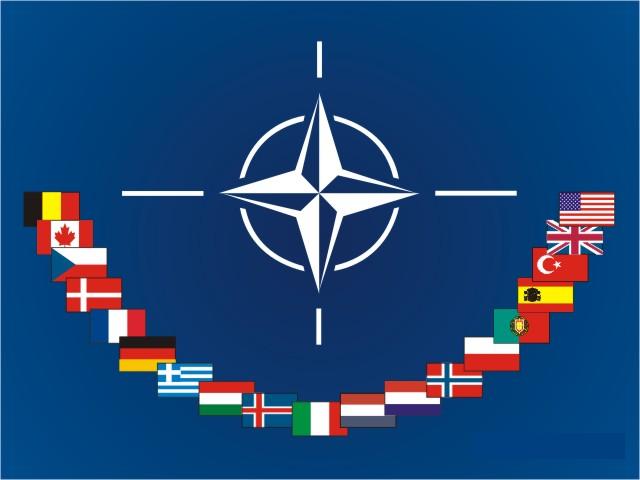
US-European ties and Nato were destined to become weaker given the end of the cold war. Alliances tend to be created and to thrive in eras of predictability and consensus over threats and obligations.  The post-cold war, post-9/11 world is much more fluid than this.

The combination of structural economic flaws, political parochialism and military limits will accelerate this transatlantic drift.  A weaker Europe will possess a smaller voice and role.  Nato will no longer be the default partner for American foreign policy.  Instead, the US will forge coalitions of the willing to deal with specific challenges.  These clusters will sometimes include European countries, but rarely, if ever, will the US look to either Nato or the EU as a whole.  Even before it began, Europe's moment as a major world power in the 21st century looks to be over.

Wrote the same thing myself in WAPO--in April 2004 ("Forget About Europe.  What about these allies?"), in which I posited that future allies were more likely to be located in the rising powers of the age instead of the declining ones.

Haass doesn't go that far, thus the lamenting tone of the piece.

I see no such reason for despair.  As interests align, so will behavior, but this is a process of many years, and most influentials on our side have already given up on many of these states (e.g., the BRICs, Turkey, Brazil, etc) because, in their impatience, they just don't see it happening (e.g., "We've been nice to China for almost 40 years and they're still Chinese!").  This process doesn't move on our timetable.  It has to do with THEIR perceptions of having made it, not our fears of their coming up fast.

Look at America 40 years into its tremendous rise:  right after WWI we basically turned away from the world and basically putting off our global leadership role for another two decades--and we didn't have, for example, the legacy of a huge, impoverished rural population to manage, like China or India or even Brazil has.

So we get impatient and despair.  We see old friends falling away and don't spot any potentiality in rising competitors.  We forget ourselves.

12:09AM

Big pharma changes its model

FT story.

Guts of piece:

With some of his most profitable medicines going off patent, and the uncertainty of replacement drugs continuing to rise, US healthcare reform has been the least of Andrew Witty’s recent worries.

When the chief executive of GlaxoSmith Kline presented his company’s most recent financial results last month, he gave a sense of how the UK’s biggest drugmaker – and the industry more generally – is responding to structural pressures: diversify to survive.

For his company, he says, this means a shift away from “white pills in western markets”, with the proportion of traditionally core patent-protected, chemically based drugs, which are sold mainly in North America and western Europe, falling to just more than a quarter of total sales.

For many years, large companies such as GSK have relied on a handful of typically high-priced, mass-market “blockbusters” that generate billions of dollars a year in sales. But as patents expire on drugs such as Lipitor, Pfizer’s anti-cholesterol medicine that is the biggest selling medication in history, big pharma is having to rethink its business model.

Most large pharmaceutical companies have adopted four principal strategies to diversify. First, expand the range of products in the research and development pipeline and the use of external as well as in-house scientists to discover them. Second, expand geographically, especially into emerging markets. Third, increase sales of products other than patented prescription medicines. Fourth, experiment with greater flexibility in pricing in different countries and with ways to ensure drugs provide value for money.

Sounds eminently correct to me and an example of how you handle the rising, mostly non-Western emerging global middle class.

12:08AM

More evidence of China's "superiority": the crushing of outspoken artists

Wang Yi was, until recently, celebrated by the official Chinese media as the nation's answer to Mozart.  His "Ode to China" symphony was a staple of state orchestras.

Last year he was arrested for corruption charges (he was also a financial officer of the Party in the way that only happens in China) and now he's universally derided by the official media.  Some wags even claim he can't read music.  Supposedly he took bribes in the millions of yuan to get tickets for businesspeople and officials who either wanted tickets to performances of his works or wanted to curry favor with him.

The truth is hard to ferret out of one piece.  The guy was a longtime and powerful party official who never studied music and then, eight years ago, he starts singing and what comes out is a melody that eventually becomes this super-popular symphony.  China has this thing for its leaders expressing themselves artistically.

But Wang definitely crossed somebody in the party and now he's gone, along with his musical legacy--however it came about.

Point of piece:

The case is one example of the extraordinary influence senior party officials with few or no artistic credentials wield over the Chinese arts.

Critics say these factors are the main reason China, the world's biggest exporter of manufactured goods, has produced relatively few cultural or artistic exports in recent years--despite a multibillion-dollar global campaign and regular exhortations from leaders to develop "the cultural industries" and "soft power" of the nation.

"The officials want China to be seen as a cultured, creative nation, but in this anti-liberal political society everything outside the direct control of the state is seen as a potential threat," says Ai Weiwei, a well-known contemporary artist and a bold critic of Communist Party rule.

"The people who control culture in China have no culture, and in this system art provide a hugely lucrative source of corruption."

So, it would seem that, no matter the truth of Wang's downfall, his career is gloriously emblematic of why the Chinese will continue to feel embarrassed by movies like "Kung Fu Panda."

12:07AM

More signs of a reviving global economy

Besides the tremendous rebound in global trade (ah, the deaths of globalization are greatly exaggerated), we now see ancillary signs of recovery.

First, an FT story notes Maersk, the world's largest container ship company, announced a sharp return to profit in the first Q and predicted the future would be much brighter than previously anticipated.

Back home, the WSJ notes that venture capitalists are ramping up activity when it comes to acquisitions and IPOs.  One analyst said, "This kind of activity we haven't seen in years, not since the 1999 and 2000 time frame."

Finally, FT says IBM plans on buying $20B worth of companies in the next five years, more than it did in the previous decade.

12:06AM

Another book on China/state capitalism

From former Beijing bureau chief of FT, Richard McGregor comes "The Party."

Emblematic of the control mechanism:  on the desk of the CEOs of the biggest state companies sits a red phone--the ultimate status symbol of political connectivity.  What these phones connect is about 300 men who run the country--we are told.

Interestingly enough, McGregor then lists historical examples of power-wielding elites in the UK, US and Japan. The thing is, once they hit modernity, the old-boy networks in each crumbled and the leadership situation opened up significantly.

But, of course, China will be unique, because, of those power networks, "none can hold a candle to the Chinese Communist Party, which takes ruling-class networking to an entirely new level."

The CCP has 76 million members, or 1-in-12 Chinese, although the vast majority are perfunctory members.

Key point:  nobody, even in the Party, calls their system communist anymore.  The all-powerful ideology has been "airbrushed" from history, says McGregor.

So we have a ruling elite based largely on wealth, and you just know how easy it is to keep the infighting at a minimum when money is involved.  When you depend on a "ruthless private sector" to maintain your power, don't expect the other guy to be looking out for you.

The claim that China's government is very Leninist "under the hood" is a bit rich:  we are told that controlling propaganda, the military and personnel is oh so copycat.  But Lenin was hardly the only genius to come up with that formula in history.  Indeed, I would call it the norm of any single-party state, no matter what BS it is selling.

Good stuff:

The gap between the fiction of the Party's rhetoric ("China is a socialist country") and the reality of everyday life grows larger every year. But the Party must defend the fiction nonetheless, because it represents the political status quo.

The Party's defense of power is also, by extension, a defense of the existing system. In the words of Dai Bingguo, China's most senior foreign policy official, China's "number one core interest is to maintain its fundamental system and state security." State sovereignty, territorial integrity and economic development, the priorities of any state, all are subordinate to the need to keep the Party in power.

Like Bremmer, McGregor notes the fundamental goal of any single-party state is to maintain its grip on power. 

The fundamental contradiction here, of course, is the need to choose between the efficiency and innovation that keeps the economic growth strong (the fundamental element of regime legitimacy in the eyes of the people) and the requirements to crush independent thought.  The only way you can sacrifice the former for the latter is to display the amazing capacity from--on high--to pick winners and losers in the economy.

Now, when picking winners consists merely of tossing in more, more, more of everything, it's fairly easy.  The trick comes when your system, having matured and requiring intensive growth, needs to be ruthless about the losers.  Politicians can't do that well, because the losers in the system get mad and want something in return. In America, the losers of any one moment can express themselves politically by throwing the bums out.  But in China, no go, so their anger must be consistently crushed.  And that ends in one of two ways:  profound social anger that triggers revolution or a sullen disassociation a la the Soviet Union.  Either way, the Party will not survive unless it ultimately submits to the rotation of power.

And that is likely to come after a series of economic crises deepens the rift within the Party between the go-fast coastal crowd and don't-forget-the-caboose interior crowd.

But until such time, we will be consistently treated to analysis that says China is unique in its development, when, in truth, it has plowed no new ground, but merely replicated the same, single-party, extensive-growth catch-up strategy that states have used throughout history--and throughout Asia in recent decades.  The scope is unique, but the outcome will not be.

Looks like a good book.  McGregor writes well.  Find it here at Amazon.

12:05AM

The magnificence and limits of China/Asia's ascent

Residential housing going up in Shanghai.

Three FTs, one WSJ and a Bloomberg BW.

Here's my linking:

The FT op-ed from David Pilling celebrates "unruffled Asia" and its economic ascent, the big danger being overheating.  Still largely export-driven growth, hot money flows in from the West.  Everybody is bullish on Chinese growth.  These flows put pressure on China's central bank, which holds the money because of China's controls on currency exchange (the yuan is not convertible).

As a result, inflation is growing inside China, with housing prices leading the way in the 12-13% range.  The same is happening, to a lesser but still significant extent, on food.  As one Credit Suisse banker puts it, "Virtually everything is on the rise in China."

Meanwhile the Chinese consumer continues to spend more, as do Asian ones in general.  Since the 3Q 2008, total cumulative consumption growth in Asia sits at 7%.  In the West, it's been negative.  And that's with private consumption still under 40% of GDP in China, compared to 71% in the US.

As this "rising" means wages have gone up, resulting in a labor shortage that is "trimming margins for exporters," according to Bloomberg.  As one factory manager notes, "Wal-Mart won't raise what they pay us."

Welcome to globalization, my friend.

Workers are getting uppity allright:

As costs climbed in Taiwan two decades ago, Ben Fan moved his lighting factory to take advantage of China's cheap labor. Now, with Chinese wages on the rise, he's moving again. "It's just like what happened in Taiwan," says Fan, chairman of Neo-Neon Holdings, which sells lamps and lighting fixtures to big retailers including Home Depot (HD), Target (TGT), and Wal-Mart (WMT). "Chinese don't want to work in factories anymore."

Ah, but Chinese state capitalism is so different, yes?  It can ignore these market realities and command where jobs appear and who fills them?

The yin and the yang:

Over the past two years, millions of jobs have moved to China's interior [yang!] or elsewhere in Asia [yin] as factory owners try to cut costs. In Guangdong, the mainland's top exporting province, wages have almost doubled in the past three years, and more than half the factories can't find enough workers. The number of migrants who traveled to coastal provinces for work fell by 9 percent last year, to 91 million. "This lack of labor will only get worse," says Willy Lin, chairman of the Textile Council of Hong Kong, a trade association.

Factory owners complain that the higher wages are devastating profits, especially as their customers continue to squeeze them for lower prices. 

That's the globalization price, as I noted in Great Powers.

You can say this is a problem of success, and it is.  Lotsa growth = labor shortages, and so does success in the one-child policy.

Already, many corporations are talking about keeping certain, more sophisticated production in eastern China while peddling the lower ends of the chain elsewhere.  That means China is ascending all right--up the production chain, and the further it goes, the less it controls--and the less labor advantage it holds.

12:04AM

China will only go deeper into Africa, staying for the very long haul

Pic here

Couple of FTs and a WSJ story on China defending itself from critics.

China does the usual oil-for-infrastructure implied swap in Nigeria:

China has agreed to spend up to $23bn (€19bn, £16bn) to build oil refineries and other petroleum infrastructure in Nigeria, potentially strengthening its hand in the country as it seeks to secure 6bn barrels of crude reserves.

Emmanuel Egbogah, special adviser to the president of Nigeria on petroleum matters, told the Financial Times that China State Construction Engineering Corporation signed a memorandum of understanding on Thursday.

In spite of being Africa’s leading energy producer, Nigeria imports almost all its fuel – and pays a subsidy equivalent to its entire annual capital spending – because existing refineries are in disrepair.

Crude but sweet.

The fund, China Africa Development Fund, is supposed to have a bunch of deals in the pipeline and an initial $5B to spend.

China also announces its largest investment into South Africa, "entrenching its position as the resource-rich continent's most important economic and commercial partner.  China is now South Africa's single biggest trade partner.

No doubt about that, and it is overwhelmingly to the good.

So naturally China bristles at criticism from outside observers, although it will need to grow ever more sensitive to such criticism growing within Africa.

As J.R. Wu notes in the WSJ piece:

... concerns persist that China is preying on the continent's resources to feed China's economy, while contributing little.

Beijing has put in place some mechanism to deal with issues surrounding its investment and trade on the resource-rich continent, and has asserted that its presence in Africa is increasingly being shaped by nongovernment forces.

Meaning more laws and protections must be put into place, says China's vice commerce minister.

China has set up joint government commissions to work these issues in 43 African countries.  Trade now sits around $100B a year, and is expected to skyrocket in coming years.

As a globalization expert and soon-to-be father of both Chinese and African daughters, my fascination with this process knows no bounds.  I have, in the past, vastly underestimated the potential for China to positively alter Africa's development trajectory.

12:03AM

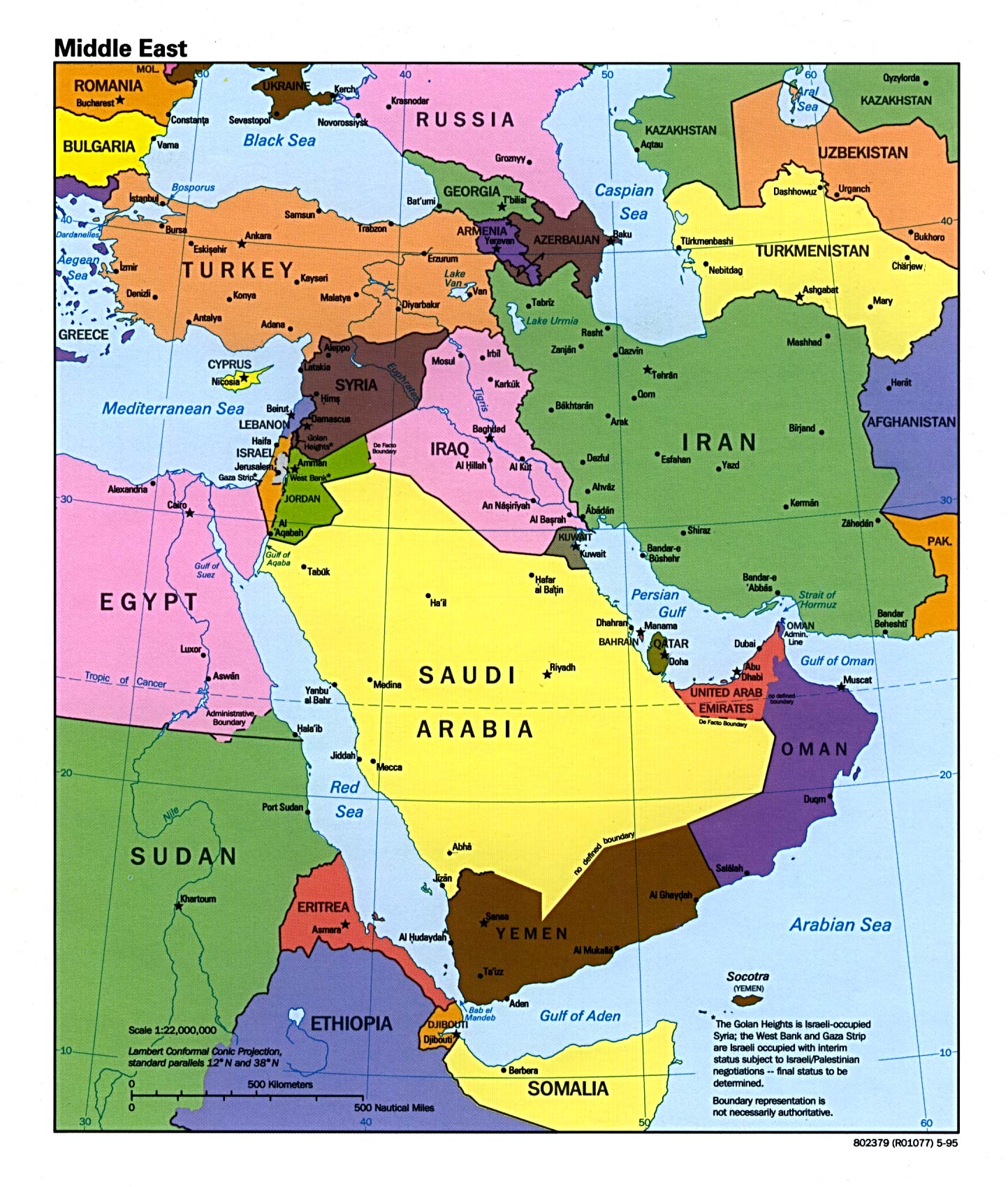
The Middle East after Iraq

Very nice World Politics Review piece by Gregg Carlstrom.

The premise:

In dozens of statements, interviews and news conferences since taking office, Obama has been adamant about sticking to the withdrawal timetable, which calls for removing all U.S. combat troops by August 2010 and a complete U.S. withdrawal by the end of 2011 . . . 

And Obama is by no means bucking domestic public opinion in holding so steadfastly to that promise now. A CNN/Opinion Research Corporation poll released in January found that 62 percent of Americans support his timeline for withdrawal . . . Domestic politics, in other words, argue strongly against delaying the withdrawal. 

And yet, the prospect of doing just that continues to be a hot topic in Washington. Tom Ricks, a senior fellow at the Center for a New American Security, published a paper in February urging the Obama administration to scrap the timeline. Conservative commentators and analysts -- Max Boot, for example -- think the U.S. should maintain a long-term military presence in Iraq. Lawmakers routinely ask civilian and military officials whether the deadlines are flexible. 

At times, the Pentagon has also seemed far more circumspect than the White House about the timetable.

Publicly, the Iraqis take great pride whenever US troops pull back or out of a city or region, but privately, Iraqi officials are more circumspect, says Carlstrom.

Internally, the future is rather bright:

"What's left of the insurgency is pretty quiet these days," said Michael Wahid Hanna, a fellow at the Century Foundation. "And there's never going to be a time when they have a greater motivation to attack than now."

Why now at the end?  Insurgencies always ramp up violence when the occupier is leaving, in order to claim "victory!" So expect some additional effort.

The real concerns are "external":  e.g., the internal border with the KRG (Kurds) and the real one with Iran and Syria (but more so Iran).

I certainly agree with Carlstom here about the look of an inevitable post-2011 presence:

But most analysts say that any American presence will look much different after 2011 than it does today: A few thousand troops, mostly serving in an advisory and training role, or performing functions that Iraqi forces can't yet handle. The Iraqi military is also executing an ambitious procurement plan, with the air force, for example, planning to purchase more than 400 new planes over the next decade. U.S. troops will certainly help train the military on its new hardware. 

Regionally speaking, it is as I've long argued, a question of competing Shia-Sunni poles potentially using Iraq as a proxy-war site.  But Carlstrom reassures here:

Iran's role in Iraq does continue to grow, as evidenced by the parade of Iraqi officials visiting Tehran before and after the parliamentary election. Saudi Arabia represents the other pole, a Sunni Arab counterweight to the Persian Shiites in Iran. But both countries are mistrusted by a plurality of Iraqis -- and not always for sectarian reasons. For instance, the Shiite Sadrist movement, with its staunchly nationalist views, often holds Iran at arm's length. Against that backdrop, some analysts say, the U.S. could carve out a durable diplomatic role in Iraq. 

What may temper Obama on all this:  Bob Gates fears a final-scene-of-Charlie-Wilson's-war outcome, as in, penny wise and pound foolish.

I agree and don't see how Obama can stick with his zero troops notion, unless it naturally incorporates several thousands of non-combat personnel--essentially pure SysAdmin.

12:02AM

Brazilian favelas: subject to modern COIN reformating?

By way of Craig Nordin, a post on Tech Crunch by Sarah Lacy.

Gist:

While it’s hard to match the lack of infrastructure like water and sewage systems in an Indian slum, there’s little that can compare to the violence of a Rio favela. So it was understandable, as I entered a Rio favela a few weeks ago that my guides kept impressing on me that a year ago I couldn’t under any circumstances have come here. One year ago, a cab wouldn’t have taken me here. One year ago, no one would even deliver pizza here.

What’s changed in a year? Specifically, the city is doing something about the problem, embarking on a project of “pacification.” As it was explained to me, newly-trained, SWAT-style cops take each favela back, driving out the drug dealers, by any means necessary, in a recognition that the situation isn’t just a bad neighborhood, it’s an urban war-zone. Being new to the force, these police officers have a clean slate with the residents of the favela, and so are able to continue to protect it, keeping the peace. So far, eight favelas have been pacified. Residents I spoke with talked about the relief of being out from under the daily violence: Suddenly they can be a part of the city. But many are still wary. “This is the best I’ve seen the community in a long time, but I’m still scared,” said Nivea Mendes of the pacified favela Babilonia. “Very few people trust the government. They are just out for an election. I’m still skeptical.” Put another way, even though they’re physically gone, the drug dealers still have power in these neighborhoods—for now.

There’s another tactical problem with pacification that never would have occurred to me: Violence aside, the move basically shoved the richest people – the criminals -  out of the favela, creating a need for a new livelihood for merchants and survival-level entrepreneurs (like the boy to your right and his family) in these neighborhoods. This is where technology is coming in.

For more than ten years a non-profit organization called CDI has been giving favela residents a different kind of freedom, setting up computer labs and offering training in everything from basic computer services to IT skills.

What caught my eye:  this is peacetime COIN or SysAdmin at its best.