Buy Tom's Books
  • Great Powers: America and the World After Bush
    Great Powers: America and the World After Bush
    by Thomas P.M. Barnett
  • Blueprint for Action: A Future Worth Creating
    Blueprint for Action: A Future Worth Creating
    by Thomas P.M. Barnett
  • The Pentagon's New Map: War and Peace in the Twenty-first Century
    The Pentagon's New Map: War and Peace in the Twenty-first Century
    by Thomas P.M. Barnett
  • Romanian and East German Policies in the Third World: Comparing the Strategies of Ceausescu and Honecker
    Romanian and East German Policies in the Third World: Comparing the Strategies of Ceausescu and Honecker
    by Thomas P.M. Barnett
  • The Emily Updates (Vol. 1): One Year in the Life of the Girl Who Lived (The Emily Updates (Vols. 1-5))
    The Emily Updates (Vol. 1): One Year in the Life of the Girl Who Lived (The Emily Updates (Vols. 1-5))
    by Vonne M. Meussling-Barnett, Thomas P.M. Barnett
  • The Emily Updates (Vol. 2): One Year in the Life of the Girl Who Lived (The Emily Updates (Vols. 1-5))
    The Emily Updates (Vol. 2): One Year in the Life of the Girl Who Lived (The Emily Updates (Vols. 1-5))
    by Thomas P.M. Barnett, Vonne M. Meussling-Barnett
  • The Emily Updates (Vol. 3): One Year in the Life of the Girl Who Lived (The Emily Updates (Vols. 1-5))
    The Emily Updates (Vol. 3): One Year in the Life of the Girl Who Lived (The Emily Updates (Vols. 1-5))
    by Thomas P.M. Barnett, Vonne M. Meussling-Barnett
  • The Emily Updates (Vol. 4): One Year in the Life of the Girl Who Lived (The Emily Updates (Vols. 1-5))
    The Emily Updates (Vol. 4): One Year in the Life of the Girl Who Lived (The Emily Updates (Vols. 1-5))
    by Thomas P.M. Barnett, Vonne M. Meussling-Barnett
  • The Emily Updates (Vol. 5): One Year in the Life of the Girl Who Lived (The Emily Updates (Vols. 1-5))
    The Emily Updates (Vol. 5): One Year in the Life of the Girl Who Lived (The Emily Updates (Vols. 1-5))
    by Vonne M. Meussling-Barnett, Thomas P.M. Barnett, Emily V. Barnett
Search the Site
Powered by Squarespace
Monthly Archives
12:08AM

Our girls are doing well in Addis

Abebu ("Abby") Akelu Barnett        Metsewat ("Sue") Akelu Barnett

My wife Vonne recently sent out an email to couples who had court dates around the end of June/beginning of July to see if any of them had come across our daughters in their new surroundings in Addis Ababa (the "WACAP House"), where they will stay until my wife and her mom (Nona Vonne) travel to spend time with them in mid-August prior to the visa hearing at the US embassy and then bring them home to Indy.  I will not be making the second trip because I have speeches scheduled and need to be here to move my daughter at Indiana University (a big event in itself).

Anyway, the hope was that we'd elicit impressions from parents who were passing through Addis during the time after the girls were transported north and put through their initial paces with doctor exams, etc. at WACAP House.

We got the following response from one mom we met during our trip (along with her husband):

I'm not sure about the dolls, but we definitely remember your daughters well! I will say that Abebu made herself known (in a good way!) She immediately came to [my husband] and then stayed very close to him all day long. She loved to be held, and got jealous whenever he held someone else. She was very sweet and we heard her laughing and talking a bit. Metsewat seemed more reserved, but she gladly accepted whenever we gave her a hand to hold. We saw a little sister rivalry going on - with them pushing a little - it was actually very sweet! The "fighting" was easily stopped and they seemed close. Abebu has such a bright smile and seems to have learned out to get her way - she definitely had [my husband] wrapped around her little finger! They both seem to be doing well and healthy.

What this tells us:  the girls have no bonding issues whatsoever, which is a big deal.  

I type this from my home office where behind me sits the hybrid crib/daybed/double bed that I just put together in the daybed mode (rails on three sides).  We need to buy a crib mattress for it, and it will be Abebu's first bed with us.  Older sis Metsewat will sleep on the bottom of a bunk-bed set-up we currently have being made (also by a local Amish furniture co.), with Vonne Mei occupying the top bunk.  The three girls will take over the largest bedroom soon to be vacated by our first-born as she heads off to college.

Whatever "empty nest" dynamics threatened our psyche will be dealt a terrific blow!

12:07AM

Africa's Horn: radical Islam bumps into Christian fundamentalism?

Economist story that caught my eye for the simple reason that the Ethiopian mother of our two girls identified herself as a Protestant Christian.

But the larger issue:  Islam is fairly prevalent in the Horn and its radicalization is ongoing even as its remains relatively low level in prevalence.  This piece seems to argue that, if one can identify a religion on the march in the region, it's the Pentecostals. Pentecostals are a particularly virulent Christian religion in the sense that anyone can identify themselves as such by simply going the more charismatic route of embracing the notion that baptism by the Holy Spirit creates a profoundly direct spiritual bond with God (being "born again"), exhibited by speaking in tongues and so on.  Protestant and even Catholic churches can take on the "spirit-filled" nature of Pentecostalism, so the faith brand has the networking strength of an Alcoholics Anonymous in that self-selection/declaration is all that is needed to join. Powerful stuff.

Back in 1970, experts estimated the "born again" numbers in Africa to be below 20m.  Now they estimate them at 400m.  Good evidence of the growth:  fly an international flight from the US to east Africa and--especially in the summer--you will find yourself surrounded by evangelical Christians on temporary missions.

The local impact is significant enough:

Ms Wanjiru’s own church, Jesus Is Alive Ministries, is a good example of the new genre. She can draw 100,000 worshippers to a meeting. Add in a visiting televangelist and the number can rise to as many as 500,000. Ms Wanjiru has lived the Pentecostal dream. She is from a poor family of casual labourers and eked out a life as a housemaid and toilet cleaner before working her way up to a marketing job. She then experienced a vision from God calling on her to save Africa. These days videos, CDs and other accessories can be bought from her website using credit cards or phone credit. She makes good use of Facebook, Twitter and other social media. She is not afraid to court controversy, last year baptising the boss of the Mungiki organised-crime outfit, Maina Njenga. Mr Njenga’s gang had been involved in extortion and had a history of hacking off the heads of its enemies.

But the business of owner-operated churches is competitive. A few dud sermons and the crowd thins. That is one reason why they are so upbeat and aspirational. Indeed, their insistent calls for self-discipline and education, striving and victory prompt some people to say Pentecostalism should be encouraged in Africa as the new version of Max Weber’s Protestant work ethic. The churches are certainly prominent in anti-corruption campaigns.

However, there is also plenty of hucksterism. You will be blessed with health and wealth by God, congregants are told, especially if you give generously. As in other parts of the world, the new churches in Kenya and Uganda provide a place for the ambitious poor to get ahead. Yet the real competitive advantage of the new churches in east Africa seems to be their willingness to tap, at least subliminally, into traditional beliefs. “They give full play to the enchanted mentality, which holds the world to be inhabited with ghosts and spirits,” explains Paul Gifford, a professor of African Christianity at the University of London. It makes economic sense: getting spells lifted and spirits cast out on a Sunday morning saves money on a visit to the witch doctor during the week.

Fascinating stuff that I would expect to grow far more significantly as Africa experiences rapid development and the transformation of so many from poverty to lower middle class status.

12:06AM

What a drawdown from "combat operations" really looks like

NYT story on the reality of what a post-drawdown US force presence in Iraq will actually entail.

The August deadline might be seen back home as a milestone in the fulfillment of President Obama’s promise to end the war in Iraq, but here it is more complex. American soldiers still find and kill enemy fighters, on their own and in partnership with Iraqi security forces, and will continue to do so after the official end of combat operations. More Americans are certain to die, if significantly fewer than in the height of fighting here.

The withdrawal, which will reduce the number of American troops to 50,000 — from 112,000 earlier this year and close to 165,000 at the height of the surge — is a feat of logistics that has been called the biggest movement of matériel since World War II. It is also an exercise in semantics.

What soldiers today would call combat operations — hunting insurgents, joint raids between Iraqi security forces and United States Special Forces to kill or arrest militants — will be called “stability operations.” Post-reduction, the United States military says the focus will be on advising and training Iraqi soldiers, providing security for civilian reconstruction teams and joint counterterrorism missions.

“In practical terms, nothing will change,” said Maj. Gen. Stephen R. Lanza, the top American military spokesman in Iraq. “We are already doing stability operations.” Americans ceased major combat in Iraq long ago, and that has been reflected in the number of casualties. So far this year, 14 soldiers have been killed by hostile fire, and 27 more from accidents, suicides and other noncombat causes, according to icasualties.org.

Remember this when you hear similar descriptions re: Afghanistan.  The norm for US interventions of significant size is that we go, we fight, we drawdown, but we stay for the long haul. The key is getting casualties down to very low levels.  Once achieved, the US public will allow ad infinitum, because opponents are no longer able to characterize it as "war."

The experts have it backwards;  the American public has little patience for the Leviathan, therefore its operations must be very short and highly victories, but it has plenty more patience for SysAdmin stuff so long as the commitments are seen as small enough, the casualties low enough, and the value-achieved-for-expenditure seem reasonable.

12:05AM

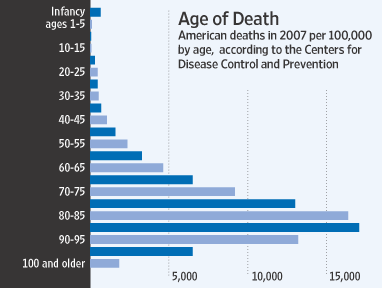
Would you want to know your potential for longevity?

WSJ story on scientists claiming to be able to calculate longevity potential on the basis of studying very old people and discovering "a genetic signature of longevity."

Despite the great complexity of causality here, the lead researcher says "we can compute your specific predisposition to exceptional longevity."  The academic researchers (Boston U) say they have no plans to profit from or patent the technology, and that a test will be made available on the Internet sometime in late July.

People want predictability in all things except the length of their life, where the vast majority prefer ignorance that allows maximum anticipation of possibilities.

There is a distinct difference between those who will die on the low end of the longevity spectrum and the "wellderly" who make it safely to old age and then face the prospect of 2-3 decades more life.

One expert claimed that life insurance policies would be forever altered by such testing capacity, but for now, it requires a several-thousand-dollar layout to have your entire genome profiled.  I guess insurance companies would need to posit their savings to justify the costs either picked up by them and made mandatory for granted coverage or forced upon consumers similarly.

What intrigues me more is the potential for genetic manipulation to "fix" what is missing.  For example:

While a healthy lifestyle is paramount, such genetic factors appear to become more important the longer we live. Indeed, a variation in a single key gene called FOX03A can triple the chances a person may live past 100, researchers at the Pacific Health Research Institute in Hawaii recently reported.

How much would the average person be willing to pay to have FOX03A boosted?

12:04AM

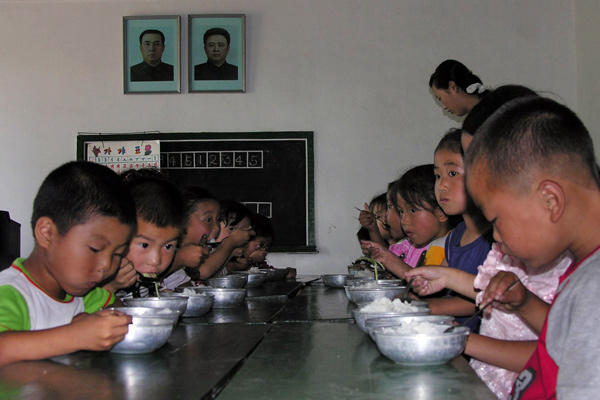
Underneath all of NorKo's belligerency re: succession remains the famine

CSM article by way of WPR's Media Roundup on NorKo lifting restrictions on private market activity in response to persistent famine conditions:

North Korea appears to be allowing private enterprise in local markets in a desperate search for an antidote to rising hunger and potential unrest.

South Korean analysts, with contacts inside North Korea, report a loosening of state restrictions on the private sales of goods as North Korea’s leader Kim Jong-il smooths the way for the takeover of his youngest son, Kim Jong-un.

The lifting of state restrictions on the operation of local markets selling food and other goods comes amid reports of an economy that is now descending to the level of the 1990s, when aid experts estimate two million people died of disease and starvation. Several years ago, markets were opened briefly – for similar reasons – before authorities again clamped down.

The most definitive report on free-market opening comes from Good Friends, a non-governmental organization in Seoul that has long attempted to provide food and other aid to North Koreans and receives information by a network of informants inside the North. Food rations have also been suspended, according to the group.

Private stands selling food and small items are operating with minimal official harassment, according to these reports, though it’s not clear whether they are fully legal or simply given tacit acceptance.

A guiding factor appears to be the desire to appease conflicting forces, including a small but influential middle class that suffered huge losses from revaluation of the currency. It’s critical, say South Korean analysts, to settle differences in the run-up to an extraordinary convention of the ruling Workers’ Party in September at which leadership changes – notably confirmation of a post for Kim Jong-un – are expected.

Familiar tactic for totalitarian system undergoing political change:  ramp up the tension with rest of world while offering bread to the masses to keep them quiet.

Unfortunately for the NorKo masses, all the relevant great powers are more than happy to let this situation proceed.  SouKo doesn't want the problem, nor does China, nor does the US.

12:03AM

The silent LLP between the PRC and the USA

 WAPO story on a long-favorite theme of mine here and in the brief:  the limited liability partnership between China and the US--as in, we do the Leviathan and pay for virtually all of the up-front SysAdmin work, but China cashes in nicely on the backside economic integration.

China didn't take part in the U.S.-led invasion of Iraq or the bloody military battles that followed. It hasn't invested in reconstruction projects or efforts by the West to fortify the struggling democracy in the heart of the Middle East.

But as the U.S. military draws down and Iraq opens up to foreign investment, China and a handful of other countries that weren't part of the "coalition of the willing" are poised to cash in. These countries are expanding their foothold beyond Iraq's oil reserves -- the world's third largest -- to areas such as construction, government services and even tourism, while American companies show little interest in investing here.

The Chinese are risk-tolerant on economics, just not on the pol-mil.  And they cannot become a superpower until they get such risk-tolerance in the kinetic realm.  And that can't come until they go multiparty, because the CCP cannot afford even a single loss of face.  And if you can't afford to lose, then you can't afford to wage war.

So oddly enough, the longer we put up with this LLP, the longer we keep China in its pol-mil place.

12:02AM

The fabled Asian century comes with unprecedented resource strains

FT op-ed by Kevin Brown.

It has become a truism, buttressed by the hard realities of economic performance, that the 21st century will belong to Asia. But there is a big problem to overcome first, and it is not the flashpoints in North Korea, the Taiwan Straits and Kashmir. It is the region’s dangerous pace of population growth, and the health, environmental and security problems caused by urbanisation on a scale unique in human history.

The United Nations is forecasting that the world’s population will rise by more than 40 per cent to 9.3bn by 2050, with the proportion living in cities increasing to 70 per cent from slightly more than 50 per cent today. But the impact will be concentrated in Asia, where two-thirds of the world’s population lives, and where rapid economic growth is accelerating the natural process of urbanisation. While Europe is dealing with the problems of ageing, Asia (excluding Japan) will be trying to cope with a rush to the cities estimated at nearly 140,000 people a day.

How well it succeeds will have a huge impact on whether this really does turn out to be the Asian century. So far, the signs are not good. 

The quintessential logic behind my mantra that the "New Core sets the new rules."  It was my primary take-away from the NewRuleSets.Project work I did on the future of globalization with Cantor Fitzgerald.  Once Asia is pulled into globalization fully, we reach a tipping point from which there is no turning back. The resulting evolution is necessarily rapid and will have global influence--and it will be centered primarily in cities.

It's why I see megacity mayors as the natural political leaders of this century.

Great line in the piece from head of UN's economic and social commission for Asia and the Pacific: governments in Asia "simply do not have the luxury of growing first and cleaning up later."

12:01AM

Chart of the day: biotech best Moore's law

From The Economist.

Hard not to expect a serious revolution out of that trend. Economic revolutions follow those in science, and those in science follow those in measurement.

From the article:

The telescope revolutionized astronomy; the microscope, biology; and the spectroscope, chemistry.  The genomic revolution depends on two technological changes.  One, in computing power, is generic--though computer-makers are slavering at the amount of data biology 2.0 will need to process, and the amount of kit that will be needed to do the processing.  This torrent of data, however, is the result of the second technological change that is driving genomics, in the power of DNA sequencing.

9:30AM

WPR's The New Rules: U.S. Must Expand its Pool of Allies in Afghanistan


With his recent selections of Gens. David Petraeus and James Mattis for command in Afghanistan and Central Command respectively, President Barack Obama signals his understanding that his previously established deadline of mid-2011 to begin drawing down combat troops in the “good war” cannot be met.  The two were co-architects of the military’s renewed embrace of both counterinsurgency operations and the associated nation-building project that by necessity goes along with it. Neither flag officer can be expected to preside over a Vietnam-like exit that once again puts troubled and untrustworthy Pakistan in charge of Afghanistan’s fate.

Read the rest of the column at World Politics Review.

12:09AM

The changing face--and pocketbook--of India

pic here

FT story on how the rise of India's middle class changes the nature of charity in that country.

First glimpse I got was with the Christmas Tsunamis of 2004, when giving by the public outpaced government aid--a very positive sign.

Story details how Oxfam now raises money inside India for Indian operations.

For decades, international charities such as Oxfam, Care International and Save the Children raised money in the industrialized world--the US, Europe and Japan--to provide basic social services to the poor in remote corners of the developing world which dysfunctional local governments failed to reach.  Yet today, global charities are tapping large emerging markets' own increasingly prosperous middle classes--and their successful local companies--to address the deep-rooted poverty and profound social challenges these up and coming middle-income countries still face.

As this paradigm goes, shift happens.

As charities move from basic services to more complex goals like mitigating the effects of climate change, more local buy-in is essential, so this change is for the better.

12:08AM

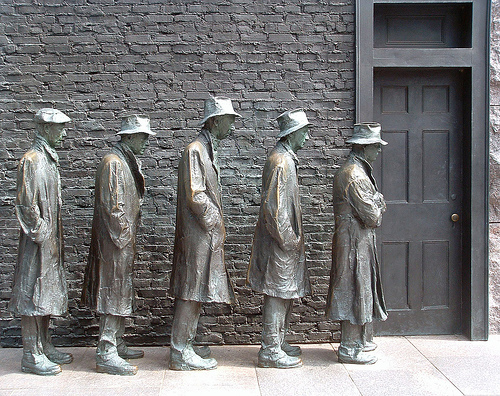
I second that emotion

WAPO story on effects of the Great Recession in terms of employment and wages:

The recession has directly hit more than half of the nation's working adults, pushing them into unemployment, pay cuts, reduced hours at work or part-time jobs, according to a new Pew Research Center survey.

I can honestly say that every single one of those things has happened to me in the last year: losing jobs, pay cuts, and reduced workload.

I survived by having lots of jobs in the first place and replacing those I lost.  

One thing I learned with Emily's cancer:  never rely on a single paycheck.

12:07AM

The beginning of the end of ethnic identity politics

An argument that says Obama was less the breakthrough than the political codification of a lengthy demographic transformation that encompasses my nearly five decades of citizenship.

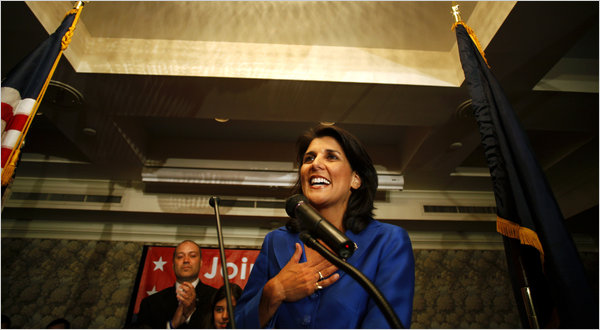
If anyone still doubted, after President Obama’s election, that candidates are no longer prisoners of their race or ethnicity, then South Carolina’s Nikki Haley offers further proof. Ms. Haley, 38, was born Nimrata Nikki Randhawa, the daughter of Indian Sikh immigrants. Now she is the Christian, Republican nominee for governor in a state with a brutal history of racial oppression.

What’s notable about Ms. Haley’s campaign, like that of Mr. Obama and other candidates, is not just that she has breached a racial and cultural barrier, but that she doesn’t feel the need — or the desire — to talk much about it. “I love that people think it’s a good story, but I don’t understand how it’s different,” she recently told The New York Times. “I feel like I’m just an accountant and businessperson who wants to be a part of state government.”

Such reticence probably reflects the complicated set of expectations imposed on candidates like Ms. Haley. (Gov. Bobby Jindal of Louisiana, who is Indian-American, and Gov. Deval Patrick of Massachusetts, who is black, also come to mind.) We are attracted to the idea that they have transcended ethnic boundaries and reaffirmed the American ideal.

At the same time, we do not expect them to dwell on their stories in the way that ethnic candidates of a previous generation routinely did. And so we create a more diverse politics that is in some ways more cautious and anodyne, too, increasingly populated by candidates who are easy to support but harder, perhaps, to really know.

To understand what has changed, think back 40 years or so, when a generation of ethnic, white candidates — Democrats, for the most part — were rising up through urban political machines. Politics then was delineated primarily by economics; if you were the working-class child of, say, Irish immigrants, chances are you had a lot in common, politically, with struggling Italian and Jewish voters in your district, too.

There was an advantage, then, in drawing attention to your journey, through anecdotes and jokes that served to underscore the universality of the immigrant experience. Take, for instance,Michael S. Dukakis, the Democratic nominee for president in 1988, whose story of Greek immigration so defined his political career that the comedian Jon Lovitz immortalized it in a line from one of the more enduring impersonations on “Saturday Night Live”: “My parents were little people. Little, swarthy people.”

Whenever I watch historical movies with my kids, I am constantly forced to explain that a lot of what they see in them, in terms of social mores, were the way things were throughout most of history (especially the treatment of women) and that the vast majority of social equality has been achieved really in only the last half century or so.

And yeah, I don't think that's a coincidence.  America becomes a global superpower and we see radical change result and spread throughout the system, to include powerfully positive feedback to the US itself (for example, we don't deal with civil rights until after we expose our population to the world so fully in WWII and then realize how backward we remained on that subject).

Another thought triggered:  Obama running for re-election will widen the door even further, because almost anyone from any background can take him on and conceivably win.

Which has me thinking seriously about Michael Bloomberg.

12:06AM

China will be working its Gap for a while

WAPO story on how much farther China must go to shrink the Gap of its interior West.

China's economic boom had largely left the west behind. Spreading the wealth was as important politically as economically -- it was a way of increasing domestic stability and cementing the government's control.

Chinese officials rattle off all the statistical measures of the program's success: Highways were constructed. Houses were built. Nomads were resettled in "model" villages. Millions of people have electricity and clean drinking water. A rail line links Beijing in the east to Lhasa on the Tibetan plateau. And annual economic growth in the west is about 12 percent, higher than the national average.

But beneath the barrage of official statistics lies another reality. China's west -- defined as the dozen provinces and "autonomous regions" stretching from Inner Mongolia to Xinjiang and Tibet -- remains the poorest, least-developed and least-educated part of the country.

The massive investment, critics say, has mainly benefited state-owned companies that build the roads and railways and mine the minerals. There is little indigenous industry and scant foreign investment. Hundreds of thousands of people have been displaced from their homes, and nomads have been resettled into villages where they have no livelihood. Locals complain that China is primarily interested in extracting minerals to keep the factories back east running.

My point: China is treating its own internal Gap the same way it treats much of the Gap at large. That's why it's crucial that we offer them real competition instead of just criticism, because what we teach China in this regard is crucial to its own internal coherence.

That's also why I view any local blowback to China's embrace to be a good and useful development for all involved.  China's influence is simply too vast and too crucial for such evolution not to occur, so the more trouble it gets into overseas, the better.

12:05AM

The third great wave of globalization: the flow of people

NYT Week-in-Review story, by way of WPR's Media Roundup, on how the flow of people, as I called it in PNM, defines the current era of globalization.

Basic argument: 

Theorists sometimes call the movement of people the third wave of globalization, after the movement of goods (trade) and the movement of money (finance) that began in the previous century. But trade and finance follow global norms and are governed by global institutions: the World Trade Organization, the World Bank, the International Monetary Fund. There is no parallel group with “migration” in its name. The most personal and perilous form of movement is the most unregulated. States make (and often ignore) their own rules, deciding who can come, how long they stay, and what rights they enjoy.

While global trade and finance are disruptive — some would argue as much as migration — they are disruptive in less visible ways. A shirt made in Mexico can cost an American worker his job. A worker from Mexico might move next door, send his children to public school and need to be spoken to in Spanish.

One reason migration seems so potent is that it arose unexpectedly. As recently as the 1970s, immigration seemed of such little importance that the United States Census Bureaudecided to stop asking people where their parents were born. Now, a quarter of the residents of the United States under 18 are immigrants or immigrants’ children.

The United Nations estimates that there are 214 million migrants across the globe, an increase of about 37 percent in two decades. Their ranks grew by 41 percent in Europe and 80 percent in North America. “There’s more mobility at this moment than at any time in world history,” said Gary P. Freeman, a political scientist at the University of Texas.

The most famous source countries in Europe — Ireland, Italy, Greece, Spain — are suddenly migrant destinations, with Ireland electing a Nigerian-born man as its first black mayor in 2007.

Differences between this period of American-style globalization and the previous European colonial version:

First is migration’s global reach. The movements of the 19th century were mostly trans-Atlantic. Now, Nepalis staff Korean factories and Mongolians do scut work in Prague. Persian Gulf economies would collapse without armies of guest workers. Even within the United States, immigrants are spread across dozens of “new gateways” unaccustomed to them, from Orlando to Salt Lake City.

A second distinguishing trait is the money involved, which not only sustains the families left behind but props up national economies. Migrants sent home $317 billion last year — three times the world’s total foreign aid. In at least seven countries, remittances account for more than a quarter of the gross domestic product.

A third factor that increases migration’s impact is its feminization: Nearly half of the world’s migrants are now women, and many have left children behind. Their emergence as breadwinners is altering family dynamics across the developing world. Migration empowers some, but imperils others, with sex trafficking now a global concern.

Technology introduces a fourth break from the past: The huddled masses reached Ellis Island without cellphones or Webcams. Now a nanny in Manhattan can talk to her child in Zacatecas, vote in Mexican elections and watch Mexican television shows.

“Transnationalism” is a comfort but also a concern for those who think it impedes integration. In the age of global jihad, it may also be a security threat. The Pakistani immigrant who pleaded guilty last week to the attempted bombing of Times Square said that jihadi lectures reached him from Yemen, via the Internet.

At least one other trait amplifies the impact of modern migration: The expectation that governments will control it. In America for most of the 19th century, there was no legal barrier to entry. The issue was contentious, but the government attracted little blame. Now Western governments are expected to keep trade and tourism flowing and respect ethnic rights while sealing borders as vast as the Arizona desert and the Mediterranean Sea. Their failures — glaring if perhaps inevitable — weaken the broader faith in federal competence.

Exceptional piece in terms of analysis-per-square-inch of text. And yet another argument against the notion of globalization's easy reversibility (so-called deglobalization).

No, no end to Westphalian-era nation-states, the article concludes (and as I have long argued), but rather a defining characteristic of American-style globalization--the super-empowerment of individuals on a scale never before seen in history.  Yes, the bad comes with the good, but the bad (transnational terrorists et. al) is the easiest bad yet confronted in this worldwide evolution.

12:04AM

The East has fewer qualms about messing with nature

WAPO story on how loose and fast--by our standards--China explores the world of biotechnology.

Centuries after it led the world in technological prowess -- think gunpowder, irrigation and the printed word -- China has barged back into the ranks of the great powers in science. With the brashness of a teenager, in some cases literally, China's scientists and inventors are driving a resurgence in potentially world-changing research.

Unburdened by social and legal constraints common in the West, China's trailblazing scientists are also pushing the limits of ethics and principle as they create a new -- and to many, worrisome -- Wild West in the Far East.

I can't remember if it was captured in PNM or "Blueprint," but I explored this theme years ago in the brief when I'd tell the story of how a genetic therapy for cancer was invented in the U.S. but couldn't get tested for legal reasons. It was thereupon pursued in China, with its looser rule set on such things, and once it was proven out, the Chinese company came to the US to get a patent. That was an eye-opener for me.

Part of it is the difference in philosophy and religion: we have this one-life view of reality but the East is a lot fuzzier on that concept (Buddhism), so it's naturally more relaxed on the subject.

Another reality:  when you're on your way up, you have little regard for the environmental consequences.  In that sense, I've always delighted in Futurama's character of Leo Wong, whose attitude toward the environment is emblematic of a lot of Chinese industrialists right now.  Another good reference:  Daniel Day-Lewis's portrayal of Daniel Plainview in "There will be blood."  Talk about a plain view!

China, with its hundreds of impoverished rural folk, will remain in this "conquering nature at all costs" mindset for a while--or until it gets too expensive. Yes, we'll hear about and see all sorts of efforts to go "green," but even there, you will see corner-cutting bravado that will frighten to no end. 

12:03AM

The rule-set clash heats up on medical pot


NYT story on the growing complexity of new rules regarding medical marijuana, with Colorado as ground zero for experimentation.

Opening bit:  don't assume you can get rich quick selling medical pot, because the restrictions are dazzlingly complex.

“You’d never see a law that says, ‘If you want to sell Nike shoes in San Francisco, the shoes have to be made in San Francisco,’ ” says Ms. Respeto, sitting in a tiny office on the second floor of the Farmacy. “But in this industry you get stuff like that all the time.”

As usual, the economics races ahead of the politics, but the politics is struggling to catch up.

One of the odder experiments in the recent history of American capitalism is unfolding here in the Rockies: the country’s first attempt at fully regulating, licensing and taxing a for-profit marijuana trade. In California, medical marijuana dispensary owners work in nonprofit collectives, but the cannabis pioneers of Colorado are free to pocket as much as they can — as long as they stay within the rules.

The catch is that there are a ton of rules, and more are coming in the next few months. The authorities here were initially caught off guard when dispensary mania began last year, after President Obama announced that federal law enforcement officials wouldn’t trouble users and suppliers as long as they complied with state law. In Colorado, where a constitutional amendment legalizing medical marijuana was passed in 2000, hundreds of dispensaries popped up and a startling number of residents turned out to be in “severe pain,” the most popular of eight conditions that can be treated legally with the once-demonized weed.

More than 80,000 people here now have medical marijuana certificates, which are essentially prescriptions, and for months new enrollees have signed up at a rate of roughly 1,000 a day.

As supply met demand, politicians decided that a body of regulations was overdue. The state’s Department of Revenue has spent months conceiving rules for this new industry, ending the reefer-madness phase here in favor of buzz-killing specifics about cultivation, distribution, storage and every other part of the business.

Whether and how this works will be carefully watched far beyond Colorado. The rules here could be a blueprint for the 13 states, as well as the District of Columbia, that have medical marijuana laws.

The rule-set reset unfolds . . .

12:02AM

A transformational era naturally features swift exits for generals

Nice piece by Greg Jaffe in WAPO about how the wars in Iraq and Afghanistan have lead to a return of old US political tradition of firing generals during wartime. This may seem like new stuff, but it ain't.  Go back to the Civil War and Lincoln's stretch of going through generals at high speed, or WWII when failing generals were fired at a rapid pace early in the war.

The veneration of generals in the post-Cold War era has been the anomaly--not the rule of US history.  And with the huge shift from pure Leviathan skills to those associated with SysAdmin work, there's naturally a steep learning curve--and not everybody gets to pull a Tommy Franks.

The irony:  we keep asking for more accountability and for generals to stand up to politicians when it matters, but when we get some turnover as a result, we start worrying about that too. I only wish we had more turnover, especially in politics.

12:01AM

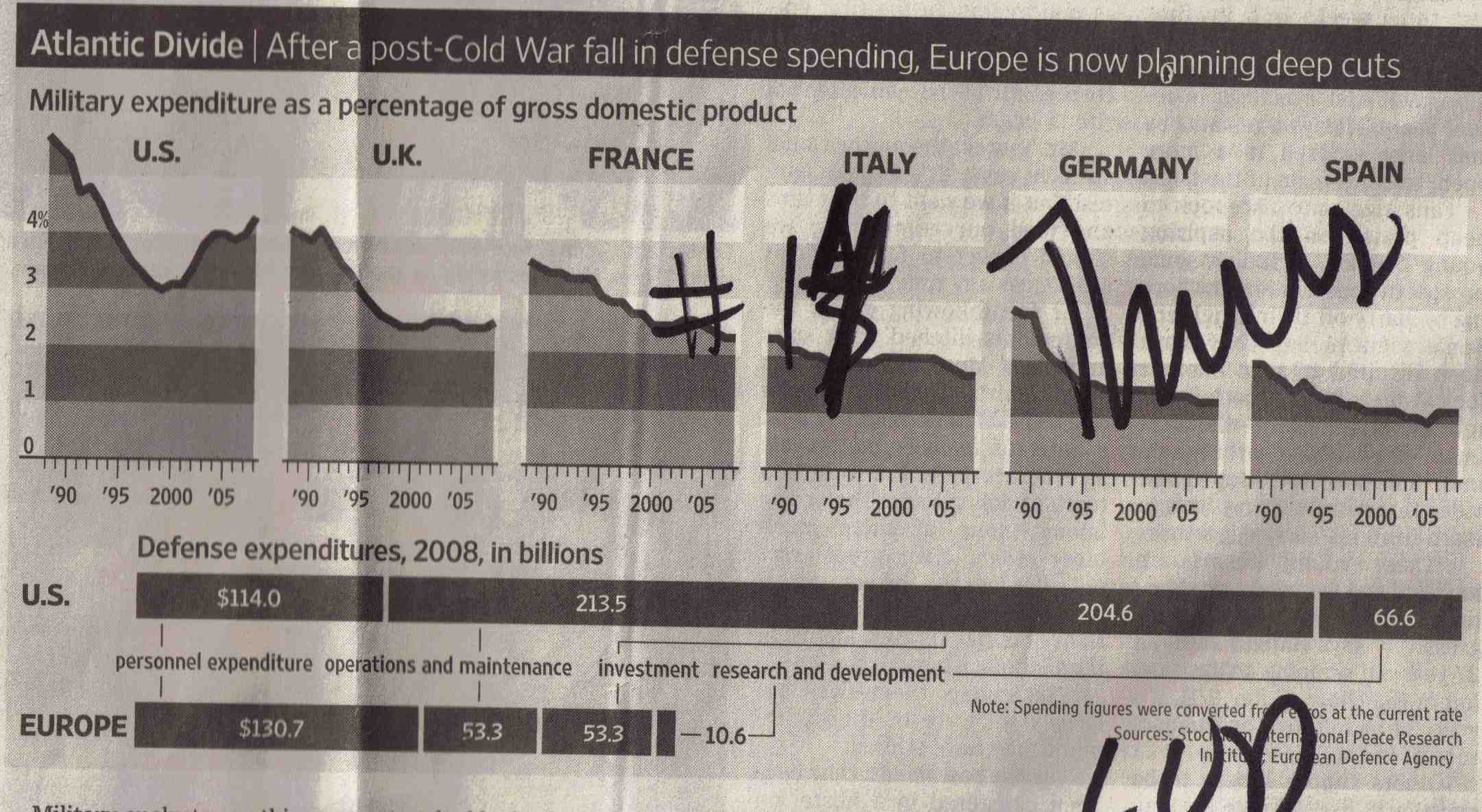
Chart of the day: dropping defense budges in Europe

Apologize for grubbiness of scan.  WSJ online version didn't include the charts, and all I had was my marked up version.

Point is simple enough:  none of our traditional allies feature anything but seriously declining defense budgets, and with our own budget coming up huge strains, it's clear we need new friends if we're going to continue playing the role of military superpower.  Indispensable?  Yes.  Sufficient?  No.

12:04AM

Making Broadway sell overseas

Interesting WSJ feature on how Broadway, much like Hollywood, is seeing an increasing share of total revenue come from international tours.  Disney alone has made $2B from "The Lion King" abroad--$2B!  Them's Cameron numbers!

The WSJ says that "the export of musical theater abroad has never been bigger."  So just like in Hollywood, you will see productions created with an eye to their sales potential abroad--further evidence of globalization's reach and staying power.

The trick is the usual one:  how to translate cultural references.

For now, the map is purely Core-limited.  A graphic showing where "Beauty and the Beast" has played, for example, listed Old Core North America, Europe and Industrialized Asia, plus New Core Asia, Argentina, Brazil and South Africa.  No Gap countries whatsoever, but invariably that will change as Disney aggressively brands consumers in frontier economies (an upcoming post).

12:03AM

The slow death of original screenplays

WSJ story on why Hollywood is rooting for "Inception," which projects to do about $50-60M over the weekend: it is emblematic of a dying breed.  Film franchises based on original ideas are going the way of the dinosaur in Hollywood, losing out to adaptations.  In the 1980s, 70% of the films featured original scripts. That share dropped to 45% in the 1990s and 25% in the 00s.

Here's hoping it reverses the trend, although that's too much to expect of any one film--unless it's made by James Cameron.