Buy Tom's Books
  • Great Powers: America and the World After Bush
    Great Powers: America and the World After Bush
    by Thomas P.M. Barnett
  • Blueprint for Action: A Future Worth Creating
    Blueprint for Action: A Future Worth Creating
    by Thomas P.M. Barnett
  • The Pentagon's New Map: War and Peace in the Twenty-first Century
    The Pentagon's New Map: War and Peace in the Twenty-first Century
    by Thomas P.M. Barnett
  • Romanian and East German Policies in the Third World: Comparing the Strategies of Ceausescu and Honecker
    Romanian and East German Policies in the Third World: Comparing the Strategies of Ceausescu and Honecker
    by Thomas P.M. Barnett
  • The Emily Updates (Vol. 1): One Year in the Life of the Girl Who Lived (The Emily Updates (Vols. 1-5))
    The Emily Updates (Vol. 1): One Year in the Life of the Girl Who Lived (The Emily Updates (Vols. 1-5))
    by Vonne M. Meussling-Barnett, Thomas P.M. Barnett
  • The Emily Updates (Vol. 2): One Year in the Life of the Girl Who Lived (The Emily Updates (Vols. 1-5))
    The Emily Updates (Vol. 2): One Year in the Life of the Girl Who Lived (The Emily Updates (Vols. 1-5))
    by Thomas P.M. Barnett, Vonne M. Meussling-Barnett
  • The Emily Updates (Vol. 3): One Year in the Life of the Girl Who Lived (The Emily Updates (Vols. 1-5))
    The Emily Updates (Vol. 3): One Year in the Life of the Girl Who Lived (The Emily Updates (Vols. 1-5))
    by Thomas P.M. Barnett, Vonne M. Meussling-Barnett
  • The Emily Updates (Vol. 4): One Year in the Life of the Girl Who Lived (The Emily Updates (Vols. 1-5))
    The Emily Updates (Vol. 4): One Year in the Life of the Girl Who Lived (The Emily Updates (Vols. 1-5))
    by Thomas P.M. Barnett, Vonne M. Meussling-Barnett
  • The Emily Updates (Vol. 5): One Year in the Life of the Girl Who Lived (The Emily Updates (Vols. 1-5))
    The Emily Updates (Vol. 5): One Year in the Life of the Girl Who Lived (The Emily Updates (Vols. 1-5))
    by Vonne M. Meussling-Barnett, Thomas P.M. Barnett, Emily V. Barnett
Search the Site
Powered by Squarespace
Monthly Archives
12:08AM

Russian farmers double-down on the wheat bet

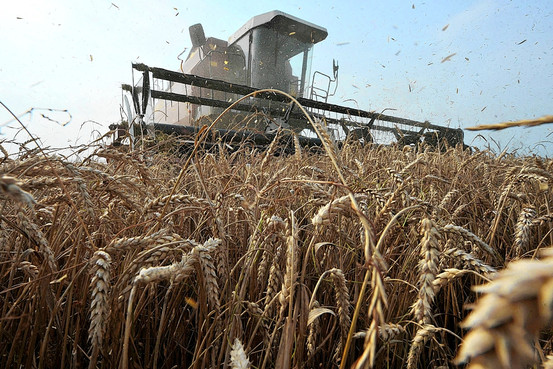
WSJ story on Russian farmers taking the gamble of planting their winter wheat crop absent clear signs that the drought will abate.  Given the lack of slack in global food production chains, everyone will be tracking this planting.

Russia not only needs rain, but well-timed rain.

Elsewhere, Australia faces some locust problems and Argentina comes under the impact of La Nina, so a lot of uncertainty plaguing the system.

American farmers have been making the same calculation that the Russians are doing now:  get in another planting to take advantage of Russia's woes or not, understanding that if the Russian winter wheat crop succeeds, the market could go from too little to too much overnight.

Thrilling days to be in ag futures, one supposes.

12:07AM

China: eager to sell to the bottom-of-the-pyramid and confident of emissions advantage

image here

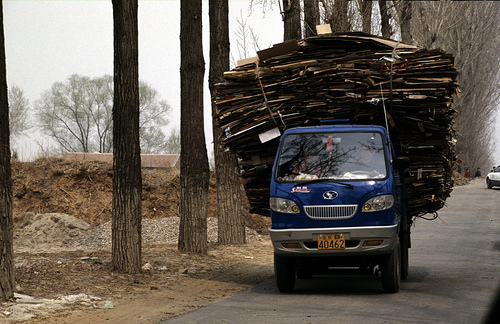
FT story on how Chinese low-end truck makers, having protected their own turf from foreign competition, are now looking to move aggressively into Gap markets (SE Asia and Africa).  Last year China produced almost half of the world's heavy and medium commercial trucks.  

China's manufacturers don't do so well in the Old Core West because they can't meet emissions standards--not a problem across the Gap.

12:06AM

The Indian-Chinese rivalry on outsourcing: India's upper hand for now

FT story on how India fears China will become a major competitor in outsourcing of services, with the concluding judgment being:  1) China's share remains but a fraction of India's for now; and 2) even if it grows a great deal, this global economy IS big enough for the both of them.

Right now, China's service outsourcing sector is growing faster, but it's where India was years ago, so that steep trajectory is unremarkable.  The Indians are just scared because they know what it means to roll up markets and worry about the Chinese doing the same to them.

Beijing's declared goal:  ten internationally competitive outsourcing hubs with 1k vending Chinese companies pulling in 100 multinational companies as client.  Naturally, China is making some headway in the US and Europe--traditional strongholds of the Indians.  

Why China won't catch up here?  India's language advantage (and frankly, trust advantage) and China's big domestic market.  Plus China is small fry compared to India ($10b to India's $50b).  China's domestic IT services market is already bigger than India's, so China's service outsourcing industry can expect a lot of growth there in addition to whatever it wins abroad.  India's industry would love to capture some of that China pie as state-owned banks and telecoms open up more in that way, but I would expect Beijing to make sure most of that business stays home.

12:05AM

Petraeus: we surge and Taliban do the same

photo here

Pair of WSJ stories.

In the first, Petraeus says the uptick in Taliban violence is directly related to the uptick in engagement pursued by the US military in the surge--as in, we fight more and they reply.  He also says that as the US military seeks to expand its "security bubbles," the fight will naturally grow as the White House conducts its policy review near the end of the year.

His focus now:  tracking the size of the individual bubbles and looking for ways to cross-link them.

One good sign:  fewer IEDs because those nets are under more stress from US operations.

Big difference with Iraq:  the surge is not coinciding with a reduction in inter-ethnic strife but with an increase, primarily, the WSJ opines, because of Karzai's offer to negotiate with the Taliban (see my other post below).

Bottom line:  Petraeus seems to be prepping the bureaucratic battlespace by reminding people that the surge doesn't equate to less violence in the short run but a whole lot more--part of the delicate dance he's pursuing with a White House eager to find early progress so as to justify the beginning of the drawdown slated for the summer of 2011.

As such, Petraeus doesn't need any additional triggers for violence in-country, hence his unusual intervention into the whole Quran-burning threat from Florida.

12:04AM

Negotiating with the Taliban naturally displeases Afghanistan's non-Pashtun minorities

WSJ front-pager on how Karzai is losing support from Afghanistan's minorities due to his desire to reach out and co-opt the Taliban.  This is seen as the equivalent of reaching out to the Sunnis in Iraq during the similar surge.

Naturally, the non-Pashtun fear any accommodation will allow the Taliban a long-term path for returning to power.

A rep of the Hazara (the Shiia in this equation; a similarly sized Hazara popultion exists in Iran) puts it this way:

We feel betrayed by the president . . . It seems that what President Karzai pursues now is the Talibanization of Afghanistan. The only difference between him and the Taliban is that he sits in the presidential palace and the Taliban sit in the mountains.

This is part of why I think the fracturing of Afghanistan is inevitable: to bring the Taliban back into the fold is to admit they own the south, and once you do that, the rest of the minorities will either want the same or will seek to do battle at some point in the future.  But with damn near everybody saying the military defeat of the Taliban is impossible, it's hard to see how you get any peace without co-opting them.

In the end, the minorities fear that the endgame as currently imagined leads to a resumed fight that the Taliban has a good chance of winning seems far from hyperbolic.

So a divided Afghanistan (however we maintain the fiction of unity) seems in the works.  The only question is who is the external guarantor.  We seem to be choosing Pakistan, ignoring the alternative of India-Iran-Russia, and I don't see how that doesn't buy us a return visit, because we've been down this path before.

So it feels like a catch-22:  don't include the Taliban and you have a truncated state, but include them and you get a divided state with the most likely unifier being the Taliban--again.

12:03AM

Japan starts pushing China on trade and currency

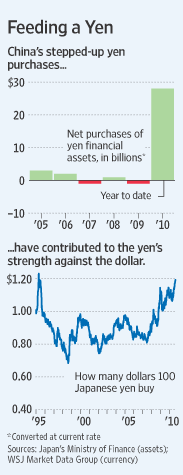
FT story on how Japan getting testy in China's direction over rise of yen and growing Chinese purchases of Japanese debt--sound familiar?

Japan's finance minister, speaking in the parliament, complains that it's a one-way street:  Japan cannot buy Chinese currency or debt.  Meanwhile, China's yen purchases this year are 6x larger than the previous five years put together.

All this while the latest maritime spat plays itself out.

Japan's Democratic Party won power for several reasons, to include their promise to work for a "relationship of trust" with China.

No one, for now, predicting a decline in relationships similar to 2005, because the economic bonds have grown spectacularly since then.  But something to watch:  in May China promised to restart talks on bilat exploitation of gas in East China Sea.  Does that go away now?

South Koreans are now bitching about the same things.

So we see continue to see natural regional resistance to China's rise, which is less a choice on China's part and more of a negotiation on everybody's part. Beijing seems to be losing track of the latter reality.

But that will change.

12:02AM

As the Leviathan experiences a budget squeeze, another door opens--a bit

BAE Systems announces in FT a cut of almost 1,000 jobs, just after Lockheed announces 600 execs take buy-out packages--all because of expected cuts in big platform purchases (total cuts sought are $100B over five years, or $20B a year).  Boeing, also announcing cuts, even broached recently the notion of a merger with another big firm.

Meanwhile, defense companies applaud (Bloomberg Businessweek) the proposed export-control revamp offered by Obama, described as the most important change in that area in the last two decades.  The change: instead of one big list of technologies that face export controls, now a three-tiered structure where government approval for export is made easier (2nd tier) or completely obviated (3rd tier).  For example, in the realm of tanks and trucks, of the 12,000 items currently requiring export licenses, three-quarters would now be shifted to the lesser control categories.

Talk about just-in-time!

Good move for US exports and competitiveness and a reasonable sop to the defense industry facing a smaller US defense budget.

12:01AM

Chart of the Day: China goes inland for cheaper labor

WSJ story on how Hon Hai, the "world's biggest contract manufacturer of electronics," is heading inland in search of cheaper labor.  The shift, as detailed in the chart, will be profound.  Big investment bets being placed in major inland cities.  The dream is a natural one, insource inland to prevent too much job flight to neighbors and help the country "retain its role as the world's factory floor for decades."  Hon Hai chairman Terry Gou dismisses the notion that competing neighbors will ever be able to displace China.

Besides the geographic shift inland to capture labor costs estimated to be 2/3rds of those along the coast, there is a philosophical shift: this time around Hon Hai has no ambition to create and run entire factory towns within which the company is responsible for housing, healthcare, etc.

9:09AM

WPR's The New Rules: U.S. Needs an Activist, Independent Turkey  


If America could be magically granted its ideal Muslim strategic partner, what would we ask for? Would we want a country that fell in line with every U.S. foreign policy stance? Not if the regime was to have any credibility with the Islamic world. No, ideally, the government would be just Islamist enough to be seen as preserving the nation's religious and cultural identity, even as it aggressively modernized its society and connected its economy to the larger world. It would have an activist foreign policy that emphasized diplomacy, multilateralism and regional stability, while also maintaining sufficient independence from America to demonstrate that it was not Washington's proxy, but rather a confident great power navigating the currents of history. In sum, it would serve as an example to its co-religionists of how a Muslim state can progressively improve itself amid globalization's deepening embrace -- while remaining a Muslim state.

Read the entire column at World Politics Review

12:09AM

Krepenevich sees a "Finlandization" strategy by China in the Pac

Andrew Krepinevich op-ed in the WSJ that's a bit breathless in its admiration for the much-hyped Chinese strategy of the "assassin's mace."  It always kills me how so many experts criticized net-centric warfare as so much high-tech BS and then seem to swallow this stuff hook, line and sinker from a military that hasn't actually fought anybody in a sustained fashion for more than half a century.

Of course, we might outspend everybody by gajillions and yet our stuff is sooooooo easy to counter, but China is going to pull off this amazing collection of high-tech hijinks the very first time and it'll be so amazingly hard to counter.

Naturally, Krepinevich's logic exists in his usual vacuum where economics and political repercussions of such behavior are set aside--to wit, his argument that China is building up all this power to "Finlandize" the region.

Well, turns out, looking at my post from yesterday, that SE Asian weapon buying has doubled in the past half decade and America seems to be having no trouble locating new military friends from this neck of the woods.

Ah, but we are told that Team Obama is the naive player here, even though virtually every China hand will tell you that Bush-Cheney talked a tougher game but were more lenient with China while Obama-Biden talk a nicer game but actually are tougher. The reason why Pentagon planners refer to China as "Voldemort" (i.e., the threat that dare not be named) is that the scenarios for conflict are bleeding plausibility with each passing year.  The Pentagon, in its complete isolation from the economic world and globalization and global supply chains and global financial flows, might find pumping up the China threat to be a tough sell, and that tough sell may be particularly galling for the Air Force and Navy that see their platform budgets tightened thanks to Long War dynamics that favor the Army and Marines more, but watching Krepinevich trying to sell the stealthiness of China's military rise is just sad.

No one is ignoring this build-up--not the US with its annual report nor China's neighbors, and balancing has naturally resulted in the region.  Krepinevich oversells the regional fear and overhypes the notion that, unless we start spending mucho on the USAF-USN-heavy Leviathan, that SE Asia "may have no choice but to follow Finland's Cold War example."

I mean, I'd love to read the scenario whereby China's "dazzles" a few US satellites and launches some surprise cyber attacks and blows up a couple of US warships with missiles and voila! Suddenly everybody in SE Asia is China's cowed minions willing to do whatever it says.  Oh, and the rest of the world just accepts this fait accompli, offering no response. Doesn't that fantastic logic strike you as mirror-imaging the same sort of net-centric "shock and awe" that we've never been able to pull off on anyone to any lasting effect?  So how come China, with its completely inexperienced military, is going to make that happen with such ease and such obvious and permanent gain (i.e., "finlandization)?

It's amazing to me: we supposedly learn the harsh reality of war in the 21st century in Iraq and Afghanistan (i.e., that the high-tech most certainly does not rule--much less guarantee victory), but now we're supposed to freak out and go all Cold War over China because it's able--on a zero-experience base--to do everything we weren't able to do with net-centric warfare and they'll be so good at it that we'll never see it coming and we'll lose everything before we even know what hit us.

Am I the only national-security type who finds this straight-faced juxta-positioning to be ludicrous?

If Krepinevich represents Pentagon war planning thinking, then he's demonstrating that the Defense Department is no closer to understanding globalization today than it was back in 2001.  This is classic war-within-the-context-of-war myopia.

All I can say is, thank God for Gates. Obama better do everything in his power to keep him past 2011. The President has no idea how bad the Pentagon's internal dynamics could get in his absence, or what a bulwark he is against such narrow thinking.

Yikes!

12:08AM

Latest Balkan divorce ruling to go uncontested by Serbia

Guardian piece via WPR's Media Roundup.

Serbia decides to accept--grudgingly--the UN court decision allowing Kosovo independence.

The A-to-Z system for dismantling the fake state of Yugoslavia has advanced to the point where, now, its remaining issues are processed in international courts--and respected by the loser (still Serbia--Monty Python's Black Knight reduced to mouthing back and little else)

An improvement, I would say.  Dare I say a "maturation"?

Don't worry.  We'll have plenty of other chances to work the process elsewhere--like in Sudan in a few months.  No shortage of fake states out there.

12:07AM

More in the "weakened Russia turns to Europe for help" vein

Where are all my "resurgent Russia" guys now?

The severe blow dealt to Russia by the West's financial crisis is prompting a recalibration of Russia's foreign policy. Among the ideas now surfacing in Moscow: a much closer relationship between Russia and the European Union.

After years of rapid economic growth, Russia was hit hard by the crisis. Last year, its economy shrank by 7.9%. That put its economic performance in 206th place out of 213 countries, according to the Central Intelligence Agency.

"What became clear from the financial crisis is that Russia is not a sustainable BRIC," said Mark Leonard, director of the European Council on Foreign Relations . . .

I mean, weren't we supposed to wage another Cold War with Russia because of Georgia?  

Gotta wonder how George Friedman is swallowing all this.

The enthusiastic "Russia is Back" slogans being bandied about two or three years ago have been replaced by growing fears of further decline.

Duh!

This is why the freak-out artists are always good entertainment but bad guides for action: they don't see the feedback loops that increasingly define globalization's connectedness.  They still see the world in 20th (or even 19th) century terms, especially in the primacy of "pow-waaah!" as my friend Hank Gaffney likes to say.  That romantic view of global affairs is quaint all right, but useless.

12:06AM

An India-Iran-Russia package on Afghanistan stability: sounds smarter to me than relying on NATO's staying power

WSJ op-ed via WPR's Media Roundup.  Shanthie Mariet D'Souza is an Indian academic.

The gist of the tripartite vision, as seen from India:

At the moment it's tough to discern what the details of this tripartite cooperation might look like. The overarching goal is to prevent the return of the Taliban to any position of influence in Afghanistan. India would of course welcome any initiative to inhibit the political legitimization of the Taliban and, by extension, Pakistan's influence in Afghanistan. One example is the Indian government's construction of the Zaranj Delaram road, which connects landlocked Afghanistan to Central Asia and Iran, reducing the country's dependence on Pakistan for trade.

India's vision shouldn't be surprising. The country has historically been allied with Iran and Russia, so in some respects Delhi is simply reverting to form. But since the Clinton administration, India has drawn closer to the U.S., both economically and militarily, as a response to the rise of China. Given the Obama administration's strained relationship with Russia and Iran, Delhi will have to proceed cautiously to avoid a rift with its U.S. partner.

This isn't an impossible mission. Even Washington must agree that in the long run, Afghanistan will be better off if all of its neighbors have a stake in the country's stability. When President Obama visits Delhi in November, India should present its roadmap for how it can contribute to this vision, either as a direct participant or as a bridge between the U.S., Russia and Iran.

For years, India pursued a "soft power" approach to Afghanistan that focused on economic aid and development. Its reinvigorated regional diplomacy shows how its role in the region is changing. Unlike in the past, India is a key power that needs to be involved, consulted and heard in discussions on Afghanistan. Washington should take note.

I couldn't agree more.  The lack of this sort of wider regional involvement to date in Obama Administration efforts is very frustrating.

I know, I know.  Admin officials will say, "We've broached this subject with the X's!"  But I would like a bit more than the usual box checking.  Didn't we get enough of that empty gesture from Condi "talking-points" Rice?

12:05AM

More natural counter-China balancing in Asia: Vietnam + US

AP story on growing mil-mil cooperation between US and Vietnam via Stewart Ross.

Cold War enemies the United States and Vietnam demonstrated their blossoming military relations Sunday as a U.S. nuclear supercarrier cruised in waters off the Southeast Asian nation's coast — sending a message that China is not the region's only big player.

The visit comes 35 years after the Vietnam War as Washington and Hanoi are cozying up in a number of areas, from negotiating a controversial deal to share civilian nuclear fuel and technology to agreeing that China needs to work with its neighbors to resolve territorial claims in the South China Sea.

But I say again, cannot the Assassin's Mace render this all asunder, with a flip of a button?

Yes, yes.  As the Pythons used to note, "No one expects the Spanish Inquisition!"

To which I now add, "Nyyyoooooobody eck-spects the Assassin's MaSSSSSSSSSSSS!"

[It's a fair blog.]

12:05AM

More natural counter-China balancing in Asia: India-South Korea

Great WPR piece that speaks to the "Finlandization" fallacy peddled by Krepinevich:

Indian Defense Minister A.K. Anthony visited South Korea last week at the invitation of his South Korean counterpart to boost defense cooperation between the two states. His visit came just two months after the Indian external affairs minister visited Seoul and at a time of great turbulence in the strategic environment of the Asia-Pacific region. After having long ignored each other, India and South Korea are now beginning to recognize the importance of tighter ties. The resulting courtship was highlighted by South Korean President Lee Myung-Bak's state visit to New Delhi in January, when he was the chief guest at the Republic Day celebrations. During his stay, New Delhi and Seoul decided to elevate their bilateral relationship to a "strategic partnership."

Ah, but what is this compared to the Assassin's Mace!


[cut to the Pink Panther squaring off against his man-servant]

South Korea and India entered into a free trade agreement last year too.

12:03AM

Nyyyoooobody expects the rebound in trade!

Economist story by way of WPR's Media Roundup (how could I have missed this!).

DURING the Great Depression, America’s protectionist Smoot-Hawley Act of 1930 raised tariffs on more than 900 goods. A series of retaliatory actions by other countries followed. The effect on global commerce was devastating. In the three years to June 1932, the volume of world trade shrank by over a quarter. No wonder, then, that the spectre of the worst recession since the Depression led many to fear another descent into protectionism and a similar decline in trade.

At first, the recession did hit trade hard. Global GDP fell by 0.6% in 2009 while the volume of world exports dropped by 12.2%. But whereas the Depression saw trade decline for at least four years, this time the rebound has been quick, and sharp. By May this year, emerging-economy members of the G20 were importing and exporting around 10% more than their pre-crisis peaks (see chart). Rich-world trade has recovered from the trough too, though it has not yet made up all the ground lost since the credit crunch began.

Trade has not been devastated by the raft of protectionist actions taken during the downturn. According to the World Bank, the rise in tariffs and anti-dumping duties explains less than one-fiftieth of the collapse in world trade during the recession. For the most part, the fall in trade reflected a drop in demand. 

There is even some evidence that activity has rebalanced from the lopsided trade pattern that existed just before the crisis. Then, the share of emerging-world imports that came from rich countries had been on a steadily declining path. But now demand from emerging economies is helping to prop up rich-world exports to a larger degree than is commonly realised. According to IMF figures, of nine emerging markets in the G20, seven got a higher share of their imports from rich countries in 2009 than they did a year earlier. Just 59% of China’s imports came from rich countries in 2008, but this rose sharply to 66% in 2009. India obtained 42% of its imports from rich countries in 2008, but last year this rose to 47%.

That mutually beneficial pattern points to the importance of both rich and poor countries keeping their markets open, so that growth in one part of the world can help stimulate a recovery elsewhere. Yet the pressure to protect domestic industry and jobs will only grow as unemployment remains stubbornly high. At the moment, countries have plenty of room to raise tariffs without falling foul of their multilateral commitments.

Reducing this wiggle room means reviving the Doha round of trade talks, which began in 2001 and collapsed in a bout of finger-pointing in July 2008. At the most recent G20 summit in Toronto, the commitment to conclude the deal by the end of 2010 was quietly dropped from the leaders’ communiqué.

More clear evidence of the great "de-globalization"!  Where are those fear-mongers today?

All crowing aside, I would like to see Doha revived.

12:02AM

Food as a right--a cause celebe for an emerging global middle class?

India, according to this great NYT piece, is thinking about some radical changes to its hugely inefficient and unbelievably Byzantine food distribution system, which needs to be marketized in the extreme because it suffers so much from a plethora of bad infrastructure and greedy middlemen and tiny retail outlets.

Story starts with description of average tough time for named citizen when it comes to feeding the family. Then it switches to the growing debate:

For the governing Indian National Congress Party, which has staked its political fortunes on appealing to the poor, this persistent inability to make government work for people like Mr. Bhuria has set off an ideological debate over a question that once would have been unthinkable in India: Should the country begin to unshackle the poor from the inefficient, decades-old government food distribution system and try something radical, like simply giving out food coupons, or cash?

The rethinking is being prodded by a potentially sweeping proposal that has divided the Congress Party. Its president, Sonia Gandhi, is pushing to create a constitutional right to food and expand the existing entitlement so that every Indian family would qualify for a monthly 77-pound bag of grain, sugar and kerosene. Such entitlements have helped the Congress Party win votes, especially in rural areas.

To Ms. Gandhi and many left-leaning social allies, making a food a legal right would give people like Mr. Bhuria a tool to demand benefits that rightfully belong to them. Many economists and market advocates within the Congress Party agree that the poor need better tools to receive their benefits but believe existing delivering system needs to be dismantled, not expanded; they argue that handing out vouchers equivalent to the bag of grain would liberate the poor from an unwieldy government apparatus and let them buy what they please, where they please.

“The question is whether there is a role for the market in the delivery of social programs,” said Bharat Ramaswami, a rural economist at the Indian Statistical Institute. “This is a big issue: Can you harness the market?”

Can't get much more stark than that:  hand out food or scrap the currently inefficient system.  Naturally, I vote for the latter.

As for the current government food programs?

The food system has existed for more than half a century and has become riddled with corruption and inefficiency. Studies show that 70 percent of a roughly $12 billion budget is wasted, stolen or absorbed by bureaucratic and transportation costs. Ms. Gandhi’s proposal, still far from becoming law, has been scaled back, for now, so that universal eligibility would initially be introduced only in the country’s 200 poorest districts, including here in Jhabua, at the western edge of the state of Madhya Pradesh.

Scary to consider expanding such a system.  Imagine how much corruption and malnutrition you get then?

Still, I believe food-as-a-right will be a growing concept.  The question, of course, is whether it's used as an excuse for governments to step in or--better--step back and let the Wal-Marts of the world force the efficiencies.

12:01AM

Chart of the Day: Somali piracy = sole rise in global piracy

WSJ story where chart caught my eye:  pull out the Somali bump-up and the rest of global piracy is basically flat from 2005 through 2009.  Because of Somali pirates, the total number of attacks has been increase by about 50%, meaning Somalia alone now accounts for roughly one-third.

The twist:  al Shabaab, the youth militant successor to the Islamic Courts Union (kicked out of Mogadishu by the Ethiopian military three years ago) used to just tax the pirates, but now it fields its own boats and speaks of "sea jihad." This is viewed primarily as a revenue-raising effort, because few American-flagged ships pass by there (Maersk Alabama was a relatively rare passage).  And with average ransoms paid now up to $2m (double the average of last year).

The good news?  The booming market for pirates suffers a talent dearth, as multinational navy response officers are noticing a steep decline in proficiency.

12:05AM

China's rise triggers natural military cooperation among those made nervous

Great WAPO piece by the always good John Pomfret that highlights a recent theme of mine: no great need to "encircle" China, because the more the neighbors worry over its economic rise and foolish threats about the South China Sea, they will simply come to us--for arms and alliance.

Thus, no great effort required.

Weapons acquisitions in the region almost doubled from 2005 to 2009 compared with the five preceding years, according to data released by the Stockholm International Peace Research Institute this year.

"There is a threat perception among some of the countries in Southeast Asia," said Siemon Wezeman, senior fellow at the institute. "China is an issue there."

The buying spree is set to continue . . .

We have this tendency in the West to suppose our "decline" is absolute and China's "rise" will unfold with no feedback from the system.  Neither, of course, is true, especially the latter.  

China will learn that there is a reason why the U.S. has long had the world's largest gun with no one trying to build one similar: the simple truth is that we're trusted in that role and with that capability.  And a big reason why is that we're a democracy.

China cannot rise as a single-party state and get the same pass. It's rise will naturally trigger all manner of localized and regionalized and globalized balancing by all sorts of players. It will not need to be organized; it will simply happen as a matter of course.

Whatever we do inside the US military to prepare for the China threat (AirSea Battle comes to mind) is marginal compared to this self-selected balancing by so many states, in large part because it will ultimately reflect smaller states pursuing across-the-board hedging strategies vis-a-vis China.

Remember these words:  in the pre-American-styled-globalization, trade followed the flag; today it's the flag that follows trade--as China will soon learn on its own in so many places in the world to its great discomfort.

12:03AM

Iran's real ambitions have little to do with religion, terrorism or nukes


Powerfully sensible piece by Dario Cristiani in World Politics Review via WPR's Weekly Article Alert.

The guts of the logic WRT Central Asia:

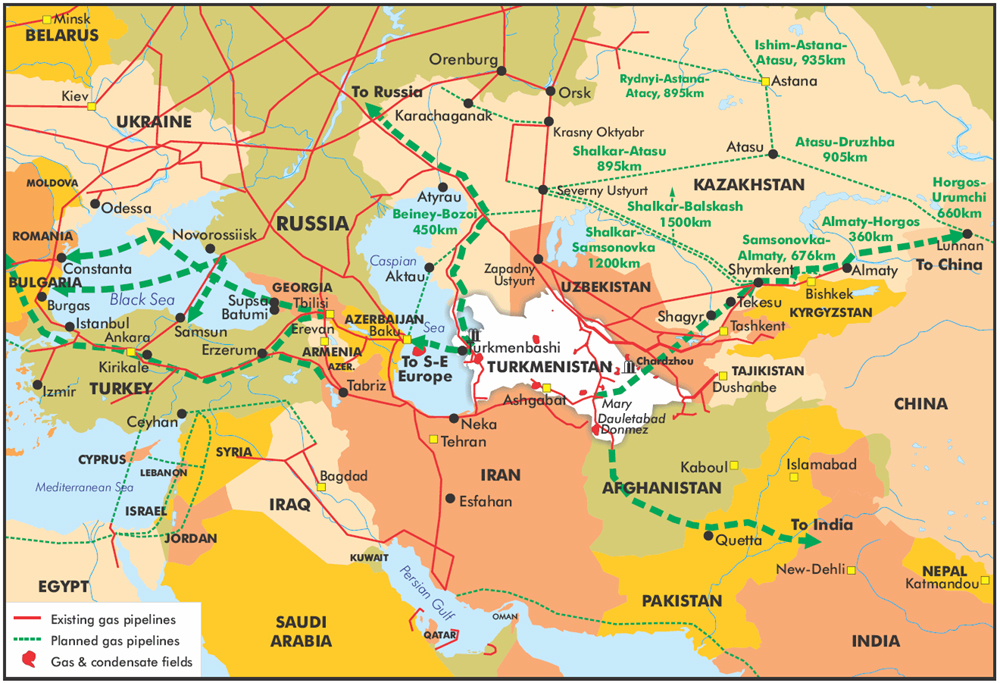
If Iran has always been geographically part of the regional context of Central Asia and the Caucasus, Tehran's geopolitical orientation has historically been focused southward, on the Persian Gulf. For more than a century, Iranian interests in the area were limited to dealing with Russia's -- and later the Soviet Union's -- expansionism. The end of the Cold War and the implosion of the Soviet Union opened new opportunities on Iran's northern borders, even if Iran remained more preoccupied with the need for domestic reconstruction following the war with Iraq. 

In the past 15 years, however, Tehran has been particularly active in trying to create a deep net of institutional and economic links in the region, in part to counter the increasing reach of Turkey, perceived as an American proxy, and of Pakistan, historically an enemy of Iran. Such an approach has been characterized by the "pragmatism" typical of Iran's post-revolutionary leadership. Eschewing the idea of exporting revolution, Iran has instead tried to improve ties with all the countries of the region, focusing on those with which it shares cultural and historical links. This explains the strong attention paid by Tehran to Tajikistan and Afghanistan, which represent cornerstones of the Iranian strategy in the region. At the same time, a clear example of Iran's pragmatism is the close relationship it has forged with Armenia, cemented by the common interest of containing Azerbaijan. 

Iran's ultimate goal is to become a technological and economic power in the region, and to this end, Tehran is supplementing its cultural and historical links with a more resolute economic presence, including investments in massive infrastructure projects.

The surprising conclusion:  even though Russia, China, the US and Iran all want stability in Afghanistan, because of regional rivalries, Iran has been unable to cooperate with any of them on the subject.

Great piece of Nasr/Takeyh quality.