Buy Tom's Books
  • Great Powers: America and the World After Bush
    Great Powers: America and the World After Bush
    by Thomas P.M. Barnett
  • Blueprint for Action: A Future Worth Creating
    Blueprint for Action: A Future Worth Creating
    by Thomas P.M. Barnett
  • The Pentagon's New Map: War and Peace in the Twenty-first Century
    The Pentagon's New Map: War and Peace in the Twenty-first Century
    by Thomas P.M. Barnett
  • Romanian and East German Policies in the Third World: Comparing the Strategies of Ceausescu and Honecker
    Romanian and East German Policies in the Third World: Comparing the Strategies of Ceausescu and Honecker
    by Thomas P.M. Barnett
  • The Emily Updates (Vol. 1): One Year in the Life of the Girl Who Lived (The Emily Updates (Vols. 1-5))
    The Emily Updates (Vol. 1): One Year in the Life of the Girl Who Lived (The Emily Updates (Vols. 1-5))
    by Vonne M. Meussling-Barnett, Thomas P.M. Barnett
  • The Emily Updates (Vol. 2): One Year in the Life of the Girl Who Lived (The Emily Updates (Vols. 1-5))
    The Emily Updates (Vol. 2): One Year in the Life of the Girl Who Lived (The Emily Updates (Vols. 1-5))
    by Thomas P.M. Barnett, Vonne M. Meussling-Barnett
  • The Emily Updates (Vol. 3): One Year in the Life of the Girl Who Lived (The Emily Updates (Vols. 1-5))
    The Emily Updates (Vol. 3): One Year in the Life of the Girl Who Lived (The Emily Updates (Vols. 1-5))
    by Thomas P.M. Barnett, Vonne M. Meussling-Barnett
  • The Emily Updates (Vol. 4): One Year in the Life of the Girl Who Lived (The Emily Updates (Vols. 1-5))
    The Emily Updates (Vol. 4): One Year in the Life of the Girl Who Lived (The Emily Updates (Vols. 1-5))
    by Thomas P.M. Barnett, Vonne M. Meussling-Barnett
  • The Emily Updates (Vol. 5): One Year in the Life of the Girl Who Lived (The Emily Updates (Vols. 1-5))
    The Emily Updates (Vol. 5): One Year in the Life of the Girl Who Lived (The Emily Updates (Vols. 1-5))
    by Vonne M. Meussling-Barnett, Thomas P.M. Barnett, Emily V. Barnett
Search the Site
Powered by Squarespace
Monthly Archives
9:24AM

Bashir, making nice on divorce, may get off on ICC charges

FT story.

A very realistic appraisal by the West of the utility of seeking to extradite (North) Sudan's president Omar Bashir over ICC charges WRT Darfur in light of his acceptance of the South's split (scheduled for this July, I believe).

In effect, the charges becomes a bargaining tool in the months ahead:  Bashir can be rehabilitated if he plays nice.

This was Wikistrat's recommendation in a recent CoreGap bulletin story on the vote.

12:37PM

Going/gone on BBC's "World Have Your Say" program at 1345EST (-5GMT)

Discussing whether China's rise is a good thing for the world. Other guest is South African businessman.

Short segment of about 15 mins.

Actually nice to discuss something other than Egypt!

But I do now regret watching "The King's Speech" this weekend . . ..  For a public speaker like myself, I considered it a horror movie.


POSTSCRIPT:  Previous discussion on Egypt dragged on a bit, so the China part was limited to about 6 mins at the end of the show.  Co-participant was from very sharp Beijing Axis business consultancy based in South Africa, with whom I crossed paths in Cape Town last year.  So no disagreements per se.  I cut out, I was told, for two seconds in my second-and-last comment.  First time for me with Skype, but I guess that can happen. Bit of a filler effort, but I like the program and love being on the Beeb, so I always say yes.

Find the podcast here in a bit (14 Feb show).

8:30AM

WPR's The New Rules: Ten Assumptions About Egypt Worth Discarding

There's a lot of trepidation mixed in with the joy of seeing one of the Arab world's great dictators finally step down. With Americans being so down on themselves these days, many see more to fear than to celebrate. But on the whole, there's no good reason for the pessimism on display, which is based on a lot of specious assumptions that need to be discarded. Here's my Top 10 list.

Read the entire column at World Politics Review.

12:01AM

If you're in sunny San Diego in early May . . .

From Electric Net:

Registration Is Open For 2011 NAED National Electrical Leadership Summit, San Diego, April 30 – May 3

February 11, 2011

Industry executives convene to plan for the business future with strategies, networking and education

The National Association of Electrical Distributors (NAED) announces that registration is open for the 2011 National Electrical Leadership Summit. The Summit will take place April 30 – May 3, 2011, at the Hilton San Diego Bayfront. The agenda features an expanded lineup of keynote speakers, industry panels, educational sessions, and networking opportunities to provide members with the ideas and strategies necessary to plan for their business future.

The fresh, condensed format of the Summit gives attendees the opportunity to hear from top-quality keynote speakers during two general sessions. Dr. Thomas P. M. Barnett, will present "Twenty-First Century: A Future Worth Creating – Globalization Strategies," covering all of the details that go into determining whether globalization will advance or retreat in the decades to come. In the presentation titled, "A Technology Infused Leader," Scott Klosoky will discuss what today's leaders need to know about technology to stay effective in the future and allow the technology savvy generations to thrive in the workplace.

Here is the conference page.

10:30AM

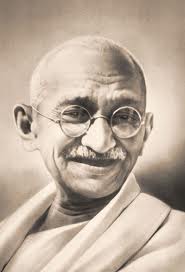
India's Achilles heel: the Gandhian/Jeffersonian ideal

versus

Gandhi reified the village as the center of Indian life.  There you find the ones left behind in the rapture that is globalization's narrow advance into "shining India."  Gandhi is the modern Jefferson, and he shows you just how wrong that guy was.

Western investors may take eager note of India’s economic growth rate of nearly 9 percent a year. But that statistic rings hollow in India’s vast rural areas. Agriculture employs more than half the population, but it accounts for only 15 percent of the economy — and it has grown an average of only about 3 percent in recent years.

Critics say Indian policy makers have failed to follow up on the country’s investments in agricultural technology of the 1960s and ’70s, as they focused on more glamorous, urban industries like information technology, financial services and construction.

There is no agribusiness of the type known in the United States, with highly mechanized farms growing thousands of acres of food crops, because Indian laws and customs bar corporations from farming land directly for food crops. The laws also make it difficult to assemble large land holdings.

Yet even as India’s farming still depends on manual labor and the age-old vicissitudes of nature, demand for food has continued to rise — because of a growing population and rising incomes, especially in the middle and upper classes. As a result, India is importing ever greater amounts of some staples like beans and lentils (up 157 percent from 2004 to 2009) and cooking oil (up 68 percent in the same period).

Food prices are rising faster in India than in almost any other major economy — and faster than they did during the 2007-8 surge.

The whole India-v-China model is a fascinating experiment in Jefferson versus Hamilton, or Gandhi versus Deng.  It's not a state capitalism versus market thing, because the ratios there aren't all that different.  It's really a question of whether you like cities and industry versus villages and agriculture.  

1:37PM

CIA wrong . . . by almost entire day! Mubarak steps down

This train keeps rolling!

Elvis, we are now told, has truly "left the building," as Mubarak has handed power to the senior military council.

So the journey along Wikistrat's 1-2-3-4 scenarios is complete:  explosive rip of initial protests shakes everything up but triggers no Tunisia-like fall, then the steady drip of protests, strikes, defections, etc, pushes Mubarak into a number of "slips", none of which placate the mob.  Eventually, the military steps in (apparently Leon Panetta's prediction was dead-on and just a few hours off) and takes the Turkish path (assuming temporary rule but promising the much-desired free elections).

The table has been run.

We've been saying for a while that this was our preferred exit glidepath:  Mubarak stops being useful the minute the military decides it can assume the same role - that of the stabilizer that will safeguard the necessary transition.  My only concern, all along, has been that the elections come no faster than planned (and there are some on the democracy side who are already arguing that more time is needed), so, if the military sticks with that clear marker, that's a decent stretch, maybe not enough for everybody to compete to their full capacity, but long enough for it to work.  Since the Egyptian military is coming through this so nicely, I think it's clear that they have the political capital to slow things down (once the celebrations cease), convene the talks necessary for some sort of interim government (hopefully not so inclusive that the infighting starts prematurely, because it would be better for that to await the campaign), and work with that government to set the rules for the election.  One way to prevent any dangerous struggle would be to rule out anybody from the unity cabinet (or whatever it's called) from running for president.

Anyway, nice ending to a utilitarian stretch of unrest (not too violent, deaths in hundreds, but gets the job done with just enough time lapsed so it doesn't dissolve into chaotic-like conditions), and you have to wonder if the opposition movement in Iran doesn't get jacked back up in response.

Now the quasi-negotiating dynamic is between mob and military (which should be a lot more relaxed, one hopes, given the latter's standing), so we see if the army is smart enough to lift the emergency rule ASAP as a signal that things are going to be different and that they are committed to the implied path of democratization. With enough of an immediate freedom agenda, it's possible that the elections could be set for a year from now, which would probably make everybody happy enough - again, if the political climate was immediately altered and altered profoundly in the direction of liberated activity, freedom of the press and assembly, self-organization and the like.  Across that year, then, you'd see all manner of economic aid, along with political support from the usual array of ambitious characters, so giving everybody that length of time to adjust could work well.  The trick, in my mind, is not letting anybody who sits at the big interim table to simultaneously run for president.  One hopes there's enough solid personages to cover both dynamics (interim and campaign).

But again, very positive stuff for the West at a time when we really needed some good news and are surprised to get it (Tunisia, Egypt - so far) from the Middle East/North Africa.

9:31AM

Mubarak teases again!

So the big military council meeting, if it did indeed happen without Mubarak (as reported), still resulted in the army deciding that they preferred the Big Man stay in office through September.

I will admit, I still like this path best, despite the obvious risks.  I don't want him gone in a heartbeat, because that scenario favors the most organized (Muslim Brotherhood), and his continuing presence will keep them careful through the election.  Getting somebody solid in there, that the military can live with, is the best hope for this democratization process to actually unfold and take hold.  Too fast and furious and we probably get a restoration within a year.

Back to the Wikistrat paths:  we start with Explosive Rip, Mubarak makes some weak moves, we head into the Steady Drip of protests, and now the military has spoken (Suleiman is the interim, but elections to happen and happen freely).  

Again, I know everyone is impatient, but this gives the world and the opposition some time to get their stories straight.  The one narrative of "crazy MB waiting to take over and thus you need a strongman" is old and established.  The new narrative of Mubarak's many abuses and the rise of the stable middle class, etc., that one needs to be established in people's minds.  We have reached a real tipping point and a good one, but so many ways to screw it up.

I think so long as the protesters maintain themselves on some very public level, and continue to prompt progress and keep the whole deal firmly in the media's eye, this can work out nicely still.

LATEST CNN AT 1000:  Army giving out food to protesters, Suleiman described by gov officials as "de facto president," and Mubarak and Missus skip Cairo for resort town Sharm el-Sheikh.  Sounds like internal exile.

Again, this is proceeding pretty nicely, by my way of thinking.  We've had the back and forth, but it looks like the military has made its call and - for now - it's a good one.

12:30PM

Wikistrat's Releases "CoreGap Weekly Bulletin" #11.05

 Greetings from the Wikistrat Team,

Today we have released this week's CoreGap Bulletin to Wikistrat's subscribers

This week our bulletin covers, among many:

  1. Terra Incognita - The Devils We'll Know
  2. Frantic Firewalling among Potential Mideast Contagion Victims
  3. Moscow Airport Suicide Bombing Signals Caucasus Separatists' Staying Power
  4. Food - How Rising Asia Destabilizes the entire Gap
  5. Asian Banking Goes Global

Join our subscribers and take advantage of the world's first geopolitical wiki model, as well as receive the full CoreGap weekly bulletin.  Sign up here

For a taste of what you'll be getting, here is a video of Tom discussing content from the bulletin as well as a download link to the abridged PDF version.


See you on the wiki!

CEO Joel Zamel

CTO Daniel Green and

Chief Analyst Thomas P.M. Barnett of WIKISTRAT

12:21PM

CIA says Mubarak may step down tonight

Image from Mike Nelson.

Panetta on the Hill says Mubarak may transfer power tonight in speech.

Trigger seems to be the military:  some big Council meet WITHOUT Mubarak, leading general to say - sotto voce - that the people's demands will be met very soon.

Given the shenanigans of the past couple of weeks, and the growing sense that Mubarak would try some tricks, the longer he stayed, I think this is a good thing, so long as the September elections stay as scheduled. I think if Suleiman takes himself out of any contention, then his interim shtick should work out, now that the military have had their intervention.

This is the most benign form of a military move, so good news - if it works.

12:39PM

China's Aviation Industry Corp plans another team-up with US firm

Get used to this line-up

WSJ story on how AVIC (Aviation Industry Corporation), which has already announced a joint effort with GE on commercial airliners, is now teaming with a small CA-based avionics firm (US Aerospace) to offer its signature big helicopter in US markets, to include defense markets and possibly even a bid on the Marine One contract to supply the White House.

Yes, there will be push back, but eventually these things will happen.

For years now, I've fantasized about China Southern buying Southwest Airlines, for no particular reason other than they have similar names and, when I flew China Southern and was warned in advance by so many people how much it sucked, I found that its service was just fine and actually on par with my favorite SWA.

But think about it:  We used to have this huge shipping fleet, and now most of it flies under other nation's flags.  Why?  Got so routine and so thin margin, that US companies got out of it, abandoning to cheaper providers.  I've heard plenty of pilots in the US airline industry say the same thing will eventually happen there, and the logical flagship companies will hail from nations with the biggest flier markets.

And you know who that will be eventually.

So yeah, if you want to compete globally, you have to compete in China, and if you want to compete in China, you'll need to be - partially - Chinese.  That is how it works in economics and trade and it won't change over China's rise.

12:01AM

Resource war ahead! China "tightening its grip" on rare earths!

Chart found here.  It all looks so suspiciously similar huh?  Like production magically rises to meet global demand.  Pretty strange, that.  Like some invisible hand guides the process . . .

China, which controls 90 percent of production of rare earths globally right now, is believed to be stockpiling a strategic reserve (always suspicious when somebody else does it, but entirely sensible when the US does).  The US, for example, still has defense-tended stockpiles of strategic commodities from WWII!  China, as in all things, simply catches up, like creating a strategic petroleum reserve like ours.

WSJ gets it right:

Many rare-earth minerals aren't actually rare, and China doesn't have a monopoly on deposits of any particular rare-earth elements.

China has half the world reserve total, then the FSU has just under one-fifth, then the US with about 1/10th, and the rest of the world owns the remainder one-fifth.

Naturally, there are calls for the US to start similarly stockpiling rare-earths, rather than rely on potential enemy China.

Not a big trick.  Somebody's just got to spend the money to make the US mines profitable.

But it's interesting:  the more China connects to the world, the more nervous we get--and plan to protect ourselves with these various dreams of autarky.  Quite the reversal from the Cold War, huh?

9:33PM

The dream begins . . .

Saw this at Indy airport on my way to DC tonight. 

Didn't wait long, did they?

Woodson has already said he's aiming for a repeat.

10:36AM

Good win

Admit I was scared when Driver and Woodson lost and Shields hurting, but we've did what we did all year -- win the game according to whatever the style turned out to be, which is impressive.

That is our 13th championship, adding a bit more distance over the Bears in that total.

Interesting to consider next year, with all those injured players back and the experience under our belts.

Feel especially good for Rodgers and the franchise.  Nothing puts the Favre debacle in the rear view quite like accomplishing this with such a young team.

10:28AM

WPR's The New Rules: "Guiding Egypt into the Axis of Good"

While there remains a ton of things that can go wrong with the unfolding revolution in Egypt, there's a strong case to be made that America, despite its low popular standing there, has been handed a gift horse whose mouth, as the axiom puts it, is best left unexamined.  Because most of America's concerns center on security issues, I'll frame the argument for why this is the case in tactical, operational and strategic terms, and then finish on the most relevant grand strategic note -- namely, the new Axis of Good that may result. 

Read the entire column at World Politics Review.

11:48AM

Go! Pack Go!

Brangelina, the ball is in your court!

8:39AM

This owner wants one for the left middle toe!

My non-voting share that my Mom (son of HOFer Jerry Clifford) got me in 1997. The family's (theoretically shared among seven siblings) voting share (1 of about 1900) is held by my brother Andy in upstate WI so he can attend shareholder meets and vote on our behalf

When the Steelers sought their fifth NFL title (all Super Bowl championship games, because they never made it to the championship prior to the NFL-AFL merger), they often referred to it as "one for the thumb," meaning a fifth ring.

Alas, the NFL didn't start the bling tradition until after the merger.

But imagining what our chant would be, given our 12 NFL titles, I was thinking "one for the left middle toe" would provide some sense of our status as the Yankees/Celtics/Canadiens of the NFL.  That's why two weeks ago felt like my Super Bowl, because the Bears, with 9 titles, are sort of LA Lakers to our Celtics.  I don't have the same feeling for the Steelers, whom we play 2-3 times a decade, so I don't have that same, I-can't-stand-losing-to-them! urgency I have with the Bears or Vikes.  And yet I want to beat them badly, because I know how hard it is to get this chance.

I have to consider the Pack underdogs on the basis of experience.  As I've noted many times, I felt this year was to get some playoff experience, but I really felt we'd go next year, when the SB visits Indy--natch.  

So we're a year ahead of sked, by my count, which relaxes me some, and yet, if real greatness (that's what the G on the helmet actually stands for, not Green Bay, as it was invented and first used in the 1961 season, which, BTW, started the 5 championships in 7 years stint under Lombardi) is to be had, like the Patriots of the early 2000s, upon whom we are modeled in personnel picks, then maybe this is when we steal one from the established winner, like the Pats did with the Rams in 2001.

This is my hope.

I plan on being fairly intoxicated by kickoff, to calm my nerves.

5:48PM

Podcast archive for Vantage Point radio appearance 31 Jan 11

Find the one-hour segment here.

First segment audio a bit bad.  Did it over Skype and needed to listen on my headphones so no feedback, so later chunks better.

10:43AM

Egypt Crisis Simulation (addendum)

Wikistrat cuts through the noise and helps our subscribers understand how the current events in Egypt could change the region for years to come. We've released a new video discussing the on-going simulation and what consquences are emerging for the region.

Wikistrat is an integrated model of globalization, emerging market trends and geopolitical risk.

For access to the Wikistrat global Model, subscribe here now, and join our community of strategic thinkers.

Writer on another blog was interested in our use of the term "credentializing" WRT the Egyptian military's role in any successful transition to democracy.

Here's how I explained on that blog what we meant by that term:

Credentializing here means that the military’s performance in the hopefully smooth transition marks them as a contributing force for democracy rather than its hindrance, something we would term “delegitimizing.”

The military, as we note, is large and powerful and popular in Egypt. That’s an asset for long-term stability worth protecting, because young democracies tend to be the most warlike–more than mature democracies and more than authoritarian states. If the military serves the right function here (Mubarak gone, but not willy-nilly leaving a vacuum, and the elections happen freely and with little violence), then it becomes seen as the righteous guardian of the republic and not its menace. That is credentializing, because it says the army isn’t just a plaything of the government or protector of any one ruler, but an institution that serves the long-term interests of the nation. Immature democracies are plenty scary in history, and if they’re coupled with a radicalized military, you’ve got trouble. So if the military’s fine standing can be preserved in this transition, they’re credentialized for what comes next, which will be tricky no matter who emerges.

1:32PM

FT: Good book on Chinese economy

Made it to Raleigh-Durham last night, to my amazement, via Charlotte.

Spoke for 2hrs before mid-career class of DoD/USG/private sector logistics managers at Rizzo Conference Center owned by U North Carolina.  Then did 45 Q&A, then did 30 signing books, then did 30 lunching.  Audience of probably 100.

Saw this book review of Red Capitalism in FT by John Plender.  It's a good review of what seems like a great book that I will check out in airport stores.

Here's the bit that sold me:

The financial crisis has delivered a heavy blow to the American model of capitalism. Chinese officials do not hesitate to trumpet the point as they rejoice in the shift in the balance of economic power to Asia. Yet there are questions about how well their own model stands up to scrutiny. In Red Capitalism Carl Walter and Fraser Howie, both long-standing experts in Chinese banking and securities markets, ask quite a few; and their conclusions are unflattering.

There are, in effect, two Chinese economies. One is dominated by foreign-owned and family-run private companies that generate phenomenal growth mainly in Guangdong and the Yangtze River Delta. These two areas, which operate a free market form of capitalism not unlike Britain’s in the 19th century, attract 70 per cent of China’s foreign investment and contribute more than 70 per cent of exports, albeit with the help of a manipulated exchange rate.


Then there is the slower-growth economy dominated by state-owned enterprise, which still provides some social security for its workers. This is a bank-based model, even if the stock exchanges of Shenzhen and Shanghai are dominated by minority stakes in state-owned companies.

While the state-owned system has many of the trappings of western financial models such as stock exchanges, bond markets, interbank markets and so forth, Walter and Howie argue that this is just camouflage. On the exchanges, initial public offerings merely redistribute capital among state entities with occasional leakage to retail investors. The government bond market mainly shuffles paper between different arms of state enterprise at officially administered interest rates no different from those charged by banks. Capital allocation is controlled by the Communist party.

If the book has a hero, it is Zhu Rongji. While premier, he opened up state-owned enterprise to foreign capital and to increased market discipline. The big four banks, saddled with non-performing loans that state enterprise had declined to service, were recapitalised. This reform programme was taken forward after Mr Zhu’s departure in 2003 by officials at the People’s Bank of China against fierce opposition from the Ministry of Finance.

Come the global crisis in 2008, a huge stimulus package driven by frenetic bank lending swept away 10 years of reform. Having set up its own sovereign wealth fund, China Investment Corporation, in competition with the central bank’s fund, the Ministry of Finance used it to claw back control of large chunks of the banking system. The collapse of Lehman Brothers thus robbed the reformists of credibility and influence.

Wonderfully concise bit of history-writing there, with credit to Plender for summarizing.  Worth filing away mentally.

Bottom line:  why hopes and fears of the rise of redback won't be realized soon.  This underlying weakness in the banking sector makes Beijing too conservative to press ahead with the liberalization of the capital account necessary to take what is not an internationalization of the RMB and turn it down the path of becoming a serious reserve currency.

It's almost the financial equivalent of China being unwilling to have overseas military bases.  You can cite the "internationalization" of the military, but it's a thin veneer with nothing solid to undergird it.

The realistic Chinese are not being humble when they say, "We are more a developing country still than a developed one."  The notions of China surpassing the US in the power realm, as I have often recently argued, remain somewhat fantastic.

4:53PM

WIKISTRAT's "Middle East Monitor", January 2011

Greetings from the Wikistrat team

We're excited to announce the launch of our latest publication, "Middle East Monitor - January 2011". 

We hope you will enjoy the Mid-East Monitor. You are also invited to our Virtual Strategic War-Room on our wiki - check out the public version here. Sign up today to access our integrated strategic model of globalization.

Subscribe and Join the Wikistrat Universe, featuring global strategic model of globalization's advance, trends, shifts and trajectories. Your journey starts Here.

See you on the wiki!